Japan × Denmark. A new bridge for regenerative medicine.
At Nakanoshima Qross, we witnessed a new Japan–Europe connection in cell therapy — and the work that turns a scientific discovery into a possible treatment.
An important afternoon in Osaka
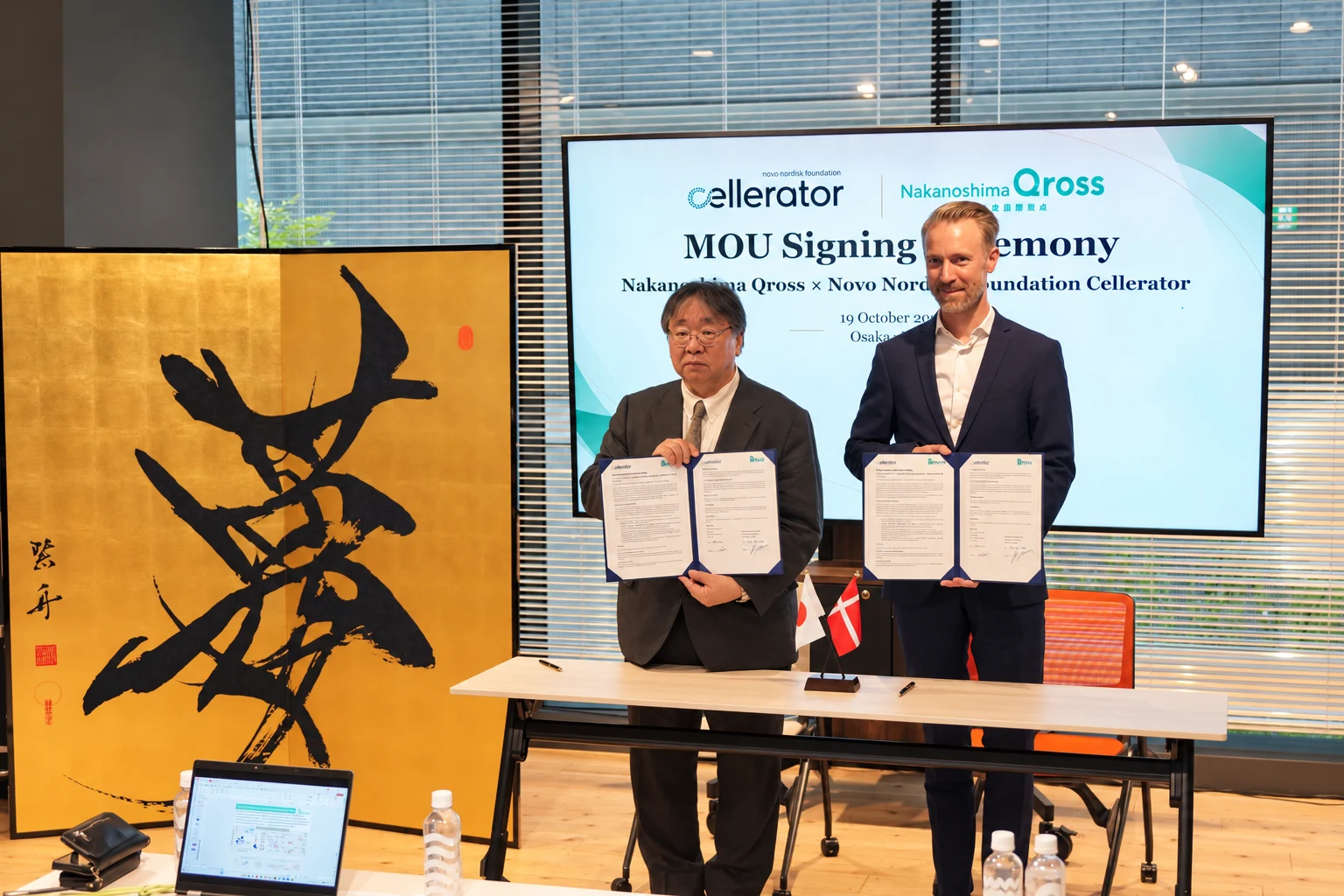
On 19 October, YOTSUBA JAPAN attended the Nakanoshima Qross × Cellerator meeting in Osaka. The most memorable moment was concrete: two organisations stood together with a signed memorandum, giving an international scientific conversation a framework for continued work.
The meeting took place at Qrossover Lounge Yume. Its programme combined introductions to the two ecosystems, a Danish policy perspective, start-up presentations and a panel discussion. For us, it was a chance to see research alongside the practical questions of development.
The moment the cooperation became official
What was agreed that day
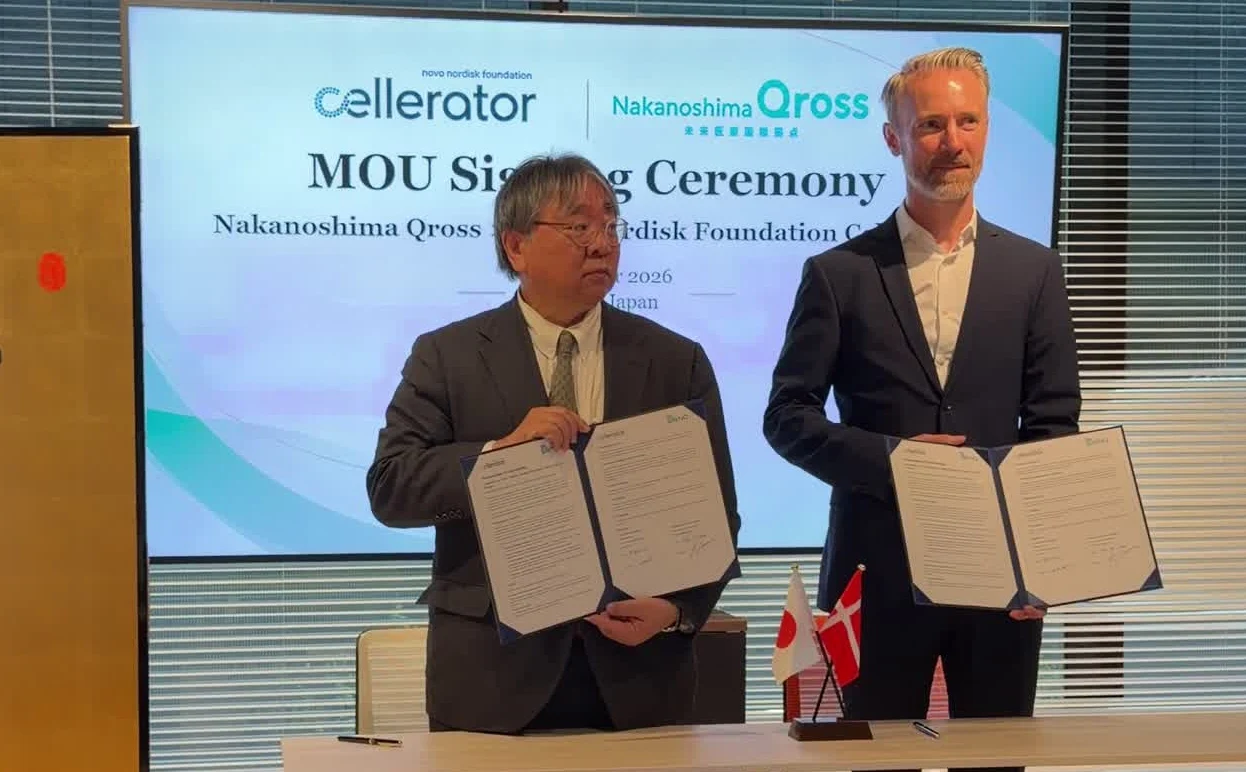
Novo Nordisk Foundation Cellerator and the Organization of Future Medicine, which operates Nakanoshima Qross, signed the memorandum. The signatories were Cellerator CEO Thomas H.R. Carlsen and OFM President and CEO Professor Yoshiki Sawa.
Their announced focus spans process development, manufacturing, technology transfer and regulatory approaches. It connects the Japanese network with Denmark and the wider Medicon Valley life science community, supporting the journey towards clinical application.
The plans include workshops, visits, training, personnel exchanges and introductions between potential partners. Cellerator’s new facility at the Technical University of Denmark is expected to become fully operational in 2027.
The next question: how does an idea reach a patient?
Our own recordings capture presentations on cardiac regeneration, tooth development and the restoration of small blood vessels. They reveal several ways researchers are approaching tissue repair, each with its own product, delivery method and questions to resolve.
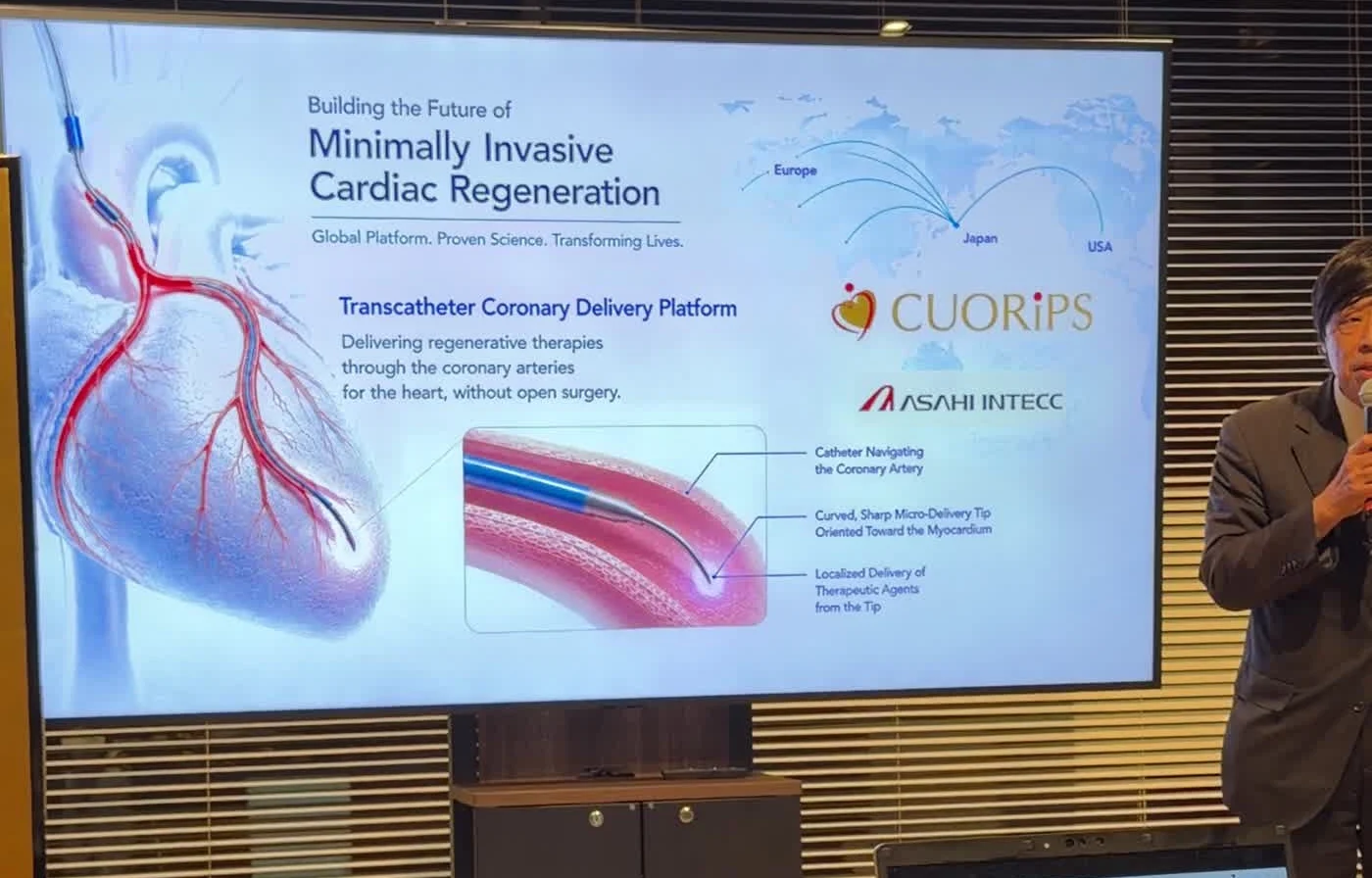
One particularly striking slide concerned a catheter-based approach to delivering cardiac cells. It illustrated an engineering question as much as a biological one: how might a developing therapy be delivered to the right place? The slide records a research direction, whose progress needs to be followed through its own studies.
Listening to these discussions, we kept returning to reproducibility. Can a promising material be made consistently, checked reliably and evaluated in the setting where it is intended to be used? That is where the conversation about manufacturing becomes part of the scientific story.
The engineering behind a future therapy
What we bring back to Yotsuba Japan
For YOTSUBA JAPAN, being present means keeping our view of Japanese life science close to the people doing the work. We want our journal to show the discoveries, the questions and the less visible steps that connect them.
Our editorial takeaway from Osaka is the value of continuity: a meeting followed by exchanges, a scientific idea followed by careful development. We will continue following this Japan–Europe connection as its next steps take shape.