Everyday food
Variety, adequate nourishment and enjoyment, adapted to your life and health needs.
食 OUR PERSPECTIVE
THE YOTSUBA WAY OF EVERYDAY WELLBEING
Wellbeing grows through the way we eat, move, rest and connect. A Japanese perspective on caring for the whole person, every day.
Explore the four leaves01 / A DIFFERENT WAY TO SEE HEALTH
ME-BYO is written 未病 and pronounced mibyō in Japanese. Its roots lie in East Asian medicine and the idea of caring before illness becomes established.
In Kanagawa’s modern approach, mind and body move continuously between health and illness. ME-BYO invites us to notice change and nurture a healthier direction through daily living.
At Yotsuba, we translate that perspective into a simple intention: make everyday care understandable, personal and possible to continue.
An illustration of a concept, not a test or a diagnosis. Change is not an inevitable progression to illness; medical conditions can also arise without warning symptoms.
02 / OUR FOUR LEAVES OF CARE
Inspired by the four-leaf identity of Yotsuba, our everyday-care model brings four habits of living together. Each supports a different part of the same life. A Yotsuba interpretation, informed by Japanese health-promotion principles.
SELECT A LEAF TO EXPLORE
Food. Movement. Rest. Connection.
The person always at the centre.
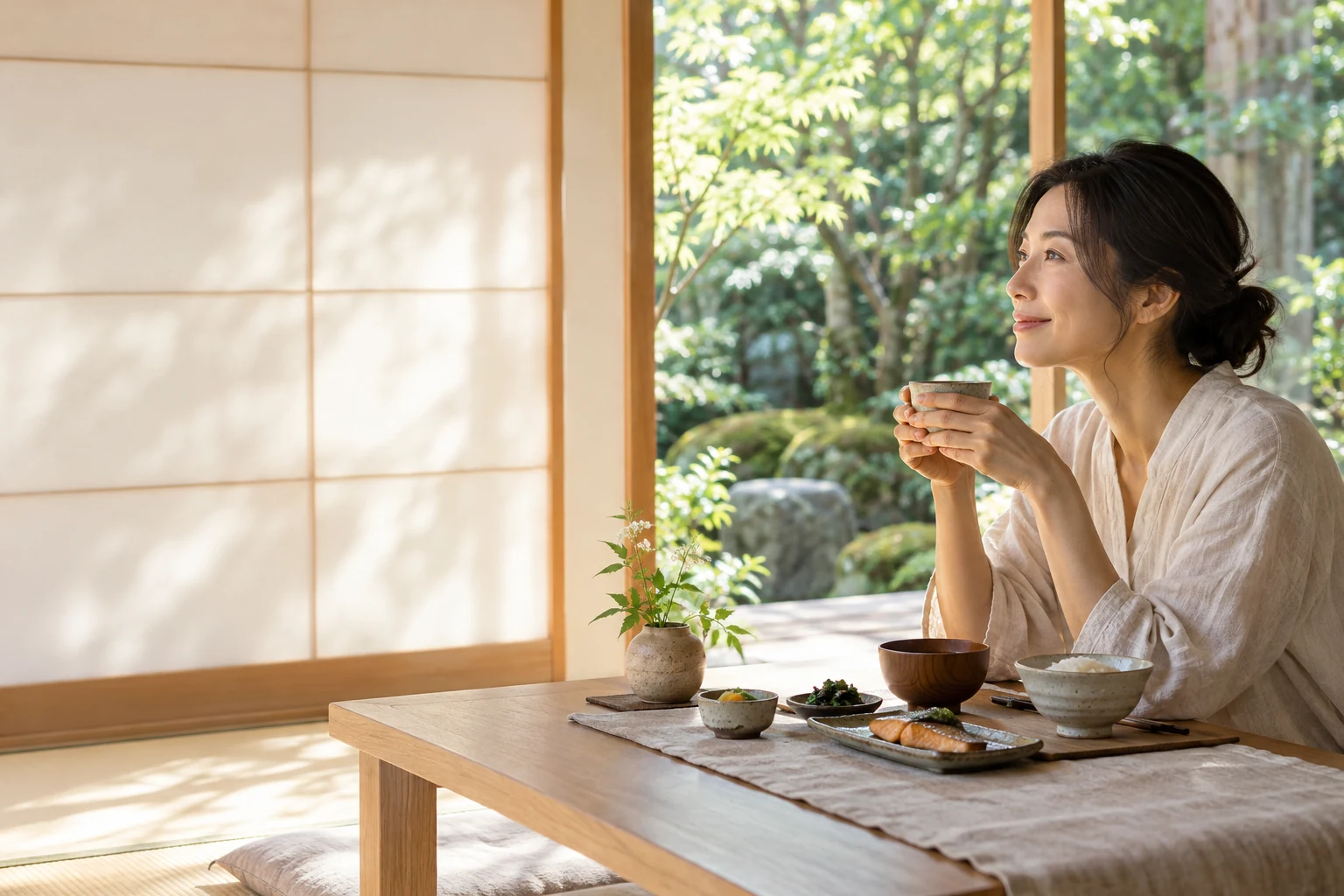
A varied diet is the foundation: vegetables, fruit, whole grains and appropriate sources of protein and fats. Japanese food culture offers an invitation to enjoy seasonality, variety and the pleasure of a shared meal.
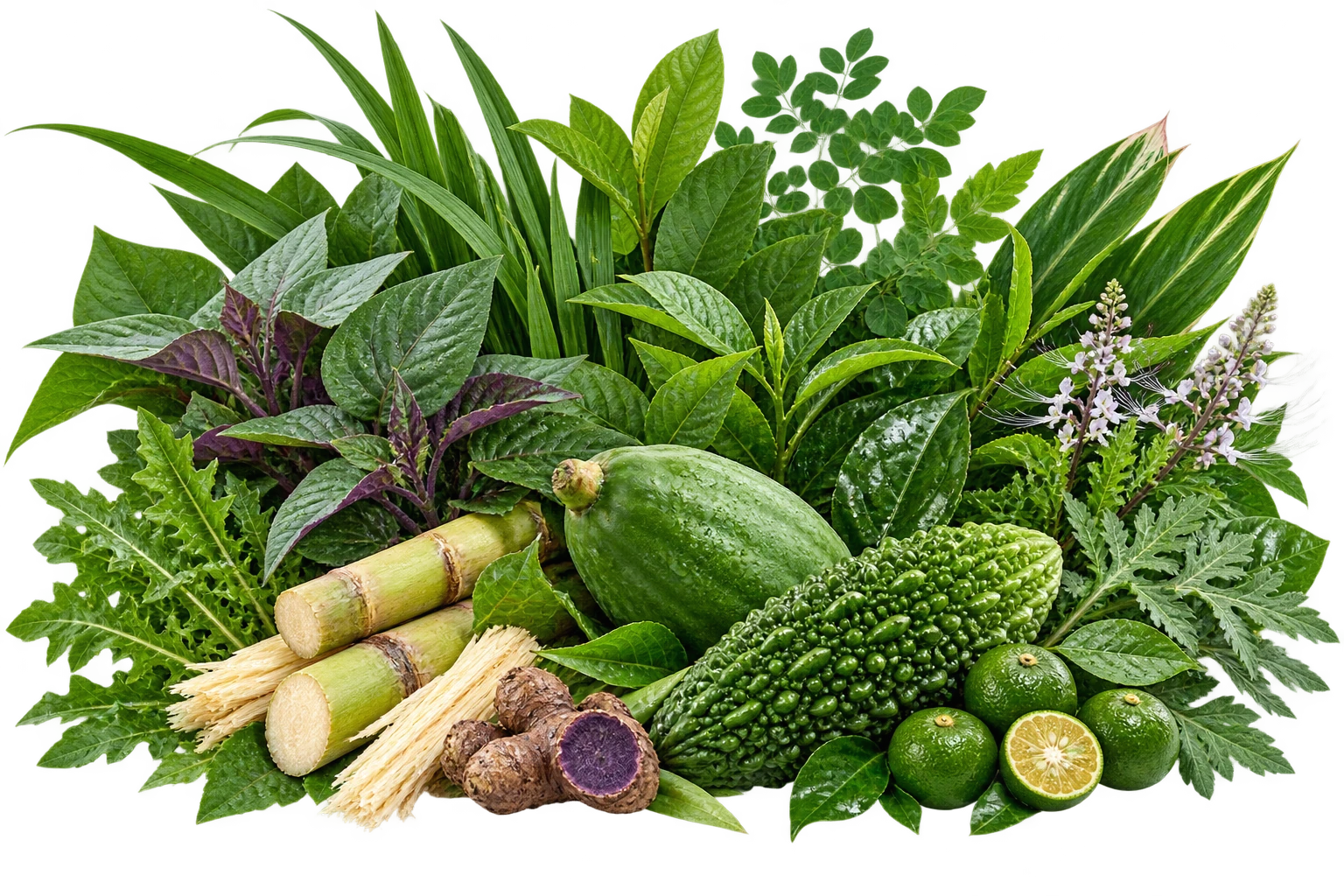
Consider supplements for a clearly identified nutritional need. Look at the whole diet and overlapping ingredients before choosing a product.
A shared walk brings movement and connection. Cooking makes room for food and attention. A calmer evening gives rest a place to begin.
03 / A THOUGHTFUL PLACE FOR SUPPLEMENTS
Supplements can have a place when there is a clear reason to use them. Begin with meals, movement and rest, then consider what additional support is appropriate for the individual.
Variety, adequate nourishment and enjoyment, adapted to your life and health needs.
食Consider diet, life stage, preferences and professional advice. Use tests when clinically appropriate.
知A suitable formula, an appropriate amount and a clear reason. Review how it fits over time.
補Read the local product label; check overlapping nutrients, allergies and medicine interactions. Pregnancy, chronic conditions and recovery after illness call for individual professional advice. Supplements are foods and are not intended to diagnose, treat or prevent disease.
For individual formulas, ingredients and product details, continue to the Yotsuba collection.
04 / FROM AN IDEA TO A WAY OF LIVING
Begin with one manageable change. Notice how it fits, keep what is useful and adjust with kindness. This is an example of a day, to adapt to your own schedule and needs.
How did you sleep? What feels different from your usual morning?
Make space for breakfast suited to your appetite and a varied day of eating.
Enjoy daylight and a comfortable walk or a few gentle movements.
Choose one realistic intention for the day, without demanding perfection.
Choose one small habit for the coming week. Observe your sleep, appetite, energy and stress without turning them into a diagnosis. Review what is realistic; seek medical advice for new or persistent changes.
MENTAL WELLBEING IS PART OF THE PICTURE
Notice a feeling before judging it. Take a comfortable pause. Share what is difficult with someone you trust. Consider whether work, responsibilities or your surroundings need to change. Care is also something we receive from others.
A PRACTICAL GUIDE / IN ENGLISH
Choose a starting point that feels useful today.
Stress may show up in the body, feelings and everyday habits. Look at changes from your usual pattern, rather than one difficult moment.
What feels different from your usual self?
05 / THE WORDS BEHIND THE PHILOSOPHY
These words describe ideas and conditions, rather than fixed labels for people. They come from different traditions and clinical contexts; they are not one universal sequence of medical stages.
The broad idea of physical and mental health. Feeling well and having no symptoms do not replace appropriate health checks.
In Kanagawa's modern public-health approach, mind and body change along a continuum. The traditional use often focuses on care before a clearly established illness. Definitions vary by context.
A classical counterpart to mibyō: illness has already developed. In everyday Japanese, byōki (病気) is the more familiar word for illness. Diagnosis and treatment belong to medical care.
Terms for the period after illness and the phase of recovery. Depending on the condition, rehabilitation and a clinician-led nutrition and activity plan may be needed.
A traditional approach to caring for oneself through food, movement, rest and everyday habits. A useful bridge from a philosophy to a repeatable routine.
The dietary aspect of yōjō: attention to food, eating habits and the person's circumstances. Traditional ideas are a cultural perspective, not proof of a product's medical effect.
The years a person can live without daily activities being limited by health problems. A public-health goal, rather than a benefit promised by any individual supplement.
A traditional principle of responding early and nurturing health. In clinical Kampo it can also mean anticipating changes during an existing illness. It is broader than a promise to prevent a particular disease.
A traditional medical perspective that treats mental and physical experience as connected. It offers a cultural foundation for looking at the whole person, alongside modern evidence and appropriate care.
The medical field of preventing illness and its consequences, including appropriate screening and early detection. It overlaps with aspects of ME-BYO, while the two terms are not identical.
Preventive medicine (予防医学, yobō igaku) includes evidence-based prevention, screening and early detection. When illness is present, medical treatment takes priority; after illness, recovery may need a rehabilitation plan. Everyday habits can accompany appropriate care in each context.
Health also depends on access to care, working conditions and the support around us. Suitable health checks, oral care, avoiding smoking and reducing harmful alcohol use belong in the wider picture. The four leaves are an introduction, not a complete prevention programme.
Japanese perspective. Thoughtful formulas. A whole-person view of wellbeing.