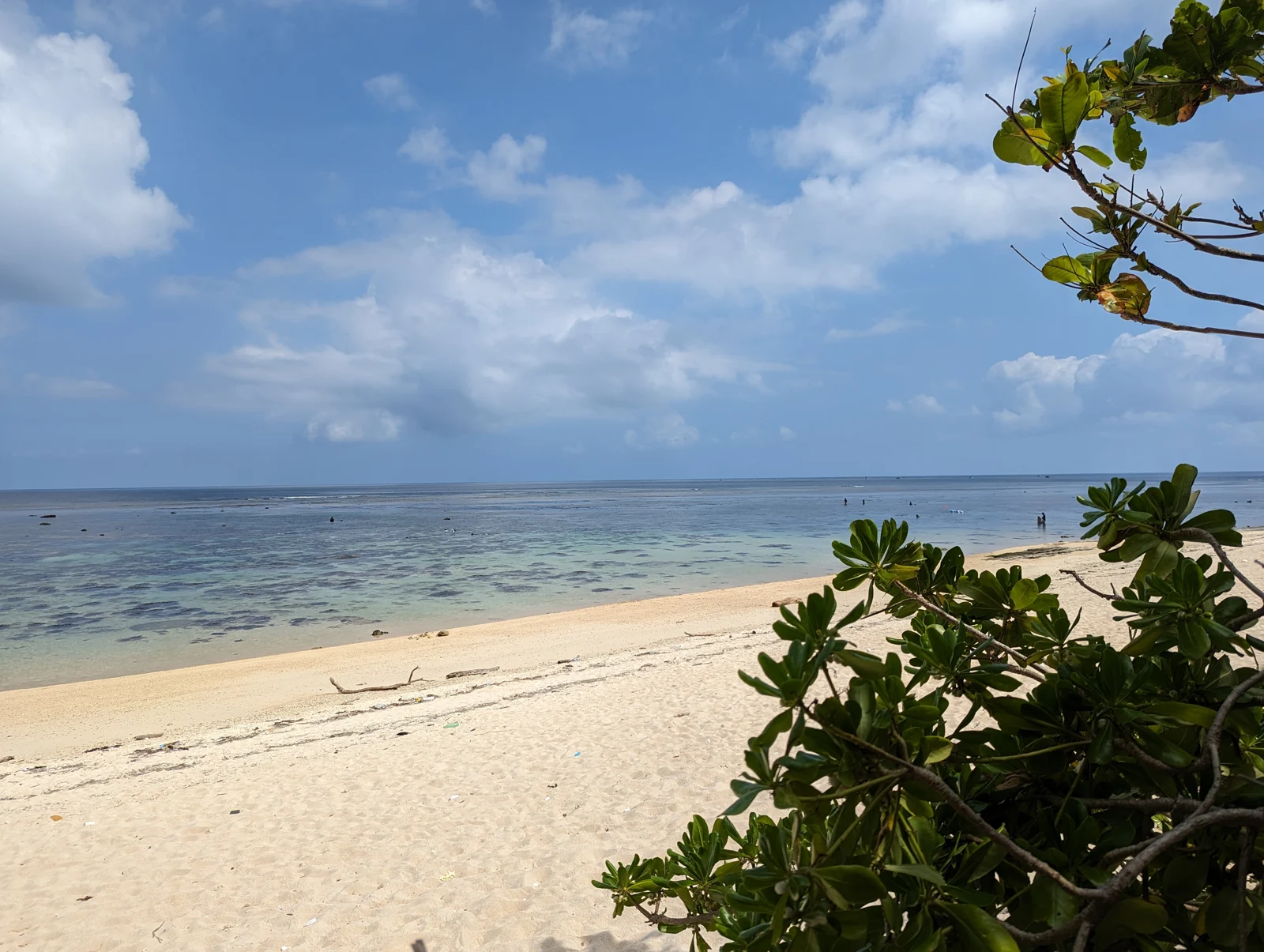
A Ryukyu manuscript
Surviving versions carry different dates and textual details; the story is larger than a single edition.

OUR HERITAGE / THE YOTSUBA PERSPECTIVE
食養生From the royal tables of Ryukyu to the way we care for ourselves today. A story of food, plants and thoughtful preparation.
Open the storyGozen Honzo · an artistic interpretation
01 / A BOOK FOR THE ROYAL TABLE
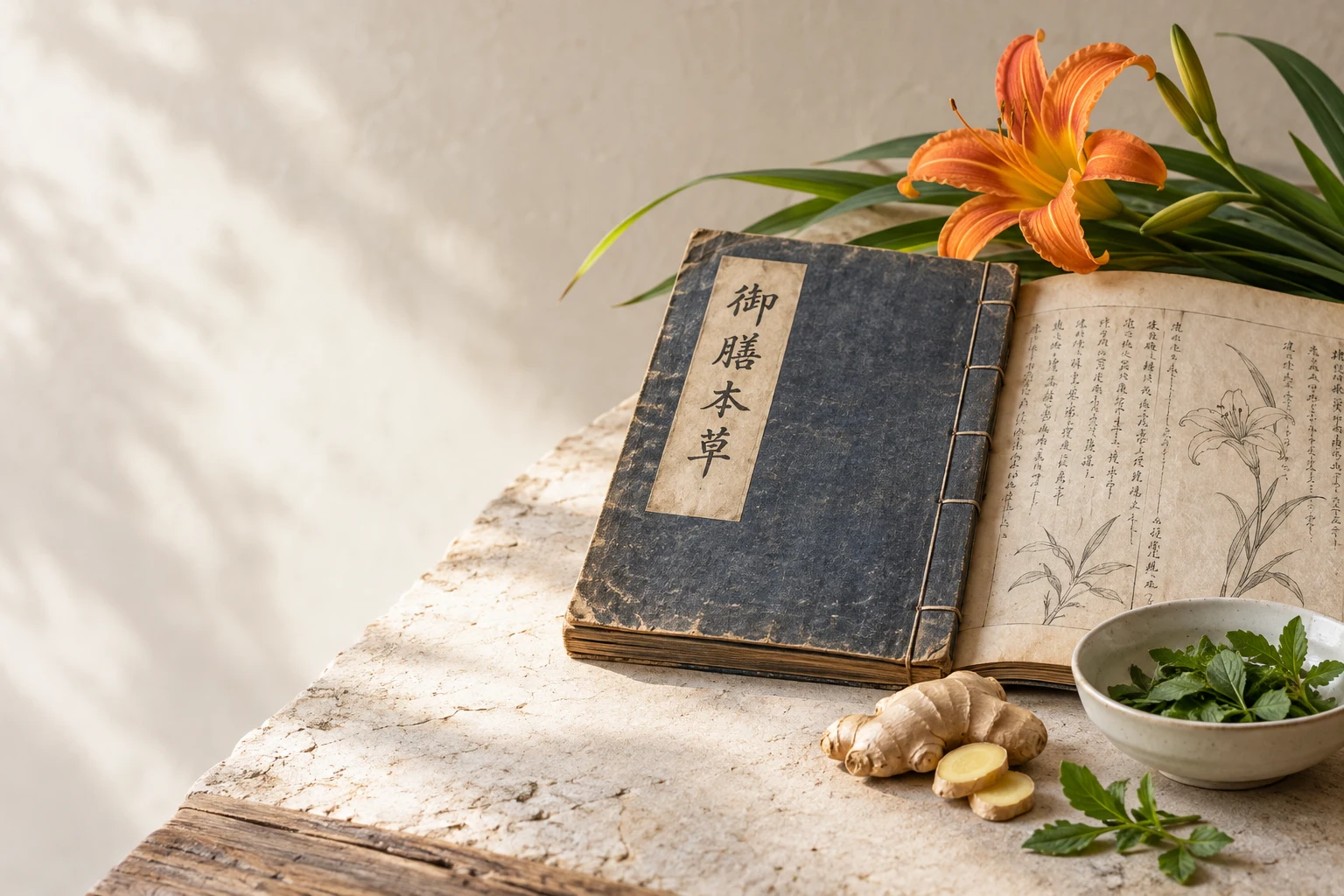
Gozen Honzo — 御膳本草, also read as Gyozen Honzo, is a food-materia-medica text associated with the royal court of the Ryukyu Kingdom. Physician Tokashiki Tsūkan brought together knowledge of foods, their preparation and their combinations.
Its pages describe around 300 ingredients: grains, vegetables, fruits, mushrooms, seaweeds, fish and other foods. It is a window into an early nineteenth-century understanding of eating and caring for the person.
Surviving versions carry different dates and textual details; the story is larger than a single edition.
Everyday ingredients are considered alongside preparation, combinations and the circumstances of eating.
The Sakamaki/Hawley Collection holds manuscript copies, made accessible through university archives.
02 / A CULTURE OF EVERYDAY CARE
Okinawan food culture gives nourishment a place within daily life: what is available, how it is prepared and the care expressed through a meal.
Attention to meals, eating habits and the person. A dietary expression of yōjō — nurturing health through daily living.
An Okinawan cultural expression for something regarded as medicinal, reflecting the place of food in local traditions of care.
Often translated as “medicine for life”: a way to speak about the restoring value of good food and the experience around it.
We carry these ideas forward as a food culture and a philosophy of attention. Historical descriptions are read in their own context, alongside modern nutritional knowledge.
03 / BOTANICAL CONNECTIONS
Some connections lead directly to the food manuscript. Others belong to the wider botanical tradition. Each deserves its own story.
THE RYUKYU FOOD STORY
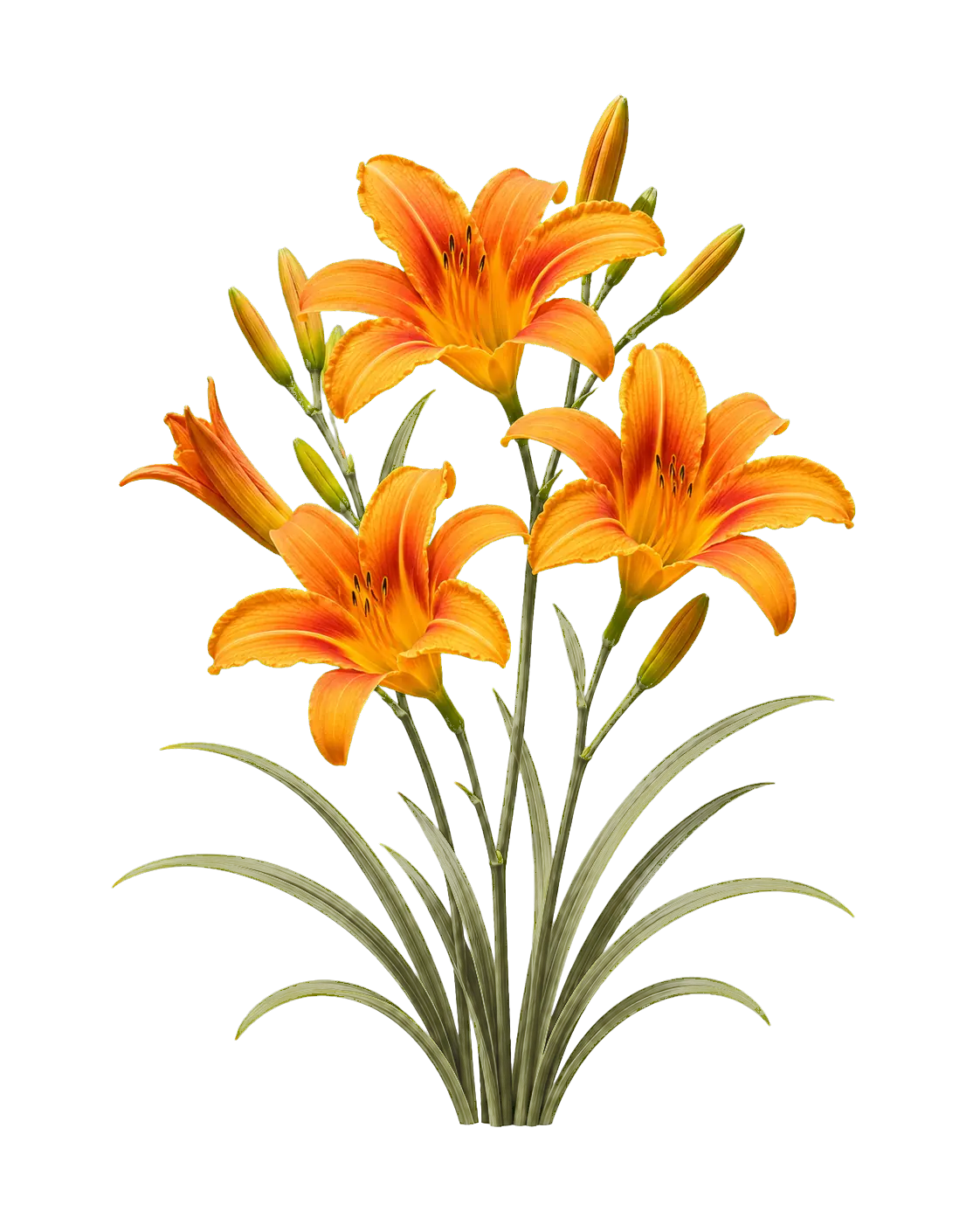
An entry for kuwasau in Gozen Honzo describes edible young leaves and flowers. It places this plant within the food culture of the Ryukyu Islands.
Its association with sleep belongs to a developing tradition: researchers distinguish the early manuscript from a 1931 adaptation that explicitly mentions sleeplessness. Modern research asks further questions about particular daylily preparations.
GABAVEN includes daylily powder within a contemporary composition of fermented GABA, Venetron®, passion flower and selected plant extracts.
Discover GABAVEN04 / THE WAY WE CARRY IT FORWARD
Which plant? Which part? Prepared in what way? Combined with what? These questions connect an interest in tradition with the work of contemporary formulation.
At Yotsuba, ingredient identity, preparation, composition and quality sit alongside the everyday foundations of food, movement, rest and connection. Our formulas are contemporary food supplements, each assessed on its own composition and evidence.
Our ME-BYO philosophyCONTINUE THROUGH THE ISLANDS
Explore Okinawa's longevity heritage, island ingredients and Yotsuba's perspective on everyday care.
Explore Okinawa Blue Zone