YOTSUBA JAPAN / OSAKAFROM THE YOTSUBA EDITORIAL DESKThe journal
Yotsuba Japan Times

THE JOURNAL / 31 STORIES

Choose a story.
Take a closer look.

Ingredients, research and perspectives from Japan. Open the stories that interest you, and close them when you are ready to explore more.

01EVENT REPORT / NAKANOSHIMA QROSSEVENT · 6 NOVEMBER 2026Japan × Italy. Engineering a healthier, longer life.From medical devices to tissue models and new ways of seeing inside the body: our report from the Japan–Italy healthy longevity forum in Osaka.Read articleClose article

YOTSUBA JAPAN field report · Event: 6 November 2026 · Published: 8 November 2026.

EVENT REPORT / NAKANOSHIMA QROSSEVENT · 6 NOVEMBER 2026 · 3 MIN READ

Japan × Italy. Engineering a healthier, longer life.

From medical devices to tissue models and new ways of seeing inside the body: our report from the Japan–Italy healthy longevity forum in Osaka.
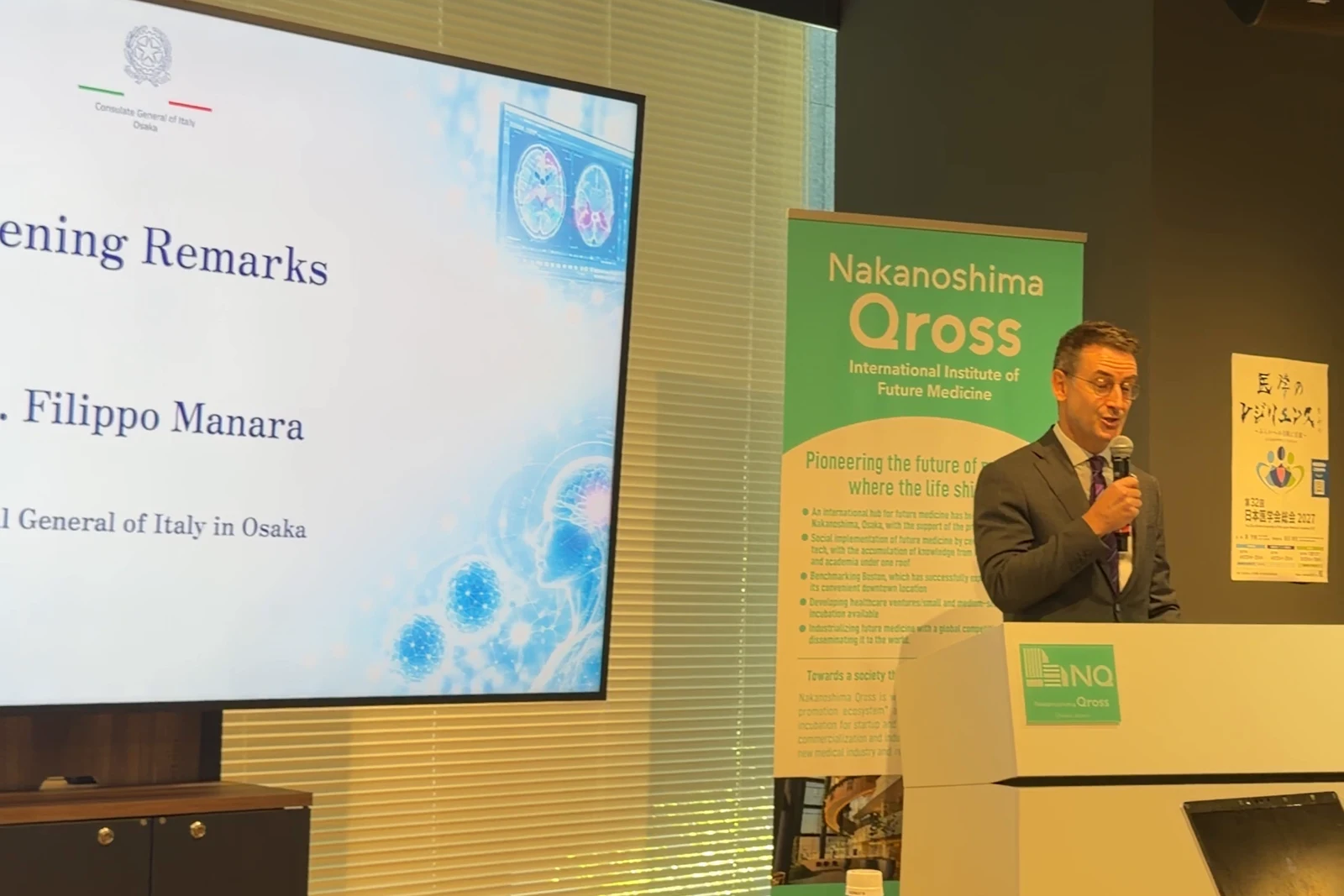
Italy’s Consul General Filippo Manara giving the opening remarks at Nakanoshima Qross on 6 November 2026
Opening remarks by Filippo Manara, Consul General of Italy in Osaka. Original frame from YOTSUBA JAPAN’s recording, 6 November 2026.

What helps turn a longer life into a healthier one? On 6 November, YOTSUBA JAPAN returned to Nakanoshima Qross to hear that question explored through medicine, engineering and international exchange.

We attended the Healthy Longevity and Biomedical Engineering Innovation Forum at Qrossover Lounge Yume. Organised by the Consulate-General of Italy in Osaka, Nakanoshima Qross and Professor Giuseppe Pezzotti, it marked 160 years of diplomatic relations between Italy and Japan.

Our recordings bring back the atmosphere of the room: opening remarks, research presentations and a succession of questions about how technology might help preserve health and function.

Two countries, one shared question

The programme opened with Consul General Filippo Manara and a keynote by Professor Yoshiki Sawa. Researchers from Politecnico di Torino joined the Japanese participants; Dr Kenji Shibuya, co-president of the International Society of Longevity Medicine and Wellness and CEO of Medical Excellence JAPAN, was also on the programme.

For us, the interesting shift was from longevity as a number to the capabilities that make a longer life worthwhile. How do we understand a change earlier? How do we preserve function? Which tools can make care more useful in daily life? Those questions gave the technical sessions a human context.

Devices, tissue models and intelligent technologies

Professor Alberto Audenino’s scheduled topic linked implantable medical devices with regulation and cost. Professor Gianluca Ciardelli brought together biotechnology and nanotechnology through organ and tissue models. Professor Filippo Molinari addressed intelligent technologies across different biological scales.

Together, these themes offered a useful way to read the field. A device needs a path into care. A tissue model needs to answer a meaningful question. A computational tool needs to be judged by what it helps a clinician or researcher understand.

We left with a reading list rather than a single headline: look more closely at the model, the measurement and the intended use. That is where an ambitious technology becomes easier to assess.

Seeing, testing and delivering differently

The demonstrations added three perspectives: Professor Mara Terzini on preclinical testing of surgical devices, Professor Chiara Tonda Turo on injectable hydrogel platforms, and Professor Kristen Mariko Meiburger on imaging approaches that combine light with sound.

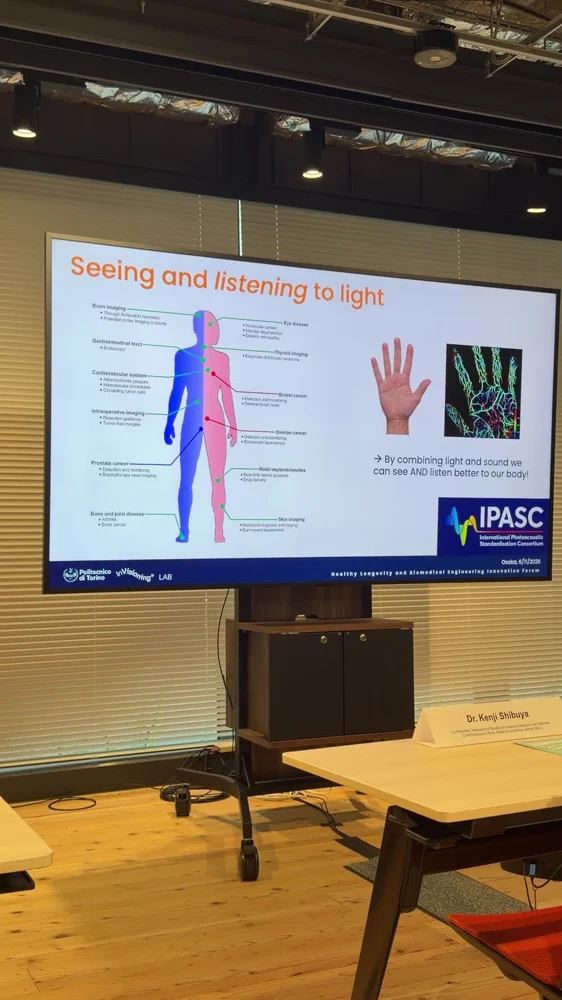
Our recording of the final imaging presentation captures the phrase “Seeing and listening to light”. It is a memorable invitation to think about the body through different signals, and about what each measurement can reveal.

This was one of the most engaging threads of the day: different technologies are useful because they answer different questions. Understanding that purpose is the starting point for understanding their promise.

FROM THE PRESENTATIONS

Seeing and listening to light

A presentation slide on light and sound imaging, recorded at the Japan–Italy forum
A frame from the imaging presentation, IMG_4809. Recorded by YOTSUBA JAPAN on 6 November 2026; slide content belongs to its presenter.

The conversations we want to continue

Networking was part of the programme, followed by closing remarks from Professor Pezzotti and an optional facility tour. That space for exchange mattered alongside the lectures: a forum can connect disciplines that usually work with different methods and vocabularies.

At YOTSUBA JAPAN, our interest in healthy longevity begins with everyday life: remaining active, curious and able to take part. Attending these events helps us ask more informed questions about the wider scientific landscape in which we work.

The October meeting with Denmark focused our attention on the route from discovery to development. This Japan–Italy forum widened that view to the tools that help us observe, test and support human function. We will continue sharing the ideas that deserve a closer look.

Session themes and speakers follow the published programme. Photographs are original frames from YOTSUBA JAPAN’s event recordings.

END OF ARTICLE
02MANUFACTURING NOTEBOOK / QUALITYEDITORIAL REVIEW · 30 OCTOBER 2026The quality of a single tablet.From incoming ingredients to the review of a finished batch: the measurements, people and records behind a carefully made supplement.Read articleClose article

Manufacturing notebook · Original photography from the Yotsuba Japan production archive, with educational illustrations and references reviewed on 30 October 2026.

MANUFACTURING NOTEBOOK / QUALITYEDITORIAL REVIEW · 30 OCTOBER 2026 · 6 MIN READ

The quality of a single tablet.

From incoming ingredients to the review of a finished batch: the measurements, people and records behind a carefully made supplement.

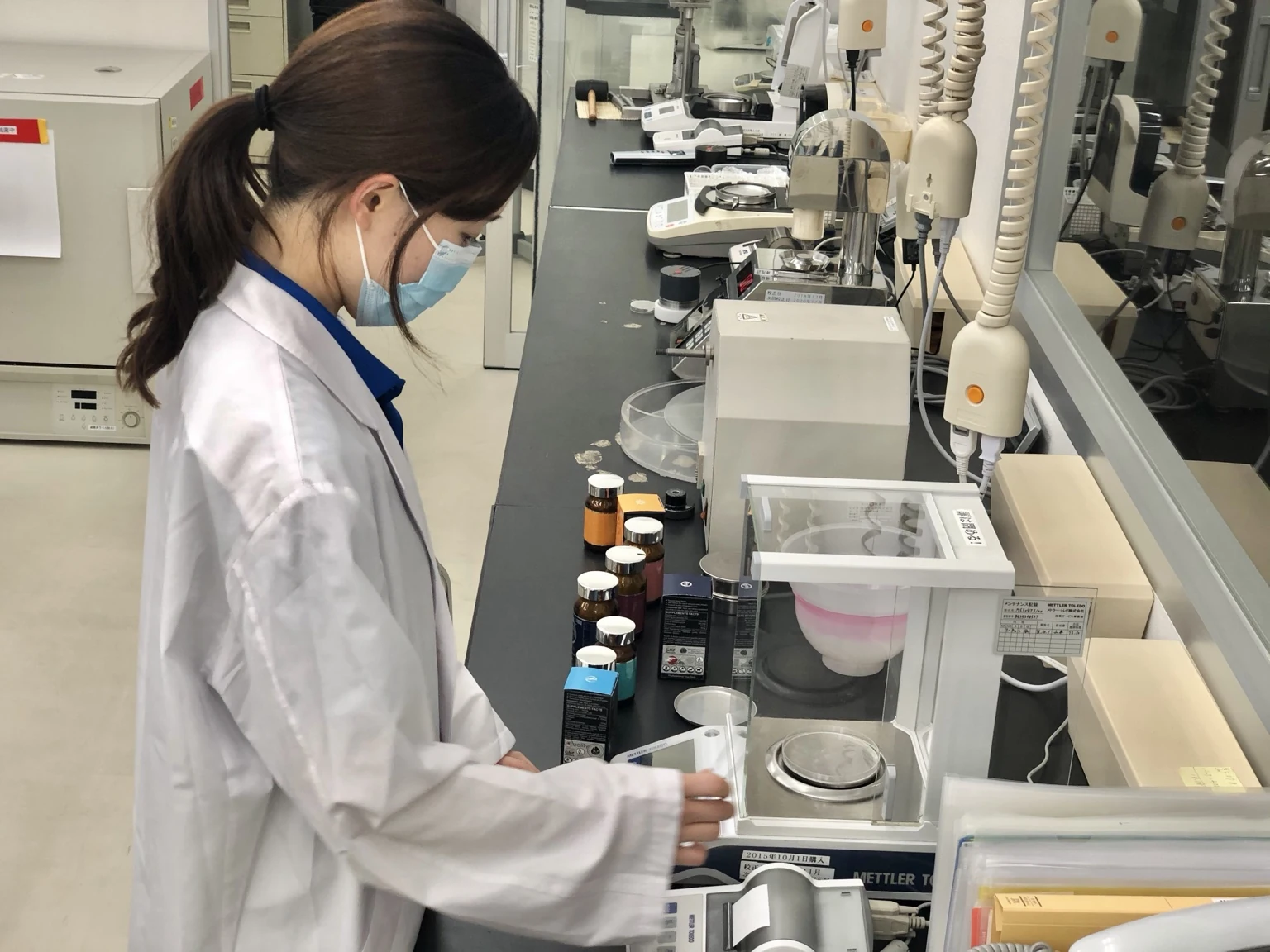
A laboratory specialist beside analytical balances and Yotsuba Japan product packaging at a Japanese manufacturing partner
From the Yotsuba Japan production archive. Laboratory work beside analytical balances and Yotsuba packaging. Original photograph supplied by Yotsuba Japan.

A finished supplement looks reassuringly simple: a bottle, a label and a daily serving. Inside production, that simplicity is the result of many separate decisions. A powder must be suitable for processing; a tablet must retain its structure during handling; the relevant checks must be reviewed.

Our laboratory photographs bring that work into view. They were taken at a Japanese manufacturing partner, where sample handling, analytical balances and product packaging share the same working environment. They are part of the Yotsuba production archive.

This notebook follows the questions behind those scenes. What is being checked? What does a measurement tell us? And how do ingredients, equipment, people and records become one system of manufacturing quality?

THE MANUFACTURING PATH / AN OVERVIEW

From incoming material to a reviewed batch

  1. Receive

    Identify the material and connect it with its lot and specification.

  2. Develop

    Prepare trial samples and evaluate the chosen production process.

  3. Check

    Assess the properties relevant to the product and its form.

  4. Review

    Connect results with records before the batch proceeds.

A simplified editorial overview. The sequence and test plan depend on the material, process and finished product.

Before a material becomes an ingredient

Quality work starts at the receiving stage. An incoming material has an identity, a supplier lot and a specification. Those details connect the material used in production with its supporting documentation.

Our partner’s published programme describes checks of raw materials as well as products. Inspection results act as a condition for continuing production. Quality review becomes a practical step in the workflow.

A useful specification gives the laboratory a defined basis for deciding whether a material is suitable. The examination needs to reflect the material and its intended use.

A formula must also be made consistently

The quantities on a formulation sheet must become a product that can be manufactured repeatedly. Development therefore includes trial samples and checks using production equipment. A small laboratory sample cannot answer every practical question about manufacture.

The manufacturing background reviewed for this article describes laboratory prototyping, production-machine trials and testing before commercial manufacture. These stages connect the intended composition with the physical form people eventually handle.

For a brand, this is an important part of formulation work: ingredients, process and presentation need to be considered together.

FORMULATION / THE PHYSICAL FORM

A powder becomes a presentation

An illustrative still life of plain tablets, empty capsule halves, powder and an amber jar with Yotsuba packaging proportions and a silver cap
AI-generated conceptual still life of generic dosage forms. The objects and quantities are illustrative.

Five measurements. Five different questions.

The published production description identifies five areas of testing: microbiology, moisture, disintegration, hardness and mass. Together they illustrate why appearance alone cannot tell the whole quality story.

Each result has a particular meaning. Consistent mass is a physical characteristic; on its own, it does not establish the amount of every ingredient in each unit. A microbiological examination addresses the organisms covered by its method. These measurements complement one another.

THE LABORATORY / FIVE AREAS OF EXAMINATION

What is each check asking?

  1. Microbiology

    What does the specified microbiological examination detect?

  2. Moisture

    Does the measured moisture meet the intended specification?

  3. Disintegration

    Does the unit break down under the specified test conditions?

  4. Strength

    Is the tablet’s mechanical integrity suitable for its intended use?

  5. Mass

    Does the measured mass meet the defined requirements?

These categories show what a test evaluates. The product’s specification defines the applicable method and acceptance criteria.

Strong enough for the journey

A tablet encounters mechanical stresses during manufacture, coating, packaging and transport. Its structure must be appropriate for those demands. Mechanical testing helps evaluate this aspect of the dosage form.

The term tablet hardness is widely used in production. Pharmacopoeial discussion more precisely refers to breaking force: the force required to break a tablet under a defined arrangement. The method and the tablet’s geometry matter when interpreting a result.

Strength must also be considered alongside the intended behaviour in liquid. The aim is a suitable balance for the formulation, rather than the highest possible number.

What happens when the tablet meets liquid?

Disintegration testing examines whether a tablet or capsule breaks down within a specified time under defined conditions in a test liquid. The Japanese Pharmacopoeia makes an essential distinction: disintegration does not mean that the dosage unit, or its active constituent, has completely dissolved.

Dissolution asks about a substance entering solution. Absorption concerns its passage into the body. These are related stages, but one test does not establish all the others.

The Japanese health-food association has specifically emphasised disintegration testing within its GMP programme for tablet- and capsule-type products. The method and acceptance criteria need to suit the product.

THREE CONCEPTS / DIFFERENT QUESTIONS

Breaking apart is one stage of the story

  1. Disintegration

    The dosage unit breaks down in the test liquid.

  2. Dissolution

    A substance enters solution.

  3. Absorption

    A substance crosses into the body.

A simplified conceptual sequence, not a prediction of timing or uptake. Disintegration testing does not establish complete dissolution or absorption.

The shell and coating belong to the design

Capsule shells and tablet coatings contribute to the finished presentation. Depending on the material and design, a coating can help with handling, mask an unwelcome taste or odour, or protect the preparation.

The production capabilities reviewed for this notebook include different hard-capsule materials and tablet-coating processes. These are development choices. A shell alone does not establish that a product is enteric or has controlled release.

The useful question is specific: which shell or coating is used in this formulation, for what purpose, and how has the resulting presentation been evaluated?

Hygiene includes the equipment between batches

The production environment is part of the quality system. Our partner’s quality information describes checks of equipment, machinery and the factory itself, alongside examinations of materials and products.

The archived factory overview adds a practical detail: equipment is disassembled for thorough cleaning, and washed parts are dried. It also describes hygiene inspections extending from machinery to frequently touched surfaces.

These activities explain some of the less visible work around a production run. The condition of the working environment deserves attention alongside the sample on the laboratory bench.

FROM THE YOTSUBA PRODUCTION ARCHIVE

Inside the laboratory

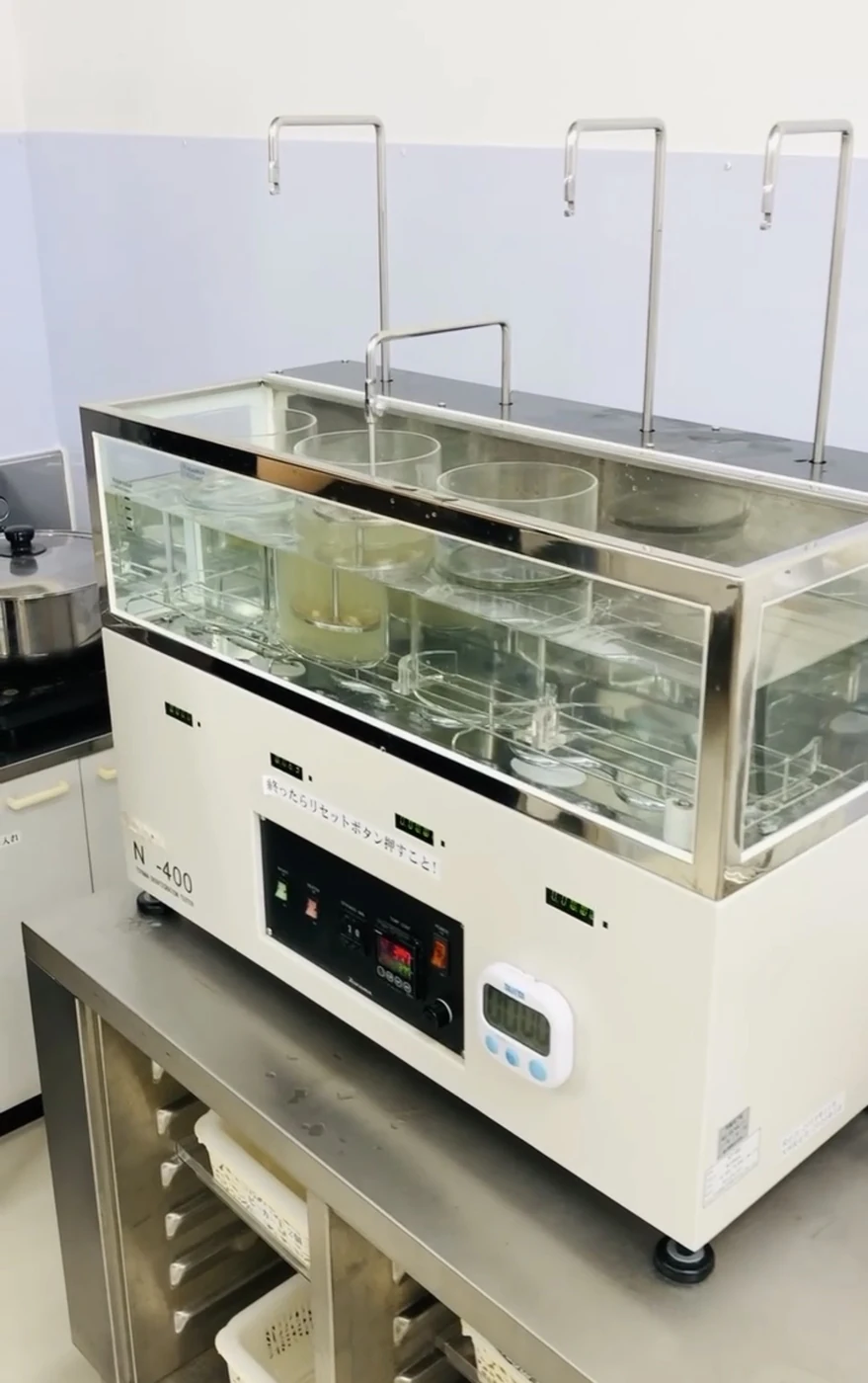
  1. Liquid-bath laboratory apparatus photographed during a Yotsuba production visit

    Equipment in context

    Liquid-bath apparatus photographed during the factory visit. The image records equipment rather than a reported batch result.

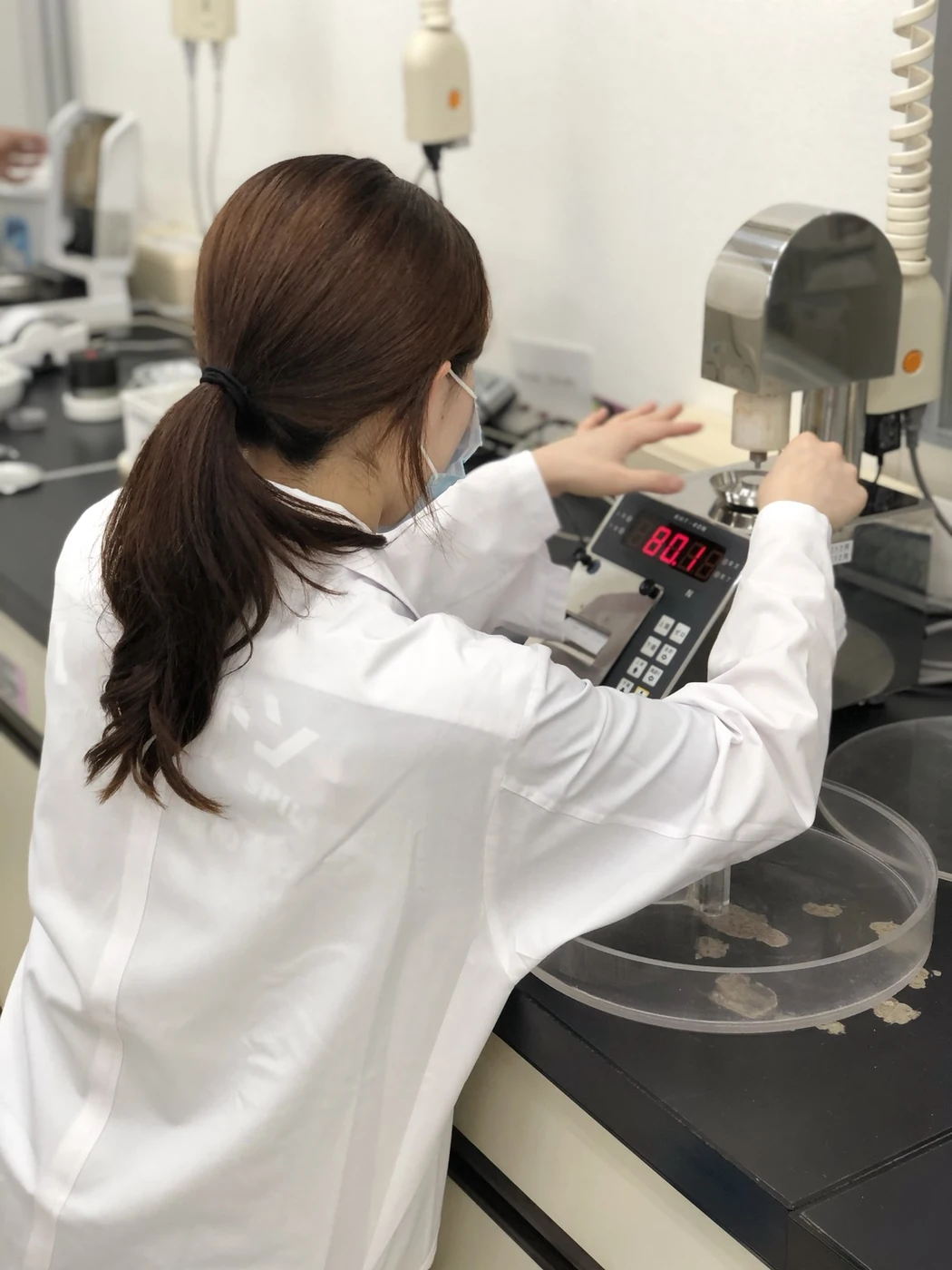
  2. A laboratory specialist handling a sample on a benchtop instrument

    Working with the sample

    A specialist handling a sample at a laboratory instrument. Original field photography supplied by Yotsuba Japan.

Laboratory equipment and sample handling, photographed during a visit to our Japanese manufacturing partner. Yotsuba Japan production archive.

People and instruments work together

Published manufacturing material describes visual inspection of individual tablets and capsules, alongside instrumental checks. An operator examines appearance; a laboratory instrument measures a defined property. These observations serve different purposes.

The archived overview also describes a final metal-detector check. This targeted examination for metallic contamination complements other checks.

The useful view of inspection is a combination: trained observation, suitable instruments and clear decisions about what their results mean.

Why records matter as much as a reading

A number on a screen becomes meaningful when its context can be recovered: the sample, method, instrument and acceptance criterion. Batch and laboratory records connect a result with the material or product it represents.

Good Manufacturing Practice addresses manufacturing and quality control throughout the process, from receiving materials to dispatching the finished product. Its value lies in the way the system is operated and documented.

Manufacturing quality and clinical evidence answer different questions. A controlled process helps a product meet its specification. Evaluating a health outcome requires evidence relevant to that outcome and preparation.

A lot number keeps the story connected

A batch identifier allows a finished product to be followed back through its manufacturing history. The production materials reviewed for this article describe retained samples and follow-up checks of identifiable lots after dispatch.

Retained samples provide a physical reference if a later question arises. Records make it possible to investigate which materials and manufacturing steps belong to the lot under review.

For Yotsuba, this continuity is part of working closely with production partners. The relationship extends from development to questions that may arise after a product has left the factory.

The meaning of a carefully made supplement

The ingredient list is a useful starting point. Manufacturing adds further questions: can the chosen form be produced consistently, do its properties meet the intended specification, and can the history of a batch be followed?

Our production photographs show the people, samples and equipment behind that work. The educational diagrams explain what each check addresses. Together they offer a closer view of the care involved in bringing a formulation into its finished form.

Manufacturing background was checked against our production partner’s published quality materials and archived factory overview. The photographs document a factory visit, rather than results from a named batch. Pharmaceutical references explain test principles; product specifications determine the applicable methods and acceptance criteria.

END OF ARTICLE
03JAPAN DISPATCH / KOBEEVENT · 17–18 & 24–26 OCTOBER 2026The future of longevity. Five days in Kobe.Our extended report from MIRAI TECH CITY: cellular identity, regenerative medicine, emerging technologies and the people bringing longevity research closer to practice.Read articleClose article

Yotsuba Japan field report, expanded 30 October 2026. Event coverage: 17–18 and 24–26 October. Programme topics are distinguished from independently published research.

JAPAN DISPATCH / KOBEEVENT · 17–18 & 24–26 OCTOBER 2026 · 6 MIN READ

The future of longevity. Five days in Kobe.

Our extended report from MIRAI TECH CITY: cellular identity, regenerative medicine, emerging technologies and the people bringing longevity research closer to practice.

Participants gathered on stage beneath the Summit II screen at MIRAI TECH CITY in Kobe
The people behind the conversation. Group photograph at Summit II, supplied by Yotsuba Japan.

What does a longer life mean if strength, mobility and independence do not follow? We came to MIRAI TECH CITY with that question in mind. Representing YOTSUBA JAPAN, we wanted to understand how researchers and founders are approaching healthy ageing, and which ideas deserve closer attention as the field develops.

Our visit covered five days: Summit I on 17–18 October, Summit II on 24–25 October and Demo Day on 26 October. Together, they offered a wider perspective than a single keynote could provide: the science, the technologies being developed around it and the conversations needed to move an idea forward.

This expanded report brings those strands together. The photographs are from our own event collection; the scientific context below links back to published sources.

A city where research meets development

The programme moved between Kobe University’s Integrated Research Center, Kobe Portopia Hotel and Orbis Hall at the Kobe Fashion Museum. The setting made the relationship between university research, clinical expertise and new ventures tangible.

For us, the value lay in hearing different disciplines ask questions of one another. A researcher may focus on a mechanism; a clinician on meaningful patient outcomes; a developer on consistency, manufacturing and use. A convincing health technology needs those conversations to meet.

That is also why the moments between sessions mattered. Meeting people working from different starting points helped us look beyond a headline and towards the work behind it.

ON LOCATION / KOBE

The setting for the conversation

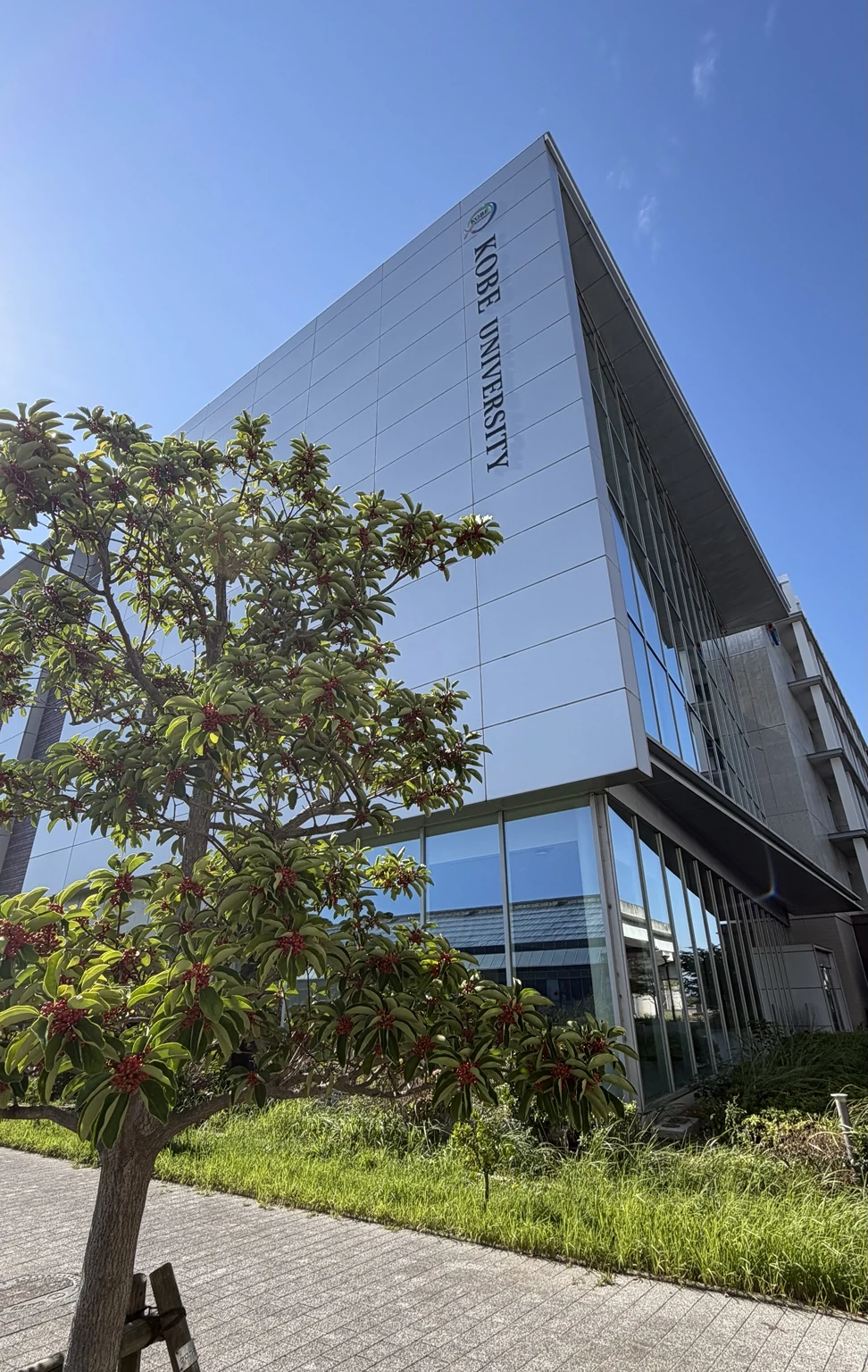
Kobe University building photographed beneath a clear blue sky
Kobe University. Original photograph supplied by Yotsuba Japan.

Cellular identity: another way to read ageing

Motoshi Hayano’s programme keynote explored an information-based view of ageing. His coauthored 2023 Cell paper offers a scientific foundation for understanding this perspective.

DNA carries the genetic sequence, while epigenetic regulation helps determine how cells use that information. The paper investigated changes to this regulation in experimental cells and mice. Its results linked disrupted epigenetic information to ageing-related changes and examined the effects of partial reprogramming.

The striking idea is that studying ageing involves more than identifying accumulated damage: it also involves understanding how a cell maintains its identity. The important boundary is equally clear. These experimental findings do not demonstrate rejuvenation in people, nor do they establish an effect of an oral NMN preparation.

Our takeaway is a research question rather than a promise: which changes in biological regulation can be measured reliably, and which interventions can improve function safely?

iPS cells: from a discovery to specific medical applications

Takayuki Aoi’s Summit I session addressed iPS-based drug discovery and cell therapy. Induced pluripotent stem cells are mature cells reprogrammed to a state from which they can develop into many specialised cell types. They provide tools for modelling disease, screening medicines and developing regenerative treatments.

The connection to Kobe is also personal to the history of the field: Shinya Yamanaka, whose group first generated iPS cells in 2006, received his medical degree from Kobe University in 1987. This is historical context, rather than a claim that he spoke at the event.

In 2026, Japan’s AMED reported conditional and time-limited approvals for iPS-derived therapies targeting ischaemic cardiomyopathy and Parkinson’s disease. The significance is specific: defined cell preparations have reached a regulated clinical pathway for particular diseases. Continued evaluation remains part of that pathway.

Retinal research offers another important example. Masayo Takahashi’s work has investigated transplantation of iPS-derived retinal tissue. Here, the development challenge includes cell identity, quality control, reproducible cultivation and long-term follow-up. Regenerative medicine advances through these concrete steps, each attached to a particular disease and treatment.

The environment around a cell matters too

Eleanor Sheekey’s programme session focused on the extracellular matrix and tissue ageing. It widened the discussion from what happens inside a cell to the environment surrounding it.

For an editorial team interested in collagen and proteoglycans, this opens a useful line of inquiry: how do the structural setting of a tissue and the behaviour of its cells influence one another? It also helps explain why a single molecule rarely tells the whole story.

Our next step is to read the relevant experiments closely: which tissue was investigated, what changed and which function was measured? A conference topic can guide that reading, but cannot by itself establish that consuming a particular ingredient changes the tissue environment.

AI, gene technologies and the limits of prediction

The wider programme included gene-based approaches, AI-assisted medicine and Masataka Watanabe’s discussion of brain circuitry and artificial systems. These subjects spanned very different stages of development.

We read them through a common set of questions. Is the result a computational prediction, a laboratory experiment, a device demonstration or an observation in people? What was compared, and for how long? Can the result be reproduced?

These distinctions make ambitious ideas easier to understand. A system that helps generate a hypothesis still needs experimental validation. A prototype still needs evaluation in its intended setting. A vision for a future technology describes a direction of work, rather than a capability already available to patients.

The second weekend: what turns an idea into practice?

Summit II broadened the conversation to evidence standards, translation, regulation and the development of new ventures. Demo Day then brought founder presentations and questions into the foreground.

For Yotsuba, this was a reminder that the work after a discovery is substantial. An interesting mechanism needs a defined material or intervention, a reliable process and evidence appropriate to its intended use. The ability to repeat a result matters as much as the first observation.

The same discipline applies when we evaluate an ingredient: its identity, specification, dose and stability must be considered alongside the research. A promising paper becomes useful when we understand precisely what it tested.

BETWEEN THE SESSIONS

Science is also a conversation

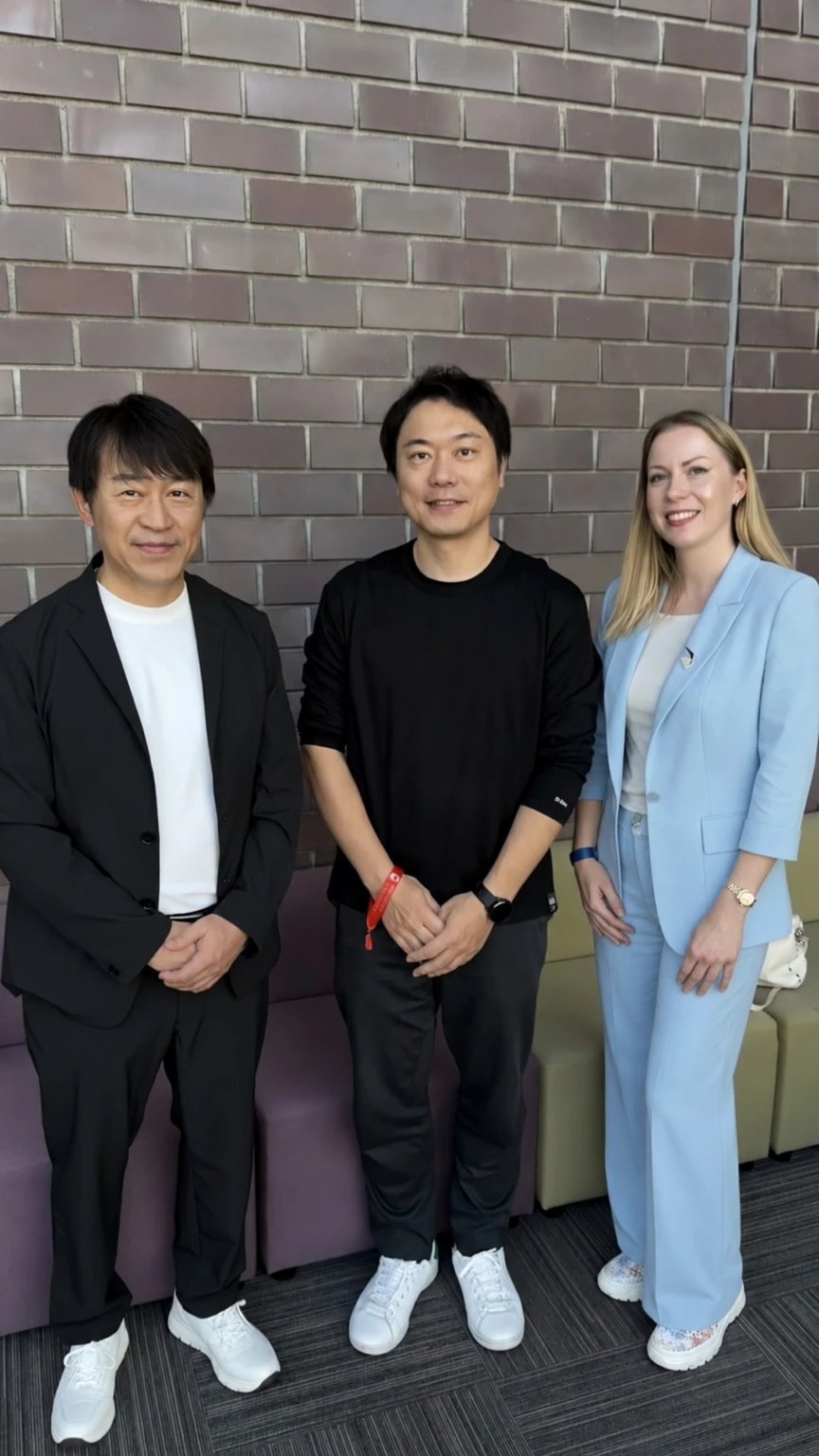
Three people photographed together during Yotsuba Japan’s visit to MIRAI TECH CITY
A moment from Yotsuba Japan’s event collection. Photograph supplied by Yotsuba Japan.

What we bring back to Yotsuba Japan

Our lasting impression is of a field asking increasingly connected questions. Cellular regulation, tissue structure, medical technology and everyday function are being discussed together. The most interesting developments are those that explain both their potential and the work still required.

For us, healthy ageing remains connected to living well: maintaining the capacity to move, work, learn and take part in daily life. That perspective shapes which research we follow and the questions we ask about future ingredients and formulations.

We return from Kobe with new conversations to continue and a clearer editorial responsibility: to describe discoveries precisely, show where the evidence stands and keep the complete formulation in view. The medical technologies discussed here belong to their own research and regulatory pathways; their results are not evidence for a nutritional supplement.

Our journal will continue following Japanese research with that combination of curiosity and care.

END OF ARTICLE
04FORMULATION / BIOAVAILABILITYSCIENTIFIC PERSPECTIVE · 24 OCTOBER 2026From formula to absorption.The journey of an ingredient — and why delivery technology is part of the formulation.Read articleClose article
FORMULATION / BIOAVAILABILITYSCIENTIFIC PERSPECTIVE · 24 OCTOBER 2026 · 3 MIN READ

From formula to absorption.

The journey of an ingredient — and why delivery technology is part of the formulation.

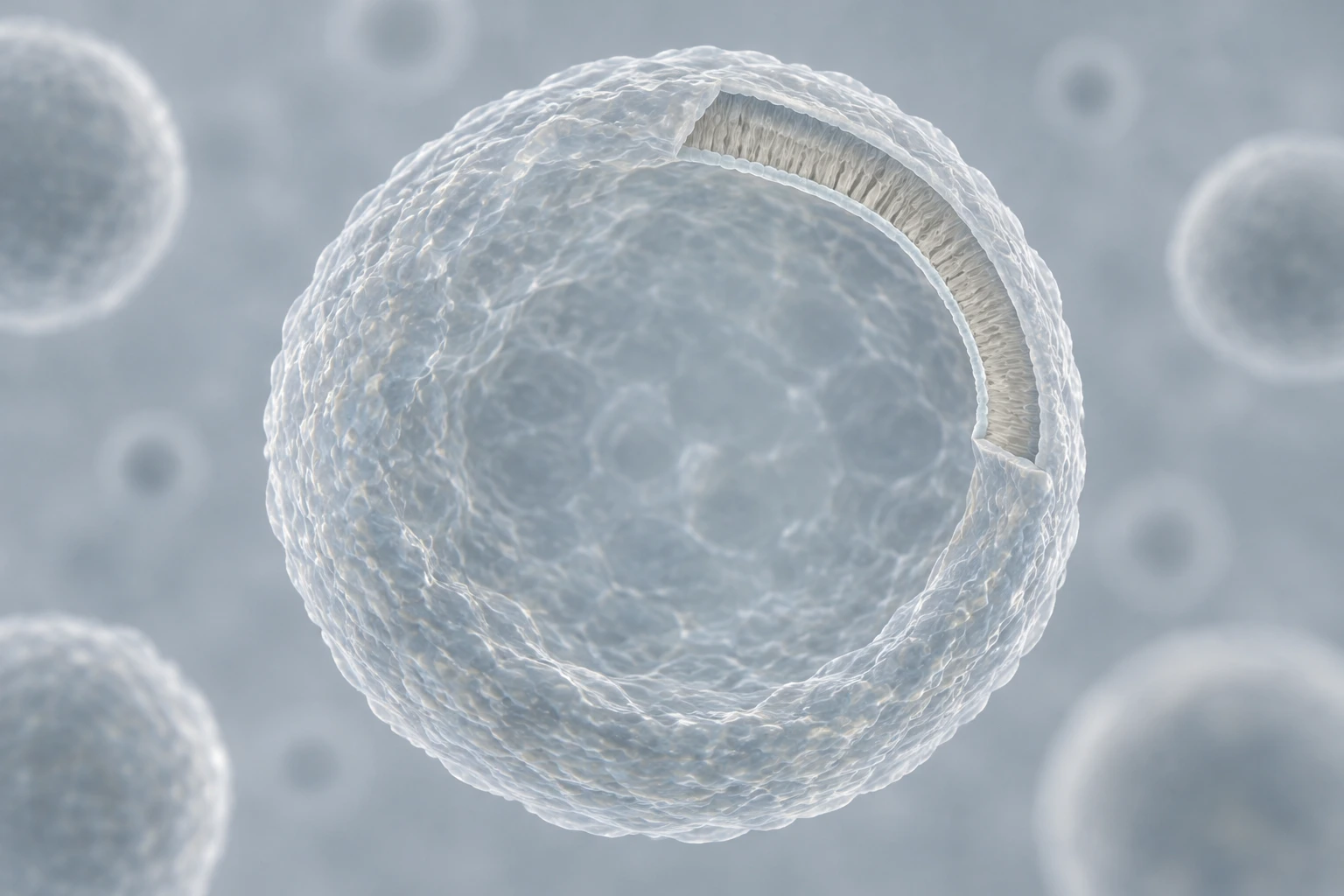
Scientific visualisation of a liposome in an aqueous environment, with a thin membrane shown in a schematic cutaway
Liposomal architecture · AI-generated scientific visualisation of an aqueous vesicle and its membrane. The cutaway is schematic; this is not a microscopy image or a particle-size measurement.

A product label introduces us to familiar names: vitamin C, iron, a botanical extract. Beside each one is an amount in milligrams. This is where our understanding of a formula begins.

Inside the body, an ingredient has a further journey. It must be released from its preparation and encounter the digestive environment before it can become available for absorption. The form of an ingredient is therefore a question worth exploring alongside its amount.

ABSORPTION / PUBLISHED DATA

Two oral preparations, one measured outcome

The area under a plasma concentration–time curve summarises exposure over the sampling period. Here, the published mean values compare two oral vitamin C preparations.

Plasma vitamin C AUC₀–₄h · mg·h/dL

Two oral preparations, one measured outcomeUnencapsulated oral vitamin C: 7.6, standard error 0.4; Oral liposomal vitamin C: 10.3, standard error 0.9. Plasma vitamin C AUC₀–₄h · mg·h/dL. Bars show means; whiskers show standard errors: 7.6 ± 0.4 and 10.3 ± 0.9 mg·h/dL. The axis begins at zero.036912Unencapsulated oral vitamin C7.6Oral liposomal vitamin C10.3

Bars show means; whiskers show standard errors: 7.6 ± 0.4 and 10.3 ± 0.9 mg·h/dL. The axis begins at zero.

Davis, Bell and colleagues · 2016 · 11 adults · single 4 g vitamin C dose per condition · randomised repeated-measures study. Selected oral conditions, 0–4 hours; p = 0.002 for the AUC comparison. Higher exposure did not confer greater protection in the oxidative-stress test. The experimental dose describes the study, not a recommended serving. Original study · Results

Milligrams and the body’s response

Vitamin C illustrates why intake and absorption are different measurements. According to the US National Institutes of Health, approximately 70–90% is absorbed at moderate intakes of 30–180 mg per day. At doses above one gram per day, the absorbed proportion falls below 50%. The body regulates vitamin C concentrations and excretes some absorbed excess in urine.

These are observations about physiology, rather than advice on choosing a dose. They help explain the interest in delivery systems: researchers ask whether a particular preparation can change an ingredient’s behaviour.

The architecture of a liposome

A liposome is a microscopic vesicle enclosed by one or more phospholipid bilayers. The same basic organisation of lipids also occurs in cell membranes. Its aqueous interior and lipid layers offer different environments for water-soluble and lipid-soluble substances.

For a formulator, this creates an opportunity to work with structure: lipid composition, manufacturing method and the conditions under which a preparation retains its intended characteristics. A familiar ingredient acquires an additional technological dimension.

A delivery system can also be a powder

Liposomal development extends to dry preparations intended for powdered formulas. A study published in 2021 described vitamin C in a fibre-reinforced phospholipid matrix, characterised its structure and compared oral bioavailability after a single dose.

A powder, granule or capsule can therefore contain a specially prepared ingredient. Appearance alone tells only part of the story. Composition, structural characterisation and testing help explain the form within.

What an absorption study measures

Researchers can collect blood samples at defined intervals after administration and plot concentration against time. Two measurements often describe that curve: Cmax, the highest measured concentration, and AUC, the area under the concentration–time curve over the observation period.

In a 2016 study involving eleven volunteers, Janelle L. Davis, Christopher Bell and colleagues at Colorado State University compared different routes of vitamin C administration. A single four-gram dose of the studied oral liposomal preparation produced higher circulating concentrations than ordinary oral vitamin C. However, its protection against the measured oxidative-stress outcome was similar.

This distinction is useful: a change in circulating concentration and an improvement in a health outcome are separate research questions. The study concerns its particular preparation and conditions.

The preparation behind the name

Liposomal describes an approach. The detailed questions concern the substance inside, the way the system is made, its stability and the conditions in which it has been investigated.

A considered assessment connects several kinds of information: composition and structure, storage stability, behaviour under digestive conditions, human absorption studies and outcomes relevant to health. Together, these give a technology its meaning.

A formulation perspective

For Yotsuba Japan, product development connects ingredient selection, amount and preparation. Delivery technology belongs within that work, alongside raw-material quality, manufacturing control and careful interpretation of research.

Our collection offers several ways to explore this topic. Each complete formula has its own composition; research on a different ingredient or delivery system provides context rather than a measured result for the finished product.

THE YOTSUBA COLLECTION

Explore three formulations from the Yotsuba collection.

Explore the ingredient library

The cited studies examine specific preparations and conditions, rather than these complete Yotsuba formulas. The four-gram experimental dose is reported as study context, not a daily-use recommendation.

END OF ARTICLE
05JAPAN INGREDIENT WATCHEDITORIAL REVIEW · 23 OCTOBER 2026How Japan develops new ingredients for health and beauty.Seaweed, fermentation and the science of formulation.Read articleClose article
JAPAN INGREDIENT WATCH23 OCTOBER 2026 · 6 MIN READ

How Japan develops new ingredients for health & beauty.

Seaweed, fermentation and the science of formulation.

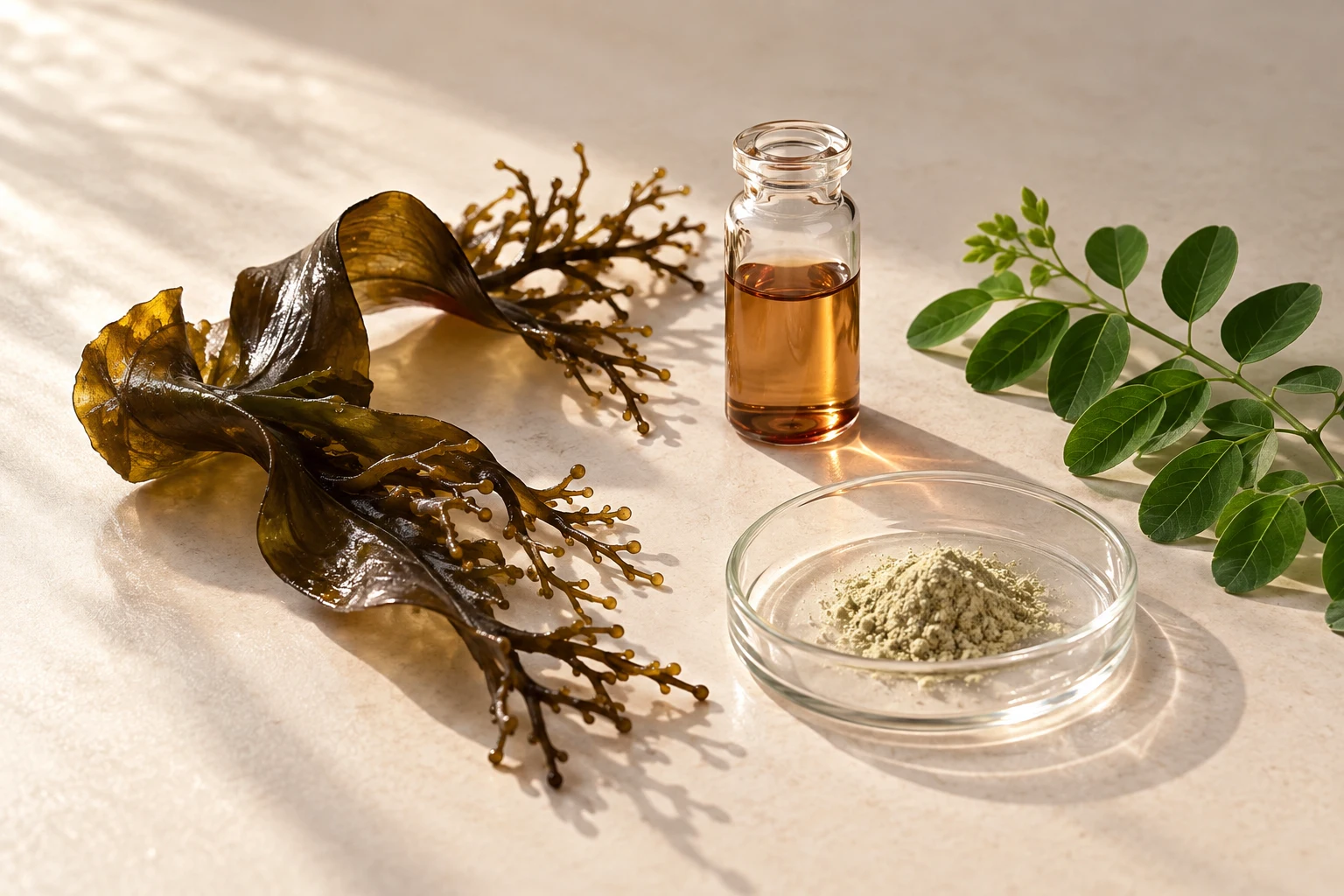
Illustrative still life of brown seaweed, a botanical sprig, a glass vial of amber extract and a powdered ingredient sample
AI-generated editorial still life. Illustrative ingredients and glassware; not a photograph of a research experiment.
THE EDITORIAL PERSPECTIVE

Seaweed, leafy plants and fermented foods have long been part of Japanese food culture. Today, researchers are studying their relationship with the microbiota, isolating valuable components and investigating new applications. This autumn’s view of Japan’s health industry brings several of these directions into focus.

01

THE PLACE / KYUSHU

A place where
ingredients begin.

Kyushu is one of the centres of this work. Young barley leaves, moringa and other plants are grown here for food ingredients. Local businesses and universities contribute to product development: a familiar plant gains a more detailed scientific description, while processing becomes part of its future formulation.

At Kyushu University, Kuniyoshi Shimizu, Associate Professor in the Faculty of Agriculture, studies biologically active substances from plants and mushrooms. His research includes applications in functional foods and cosmetics. Behind a short ingredient name lies a much longer story of cultivation, processing and investigation.

02

THE OCEAN / MICROBIOTA

The ocean meets
the microbiota.

New findings on seaweed are particularly interesting. In September 2026, an analysis of data from 1,000 people was presented at the 73rd Annual Meeting of the Japanese Society of Nutrition and Dietetics. More frequent seaweed consumption was associated with a higher relative abundance of certain gut bacteria capable of producing butyrate, a metabolite involved in supporting the intestinal barrier.

The study was observational: it identifies a relationship between dietary patterns and the microbiota, without establishing cause and effect. It provides a foundation for intervention studies that can examine the relationship more closely. These findings concern seaweed in the diet; individual extracts need their own evaluation.

PRESENTED IN JAPAN

73rd Annual Meeting of the Japanese Society of Nutrition and Dietetics · September 2026

RESEARCH NOTE / 01SEPTEMBER 2026
1,000people in an
observational analysis
Seaweed intake and gut microbiotaA conceptual seaweed specimen and bacterial forms illustrate an observed association. This is not a microscopy image or a chart of effect size.
SEAWEED IN THE DIETGUT MICROBIOTA

More frequent intake was associated with a higher relative abundance of certain butyrate-producing bacteria.

Study overview · Observational association, not proof of causation. The drawing is conceptual; no effect size is depicted.
03

THE CULTURE / FERMENTATION

Fermentation,
with a second chapter.

Another direction begins with Japanese fermentation. The plant material remaining after traditional beverage production can contain dietary fibre, protein components and other valuable substances. New technologies help find food and cosmetic uses for it. This approach is known as upcycling: a production by-product becomes the starting material for a new ingredient.

UNDER THE LENS / 02FUNDAMENTAL BIOLOGY

A cell’s own
recycling system.

A simplified view of macroautophagyCellular material is enclosed in an autophagosome. Fusion with a lysosome allows its contents to be broken down into reusable components. The schematic explains a mechanism, not the effects of an ingredient.ENCLOSURELYSOSOMAL FUSIONBREAKDOWN & REUSE
  1. Enclosure
  2. Lysosomal fusion
  3. Breakdown & reuse
Simplified mechanism of macroautophagy. Conceptual illustration; not an experimental result.

One example comes from the production of sweet-potato shochu, a Japanese distilled beverage. In collaboration with Waseda University, researchers investigated the resulting material’s influence on autophagy in cellular models. Autophagy is a natural process through which a cell breaks down and reuses some of its own components. These laboratory findings are of interest for further development; on their own, they do not demonstrate a rejuvenating effect when consumed by people.

Other developments have a longer history, including the extraction of ceramides from soy-sauce production by-products. Ceramides are lipid components important to the skin barrier. Researchers from the Fukuoka Industrial Technology Center participated in the project, in which this food-derived material became a source of ceramides for cosmetic formulations. Knowledge of fermented foods can find applications well beyond the kitchen.

ACADEMIC CONTEXT

Waseda University
Fukuoka Industrial Technology Center

04

THE BALANCE / AMINO ACIDS

The science
of balance.

In amino-acid research, compact formulations with carefully considered proportions are attracting attention. Japanese developers are investigating mixtures of the nine essential amino acids, which the body needs to obtain from external sources.

In one 12-week study in healthy adult men, a particular mixture combined with exercise produced findings of increased muscle mass. Coauthors of the study, published in 2025, include Toshio Moritani, Emeritus Professor at Kyoto University. The results help researchers examine composition and dosage in nutrition for physically active people. They apply to the formulation and conditions studied.

FORMULATION NOTE / 03ESSENTIAL AMINO ACIDS
9ESSENTIAL
AMINO ACIDS
  1. 01Leucine
  2. 02Isoleucine
  3. 03Valine
  4. 04Lysine
  5. 05Methionine
  6. 06Phenylalanine
  7. 07Threonine
  8. 08Tryptophan
  9. 09Histidine
A composition reference. The balance and dose of a particular preparation matter when interpreting its research.
05

THE FUTURE / BLUE BEAUTY

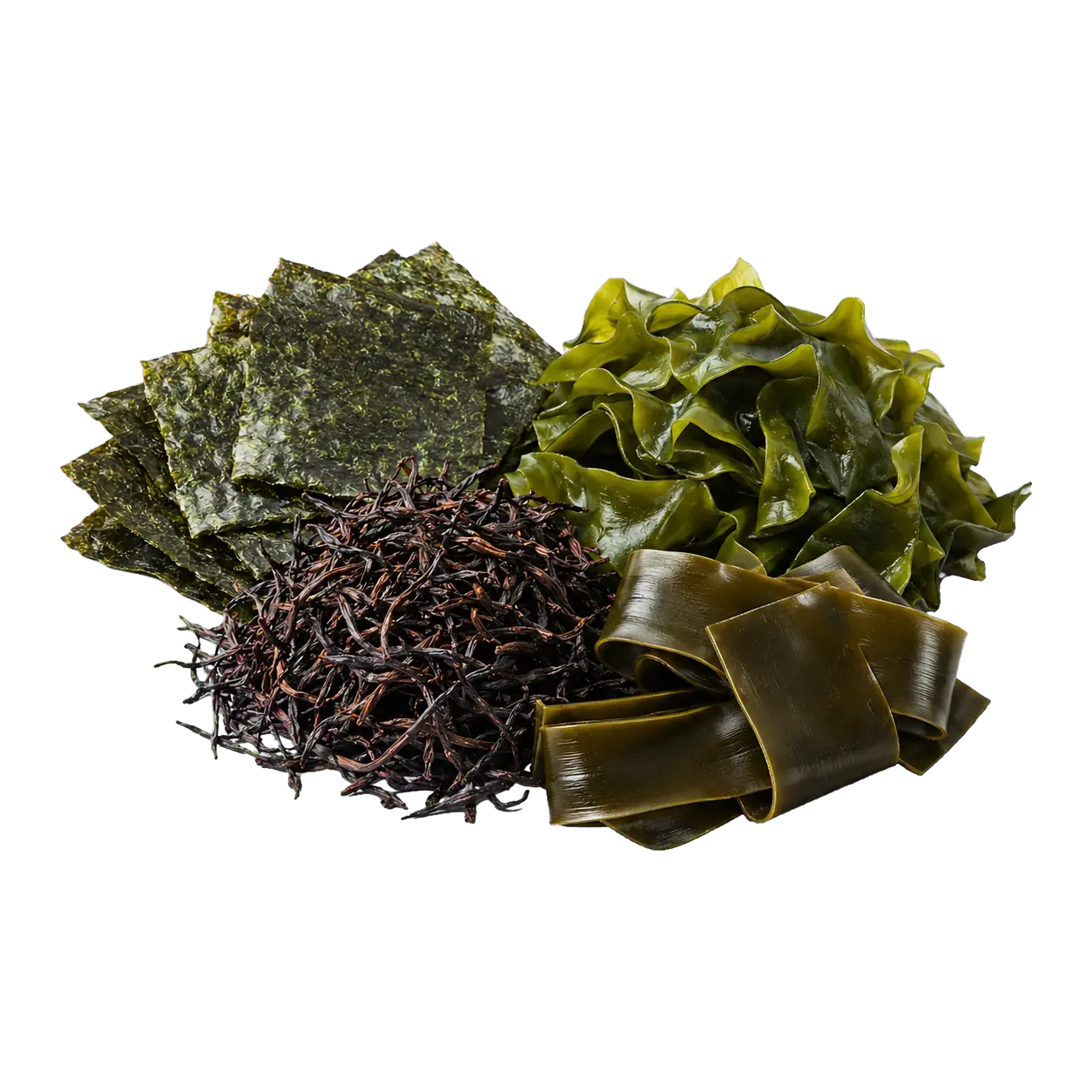
Illustrative assortment of marine seaweeds
MARINE BOTANICAL / EDITORIAL SPECIMEN

A new perspective
on marine beauty.

Marine ingredients are finding new applications in skin and hair care, too. In autumn 2026, a Japanese cosmetic project introduced brown-seaweed extracts in care designed for after marine activities. The development was connected with marine-conservation programmes and the use of previously underutilised raw material. It is one example of Blue Beauty, in which ingredient origin and environmental work become part of a product’s story.

BLUE BEAUTY

Ingredient origin. Responsible use of marine resources. Conservation projects connected with product development.

THE YOTSUBA PERSPECTIVE

Origin. Process.
Understanding.

For Yotsuba Japan, the connection between a component’s origin, the way it is obtained and the research behind it is especially interesting. We follow Japanese developments to better understand ingredient possibilities and explain them clearly. Behind each new name in a formulation are a particular raw material, a technology and findings that help us evaluate its application.

Explore the ingredient library
THE INGREDIENT EDITIONY / JAPANBACK TO THE TOP
05 / 31YOTSUBA JAPAN TIMES
END OF ARTICLE