Hydration from within.
Hyaluronic acid and NAG: a familiar moisture-holding chain, a lesser-known building block, and the skin science that connects them.
A familiar name on a moisturiser
That tight feeling after cleansing is easy to recognise. We reach for a moisturiser and look for hyaluronic acid on the label. Its name has become almost synonymous with hydration. Yet this familiar molecule has a lesser-known relative with a much longer name: N-acetylglucosamine, or NAG. Its story takes us a little deeper into how skin holds moisture.
Hyaluronic acid is naturally present in our skin, helping to create a water-rich environment around cells. It is often compared with a molecular sponge: its long chains interact with water and help retain it in tissues. This is one reason it has become such a familiar part of the conversation about skin.
A long chain and a small building block
Imagine the chain as a long, flexible ribbon made from two alternating types of link. One is NAG. The other is glucuronic acid. Together, they create the repeating pattern that makes up hyaluronic acid. Behind the complicated name lies a surprisingly clear structure.
NAG is a small sugar molecule of a particular kind: an amino sugar. It is part of larger biological structures. That makes it an interesting ingredient in its own right: one of the building blocks of a well-known moisture-holding molecule can also be studied separately.
A chain made from two alternating links.

Inside the cellular workshop
Cells can make hyaluronic acid themselves. They need starting materials and specialised enzymes. After several transformations, NAG can enter this production pathway. In experiments with cultured human skin cells, researchers observed increased hyaluronic-acid production when NAG was added. This helps explain the scientific interest, while a result in a cell culture remains different from an effect after taking an ingredient by mouth.
Hyaluronic acid and NAG therefore play different roles in the same story. Hyaluronic acid is the long, water-holding chain. NAG is one of the components cells can use to build it.
Preparation first, then assembly.

What size can tell us
The difference in size is real. A single NAG molecule is much smaller than many hyaluronic-acid chains. Absorption, however, involves more than size: digestion, the forms that enter the blood and how the body uses them all matter. A claim that NAG is necessarily absorbed several times better than every form of hyaluronic acid would need its own direct evidence.
What researchers measured in skin
NAG also has human skin research of its own. A Japanese study published in 2008 involved women concerned about dry skin. For eight weeks, one group drank a beverage containing 500 mg NAG each day. Researchers measured skin moisture with instruments and compared changes with a control group receiving a beverage without NAG. By the end of the study, the increase in cheek moisture was greater in the NAG group than in the placebo group.
The study was small, so its findings are best seen as a reason for further investigation. Even so, it adds a useful detail to the molecular story: interest in NAG includes measurements in people. Hydrating ingredients can be investigated by observing whether the water content of the skin’s outermost layer changes.
Oral hyaluronic acid has clinical studies too. In one Japanese controlled trial, researchers reported improvements in skin-moisture measures with particular HA preparations. These studies remind us why the precise ingredient form and study conditions matter. A familiar name on a label is only the beginning of a meaningful comparison.
Another side of a familiar ingredient
Seeing NAG in joint-focused formulas can leave its skin story in the background. The connection is understandable: hyaluronic acid is associated with different tissues, including the environment within joints. Interest in one application, however, does not exhaust an ingredient’s biology. Japanese ingredient literature also gives skin and hydration a place in the NAG story.
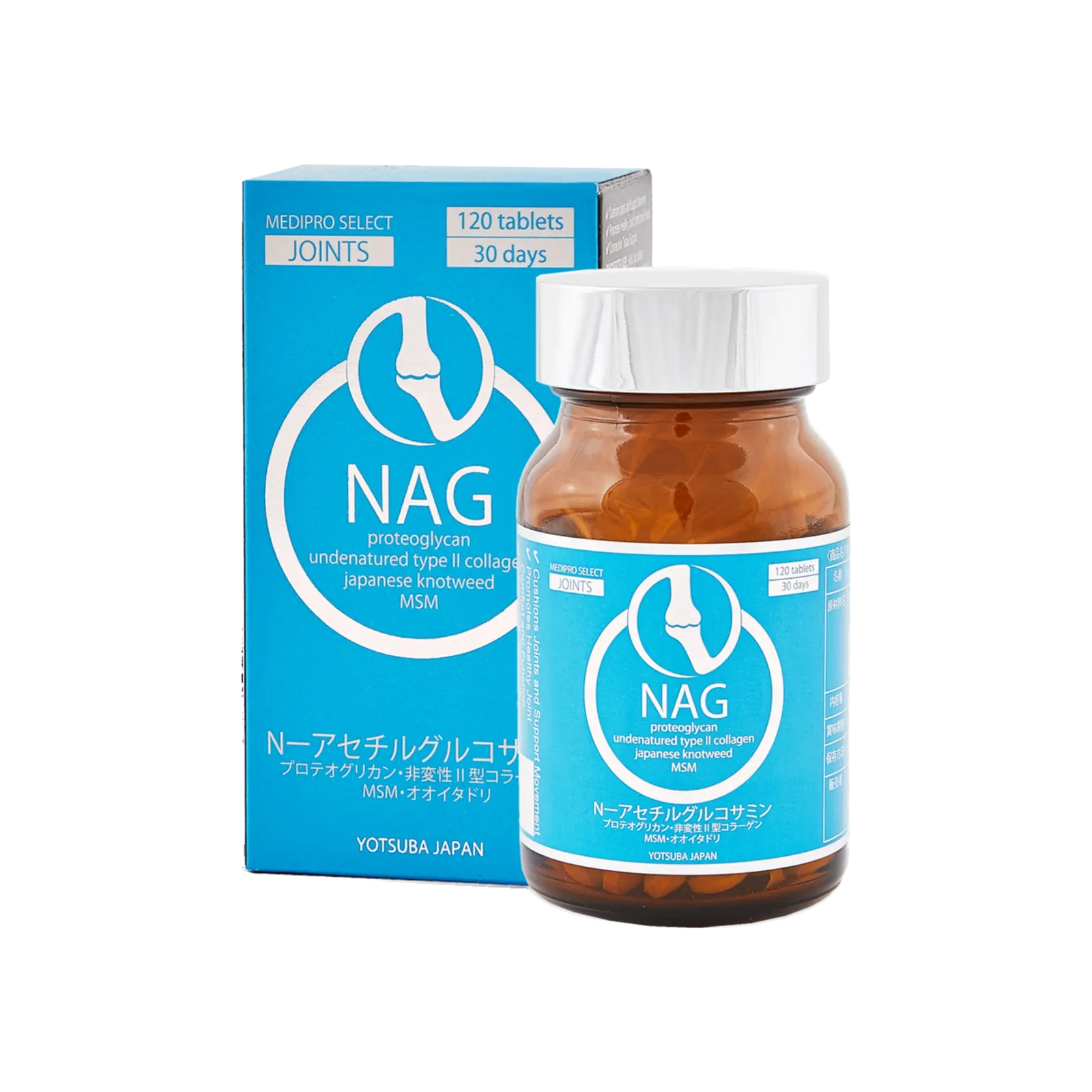
For Yotsuba Japan, this connection is particularly interesting. Our NAG formula provides 500 mg N-acetylglucosamine in the daily serving of four tablets. Ingredient research helps explain that choice and introduces another side of the product. The effects of the complete formula need separate evaluation; understanding its central ingredient can begin with the simple story of how skin holds water.