Based on The Health Industry News · No. 1845 · 7 October 2026
From root to extract.
The plant is the beginning. Processing and composition give an ingredient its identity.
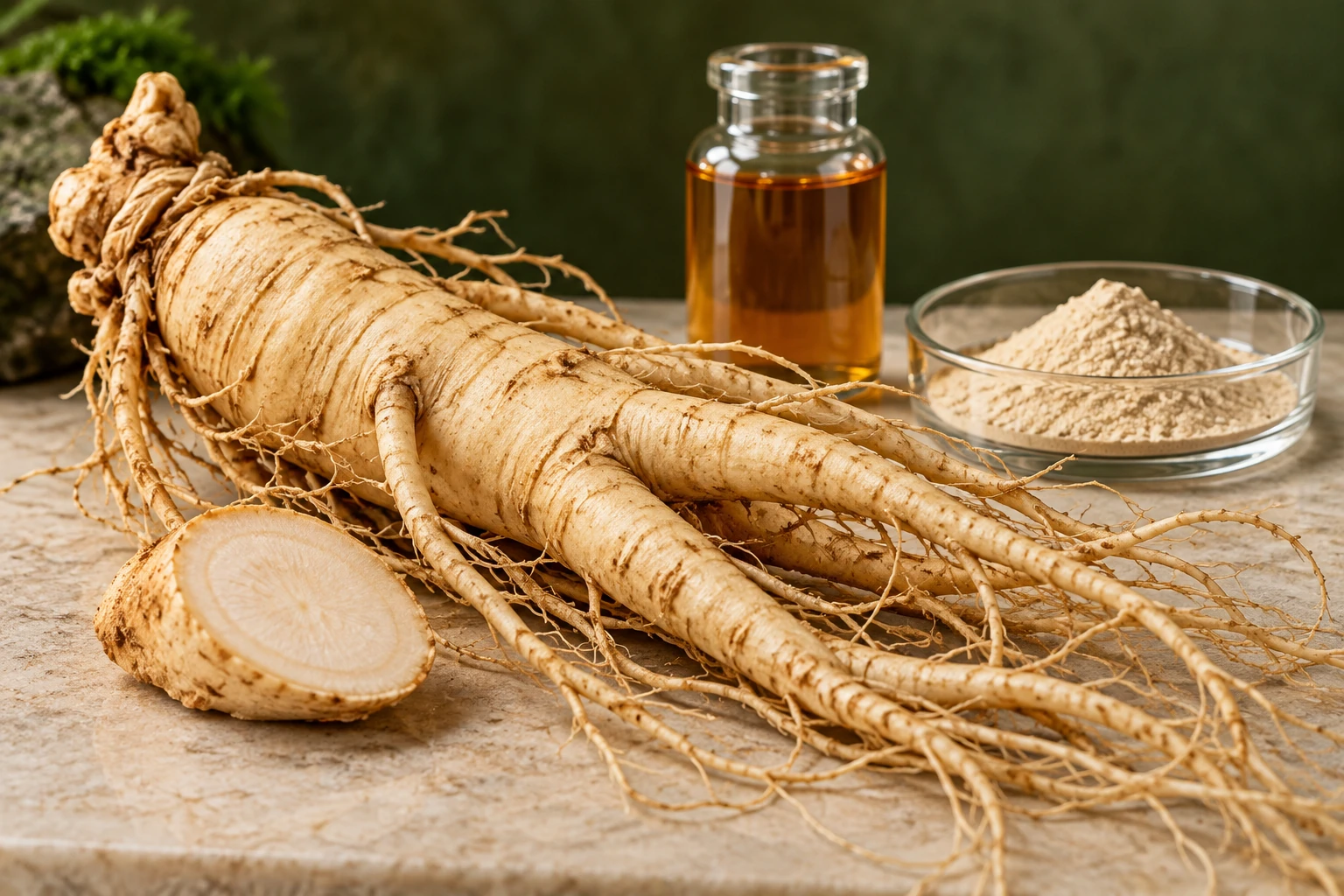
A familiar plant name can conceal very different ingredients. Ginseng offers a particularly rich example: roots and berries, distinct botanical species, different extraction methods and multiple forms of processing all appear in contemporary product development.
The professional market presents Asian ginseng, American ginseng and Panax notoginseng alongside red, black and fermented preparations. These names describe differences that deserve attention. An attractive root photograph alone cannot tell us what is inside an extract.
Fermentation is one way to change the chemical profile. Experimental work by researchers at Dongshin University on ginsenoside biotransformation shows that the microorganisms and processing conditions matter. This is a reason to examine the resulting composition closely. It does not establish that every fermented preparation is equivalent or more effective.
Standardisation adds another layer of detail. A specification may state a total ginsenoside content or quantify an individual component such as Rb1. The next question is how much of that specified extract is present in the daily serving. A concentration in the raw material and an amount in the finished product describe different things.
The same care applies to research. Results from a particular species, extract or processing method belong to that preparation. Before applying them to another formula, the botanical identity, composition and studied amount need to be compared.
For Yotsuba, this is a useful way to tell an ingredient story. Origin gives it a setting; processing explains how it was made; analysis describes what it contains. Together, those details make the journey from plant to daily product more understandable.
Follow the composition through the process
Identify the source
Document the botanical species and the selected plant material.
Describe the processing
Record extraction or fermentation conditions; the process shapes the resulting preparation.
Measure the profile
Analytical work quantifies selected ginsenosides in the resulting material.
Our fermented ginseng collection provides a practical starting point for exploring processing and ingredient composition.
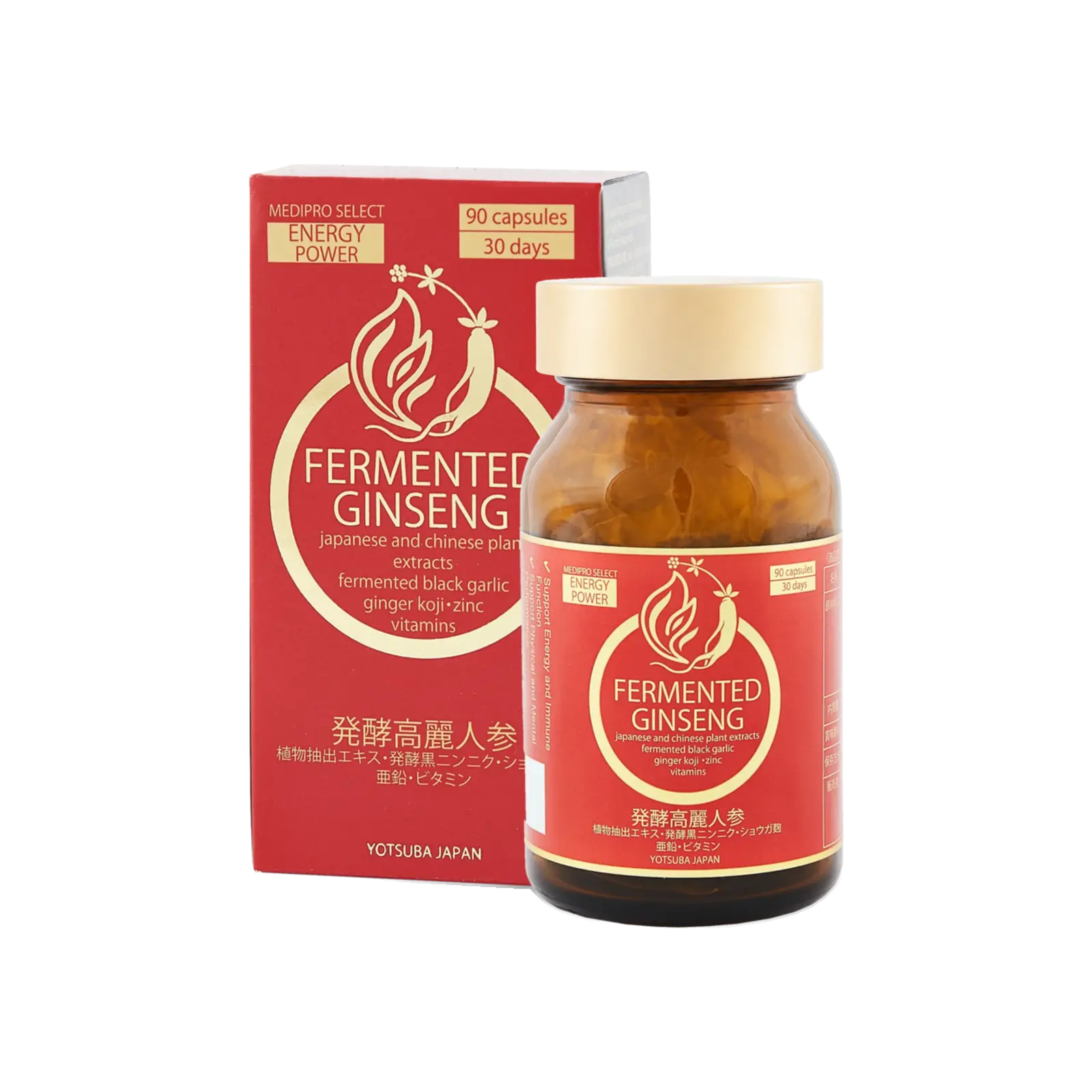
The cited processing research provides ingredient context. It does not evaluate the complete Yotsuba formula or establish a universal advantage of fermentation.