From formula to absorption.
The journey of an ingredient — and why delivery technology is part of the formulation.

A product label introduces us to familiar names: vitamin C, iron, a botanical extract. Beside each one is an amount in milligrams. This is where our understanding of a formula begins.
Inside the body, an ingredient has a further journey. It must be released from its preparation and encounter the digestive environment before it can become available for absorption. The form of an ingredient is therefore a question worth exploring alongside its amount.
Two oral preparations, one measured outcome
The area under a plasma concentration–time curve summarises exposure over the sampling period. Here, the published mean values compare two oral vitamin C preparations.
Plasma vitamin C AUC₀–₄h · mg·h/dL
Bars show means; whiskers show standard errors: 7.6 ± 0.4 and 10.3 ± 0.9 mg·h/dL. The axis begins at zero.
Milligrams and the body’s response
Vitamin C illustrates why intake and absorption are different measurements. According to the US National Institutes of Health, approximately 70–90% is absorbed at moderate intakes of 30–180 mg per day. At doses above one gram per day, the absorbed proportion falls below 50%. The body regulates vitamin C concentrations and excretes some absorbed excess in urine.
These are observations about physiology, rather than advice on choosing a dose. They help explain the interest in delivery systems: researchers ask whether a particular preparation can change an ingredient’s behaviour.
The architecture of a liposome
A liposome is a microscopic vesicle enclosed by one or more phospholipid bilayers. The same basic organisation of lipids also occurs in cell membranes. Its aqueous interior and lipid layers offer different environments for water-soluble and lipid-soluble substances.
For a formulator, this creates an opportunity to work with structure: lipid composition, manufacturing method and the conditions under which a preparation retains its intended characteristics. A familiar ingredient acquires an additional technological dimension.
A delivery system can also be a powder
Liposomal development extends to dry preparations intended for powdered formulas. A study published in 2021 described vitamin C in a fibre-reinforced phospholipid matrix, characterised its structure and compared oral bioavailability after a single dose.
A powder, granule or capsule can therefore contain a specially prepared ingredient. Appearance alone tells only part of the story. Composition, structural characterisation and testing help explain the form within.
What an absorption study measures
Researchers can collect blood samples at defined intervals after administration and plot concentration against time. Two measurements often describe that curve: Cmax, the highest measured concentration, and AUC, the area under the concentration–time curve over the observation period.
In a 2016 study involving eleven volunteers, Janelle L. Davis, Christopher Bell and colleagues at Colorado State University compared different routes of vitamin C administration. A single four-gram dose of the studied oral liposomal preparation produced higher circulating concentrations than ordinary oral vitamin C. However, its protection against the measured oxidative-stress outcome was similar.
This distinction is useful: a change in circulating concentration and an improvement in a health outcome are separate research questions. The study concerns its particular preparation and conditions.
The preparation behind the name
Liposomal describes an approach. The detailed questions concern the substance inside, the way the system is made, its stability and the conditions in which it has been investigated.
A considered assessment connects several kinds of information: composition and structure, storage stability, behaviour under digestive conditions, human absorption studies and outcomes relevant to health. Together, these give a technology its meaning.
A formulation perspective
For Yotsuba Japan, product development connects ingredient selection, amount and preparation. Delivery technology belongs within that work, alongside raw-material quality, manufacturing control and careful interpretation of research.
Our collection offers several ways to explore this topic. Each complete formula has its own composition; research on a different ingredient or delivery system provides context rather than a measured result for the finished product.
Explore three formulations from the Yotsuba collection.
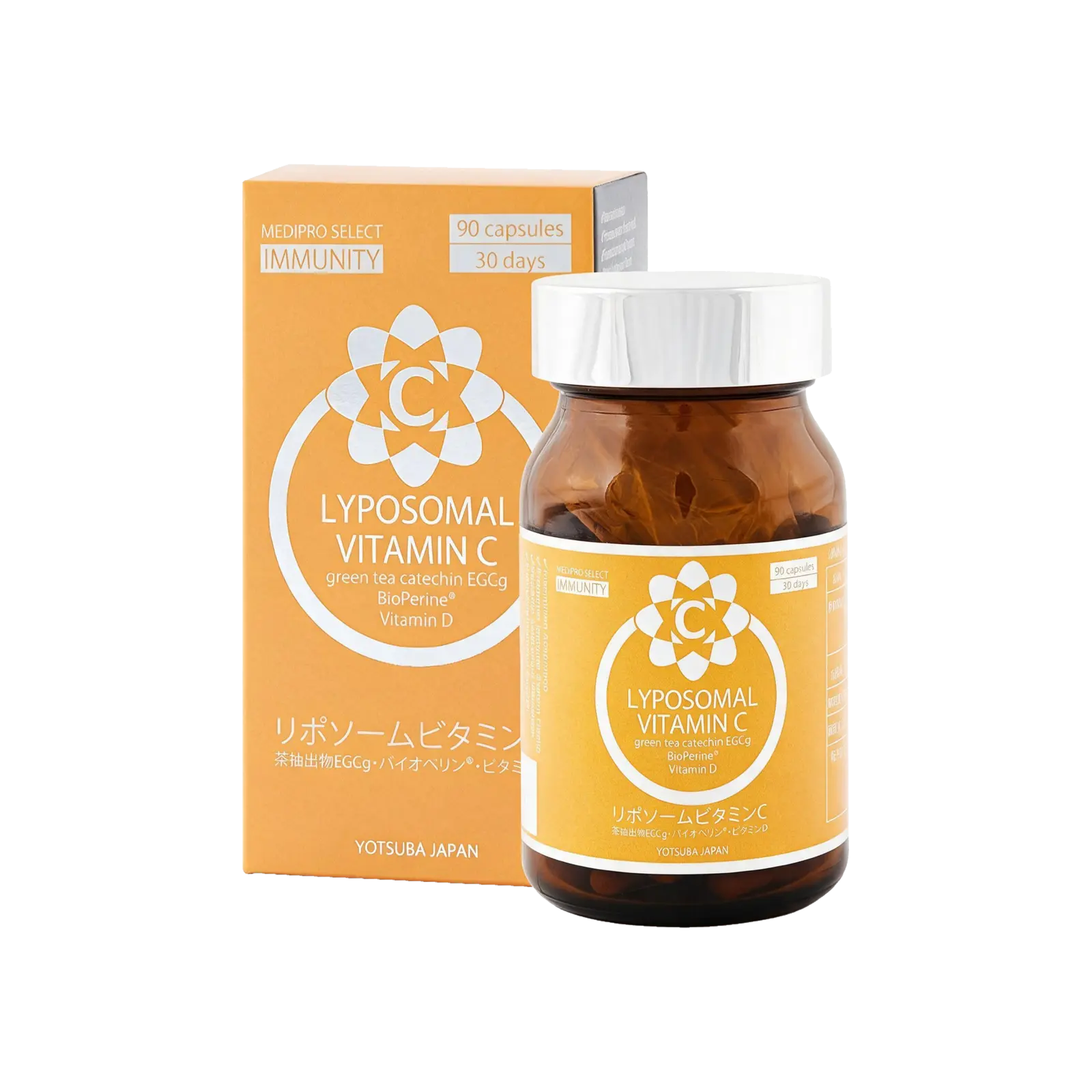
Liposomal Vitamin C
A familiar water-soluble vitamin in a prepared delivery form.
Explore the formula ◎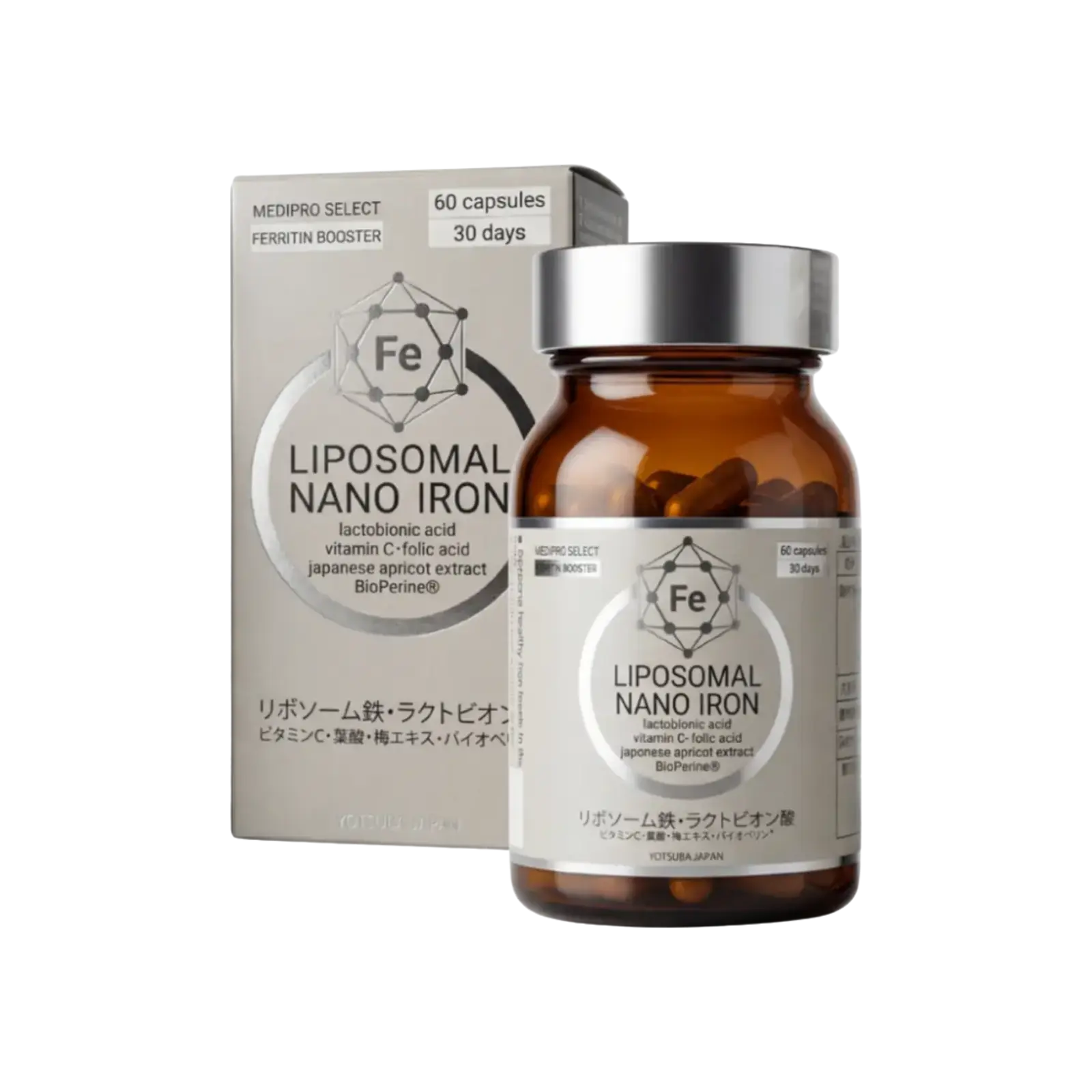
Liposomal Nano Iron
Read the mineral form, elemental iron amount and complete composition together.
Explore the formula ◎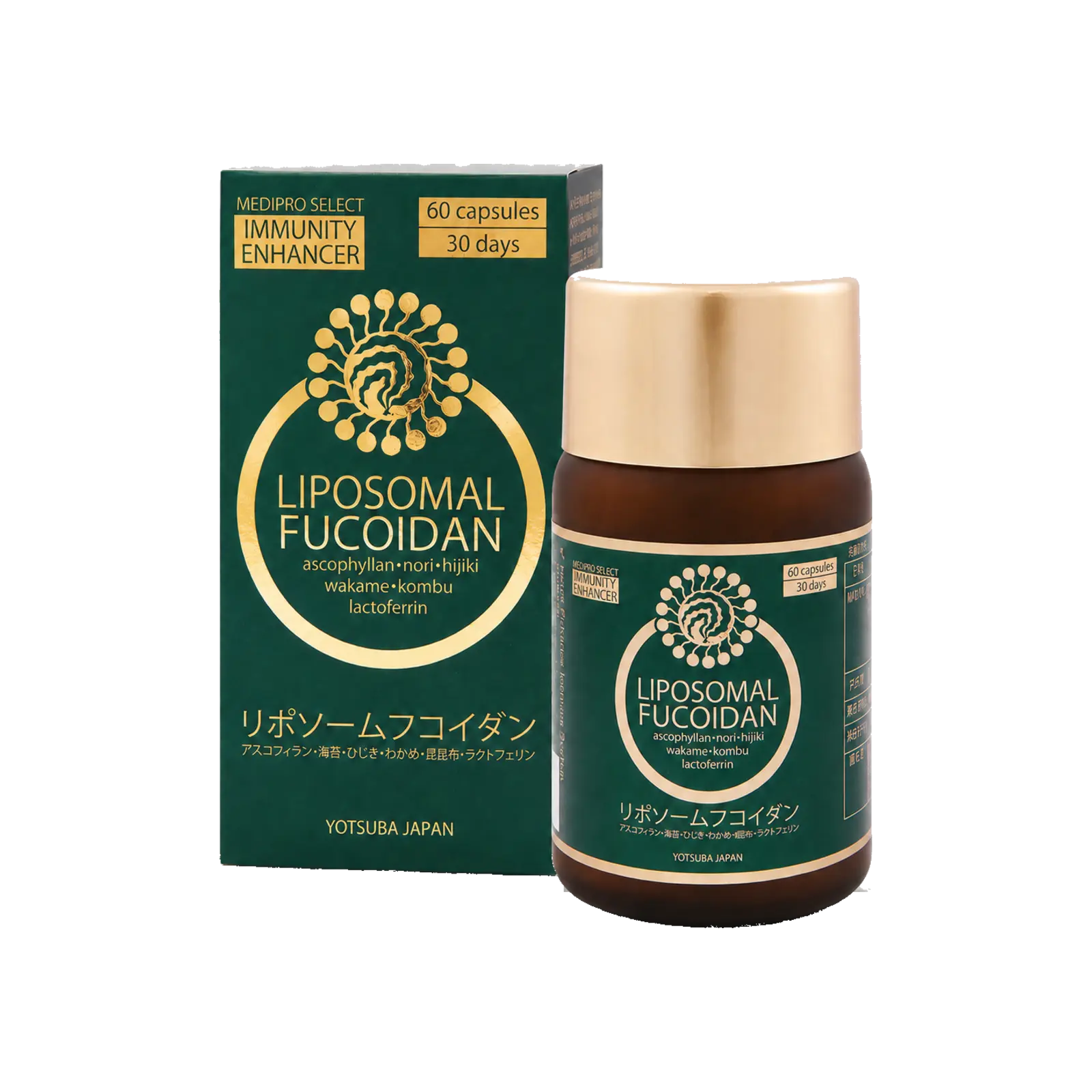
Liposomal Fucoidan
A marine ingredient within a complete formula with its own composition.
Explore the formula ◎The cited studies examine specific preparations and conditions, rather than these complete Yotsuba formulas. The four-gram experimental dose is reported as study context, not a daily-use recommendation.