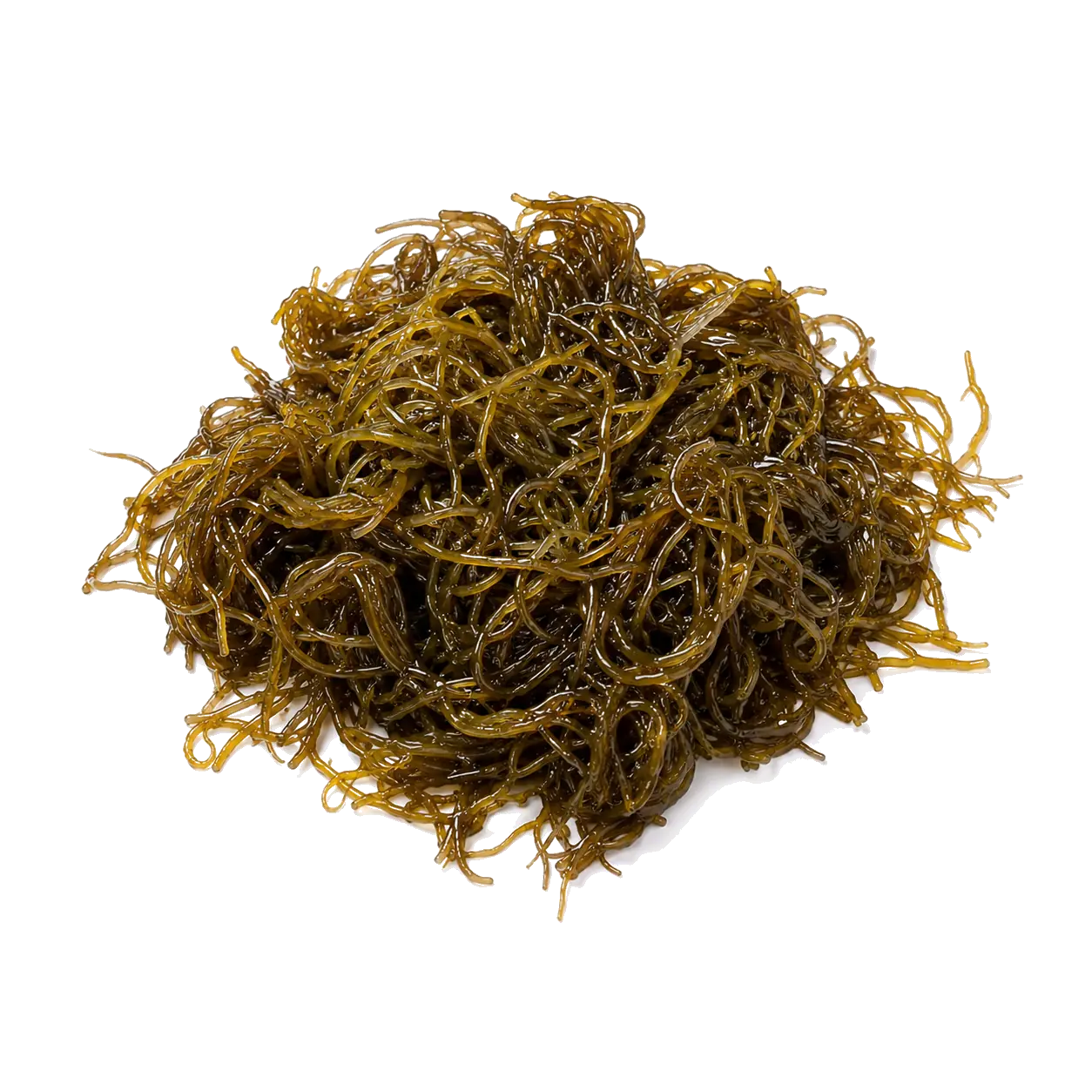

All productsLIPOSOMAL
Marine immune wellness · 30-day daily system
LIPOSOMAL
FUCOIDAN
A Japanese marine formula combining two sulphated-polysaccharide sources, four traditional seaweed powders and lactoferrin in a modern lipid-based delivery concept.
60capsules2per day30days
Why it was created
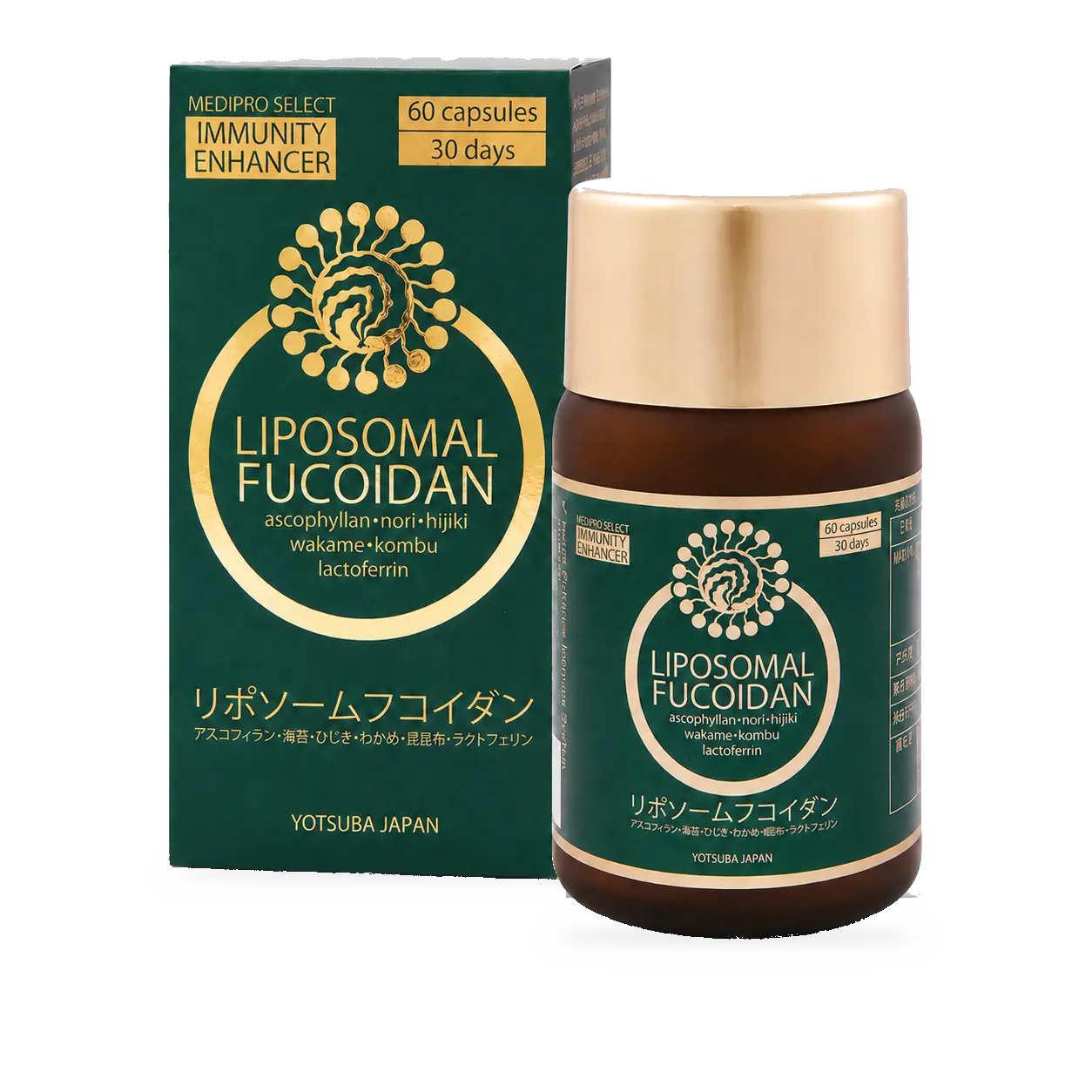
Okinawan marine tradition.
A modern delivery story.
Fucoidan is a family of sulphated polysaccharides found in brown seaweeds. Its structure varies with the seaweed species, extraction method and molecular profile.
This formula begins with mozuku extract containing fucoidan and Ascophyllum nodosum containing ascophyllan, then adds nori, hijiki, wakame, kombu and lactoferrin.
Formulation · marine polysaccharides
Marine complexity.
A lipid-based concept.
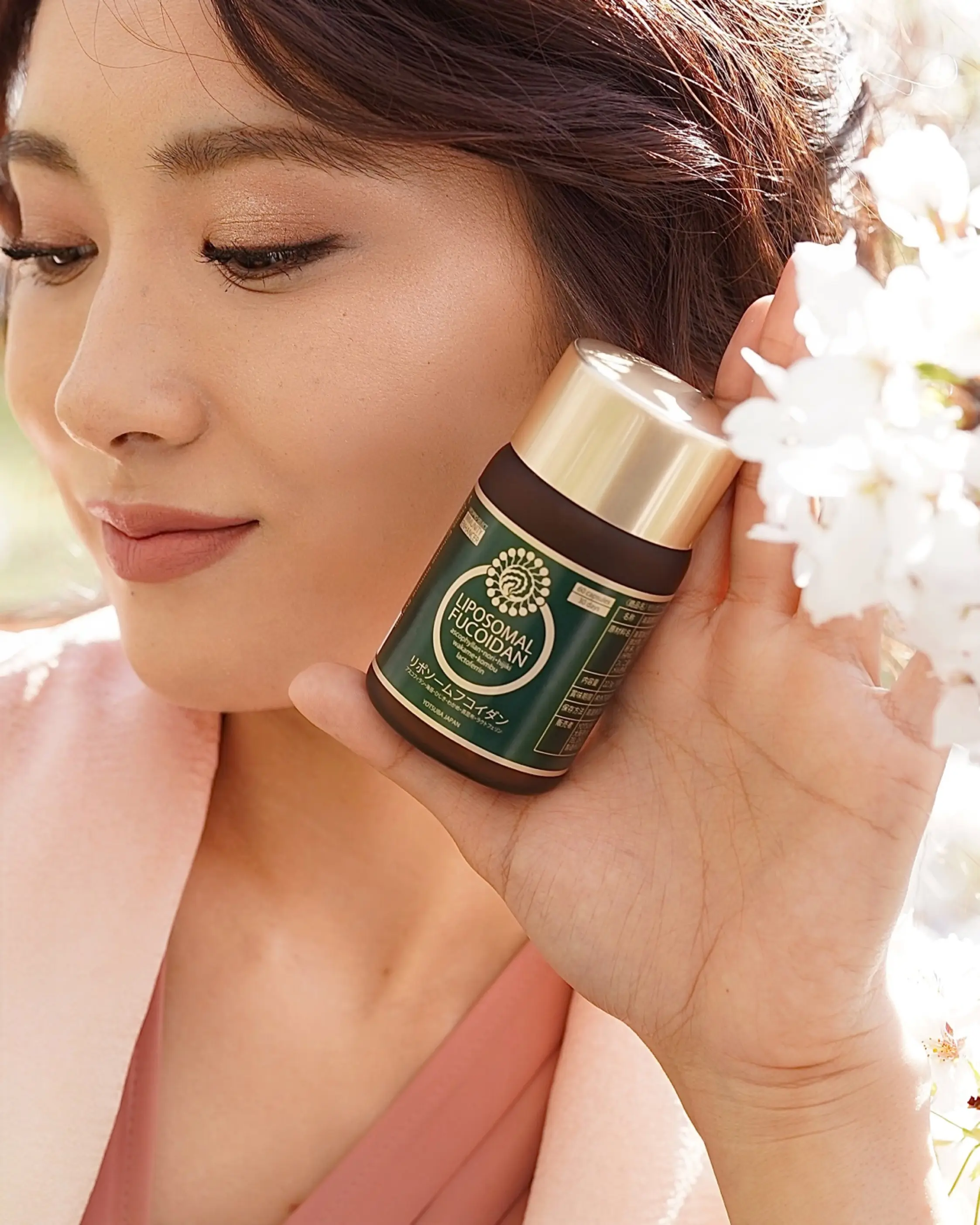
A branching polysaccharide motif meets a lipid-based formulation: two different kinds of structure in one ingredient story.
Explore ingredient evidenceYOTSUBA JAPAN / FORMULA STUDY
01/ 03
Marine ingredient
Fucoidan refers to a family of sulphated polysaccharides associated with brown seaweed.
Conceptual lipid architecture, not to scale. Absorption depends on the specific preparation and requires separate evidence.
Formula architecture
Seven active components.
Four visual source layers.
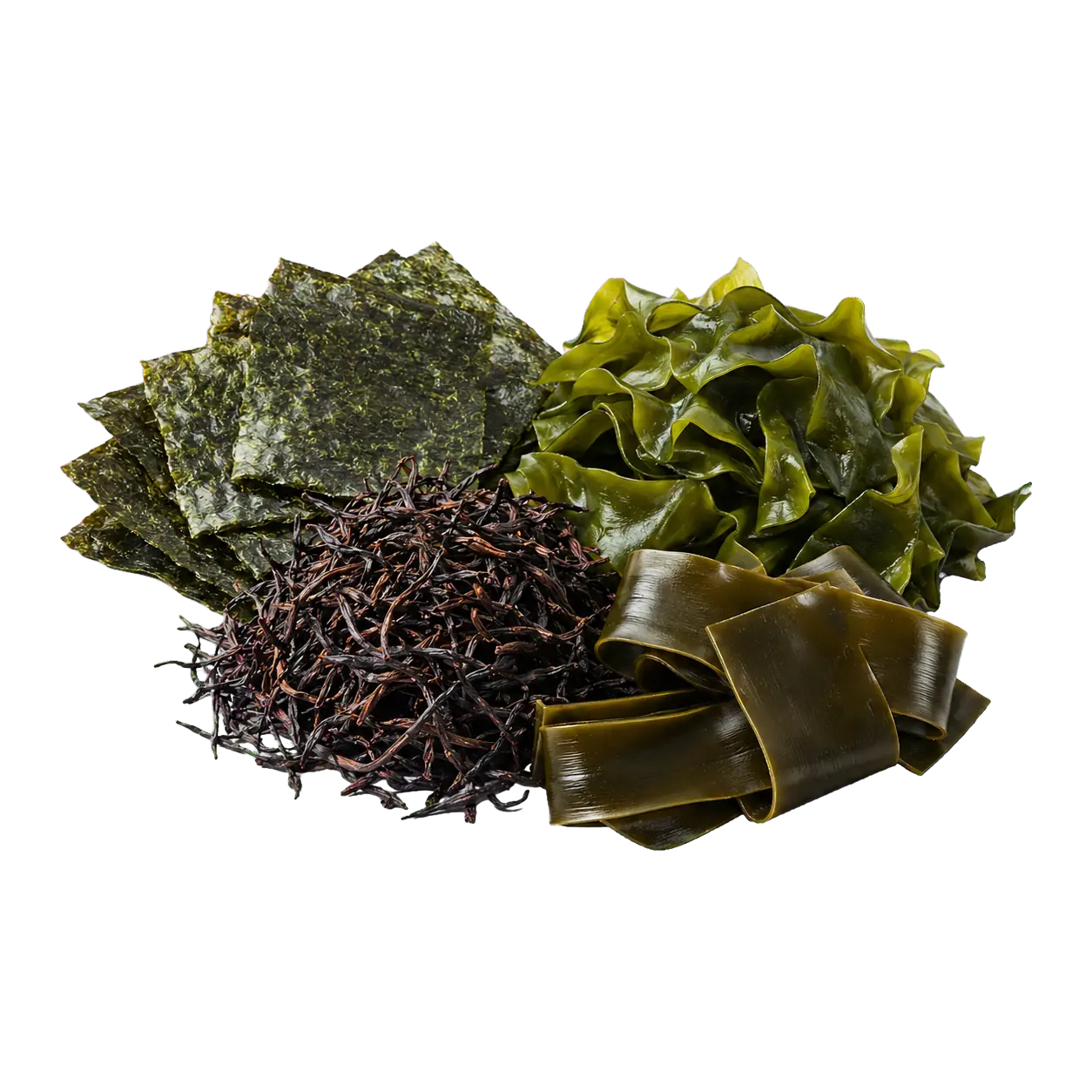
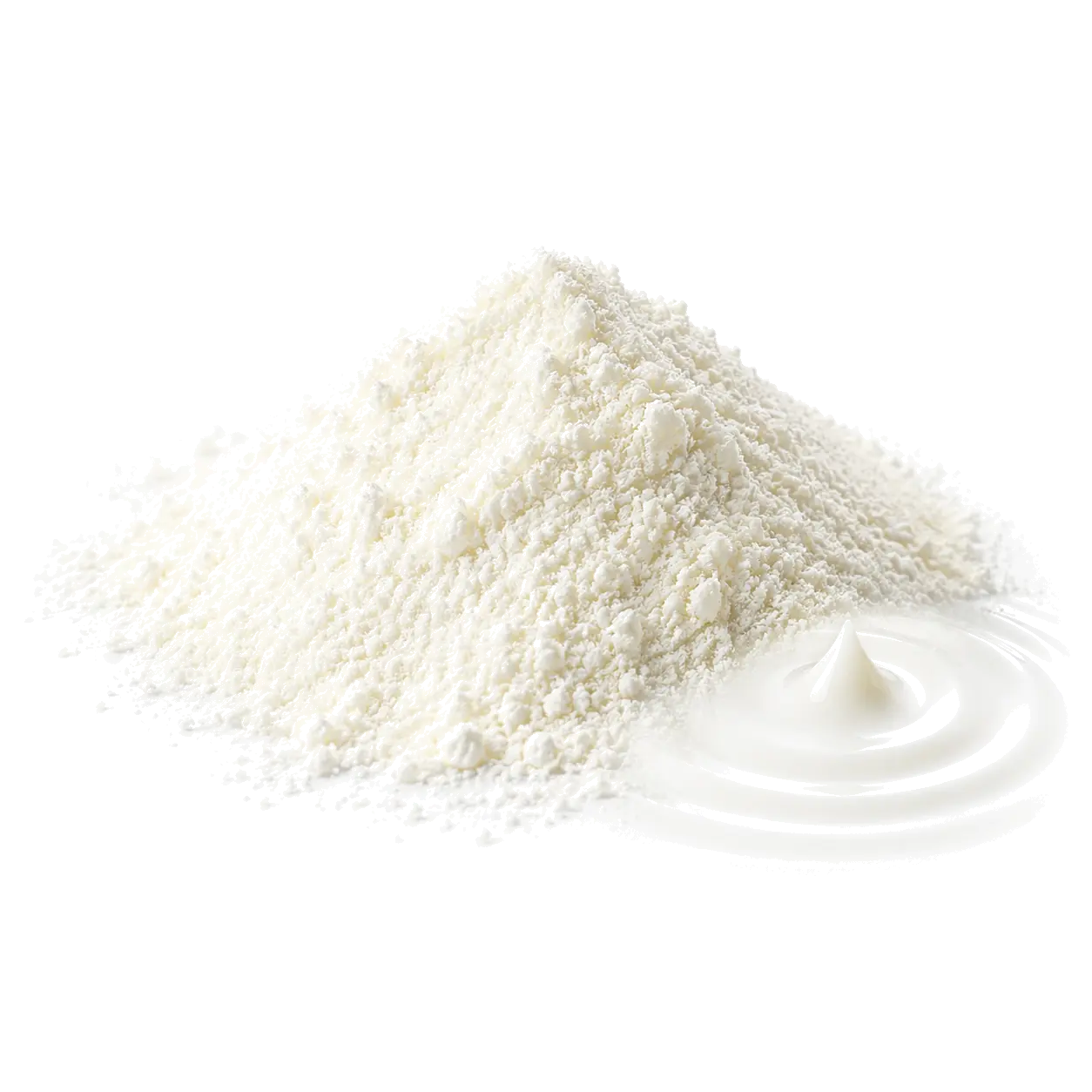
Inside the formula · per 2-capsule daily serving
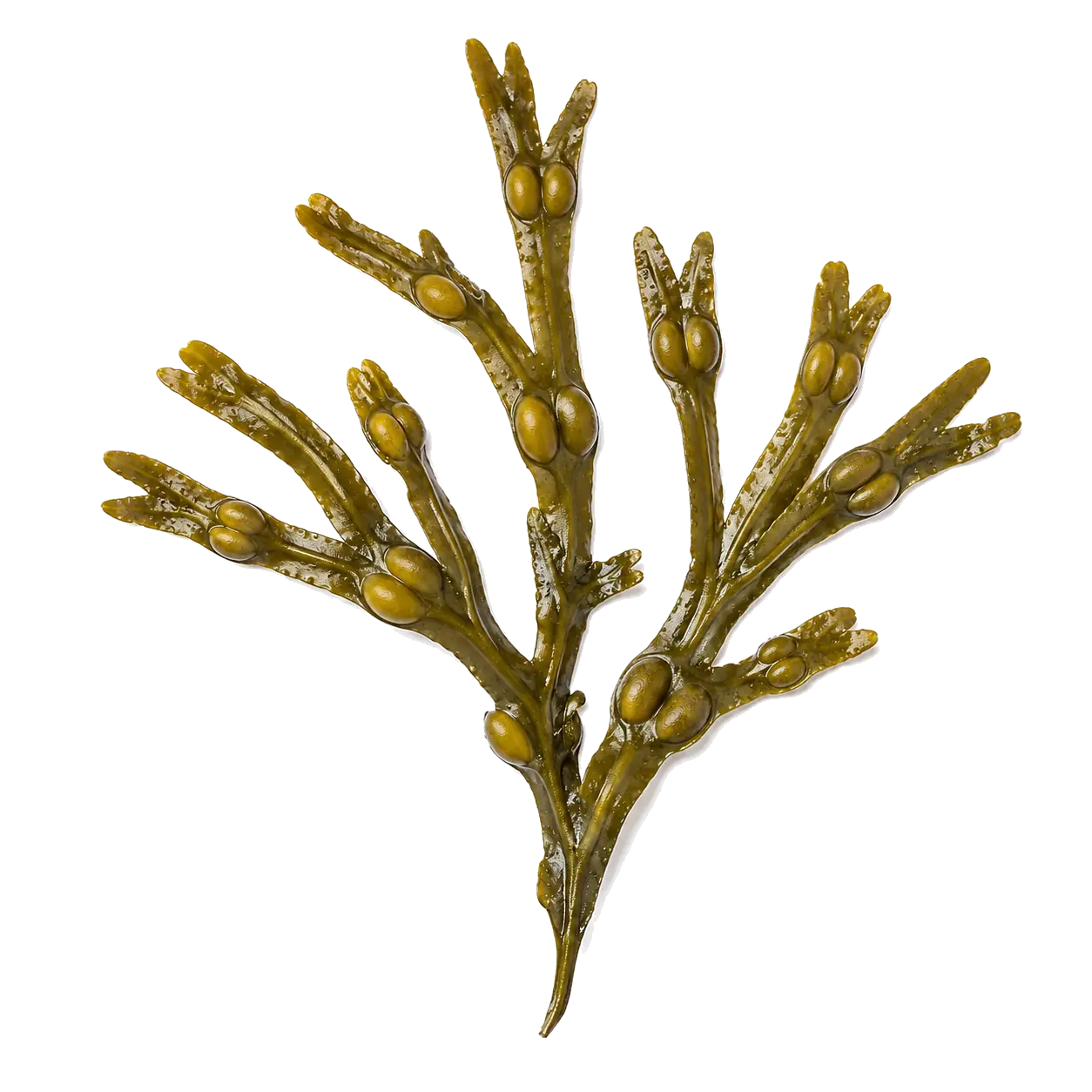
Two marine extracts at the centre.
Precisely documented.
The values below reproduce the current packaging artwork for the two-capsule daily serving. They describe ingredient quantities, not amounts of isolated pure fucoidan or ascophyllan. Destination-market labels remain authoritative.Select an ingredient to explore its source or food comparison
Food & ingredient forms
Mozuku seaweed
Mozuku · Fucoidan-containing extract
A comparison of source and prepared forms
Mozuku
Whole brown seaweed contains a complex structural carbohydrate matrix.
Fucoidan-containing extract
Extraction selects the prepared fucoidan-containing layer.
Ingredient perspective & source
Whole brown seaweed contains a complex structural carbohydrate matrix. Extraction selects the prepared fucoidan-containing layer. The principal Okinawan brown-seaweed extract in the verified two-capsule daily serving.
This visual explains ingredient identity or origin. It does not represent a food portion, a measured extraction ratio, equivalent nutrition, absorption or a health effect.
Yotsuba Japan · Formula declarationFood quantities compare selected constituent content only. Form comparisons explain the relationship between a familiar source and a prepared ingredient; they do not imply a portion or extraction ratio. Foods and supplements differ in nutrition, absorption and health effects. Images are illustrative, not measured portions or eating recommendations.
Mozuku extract containing fucoidan: ingredient perspective open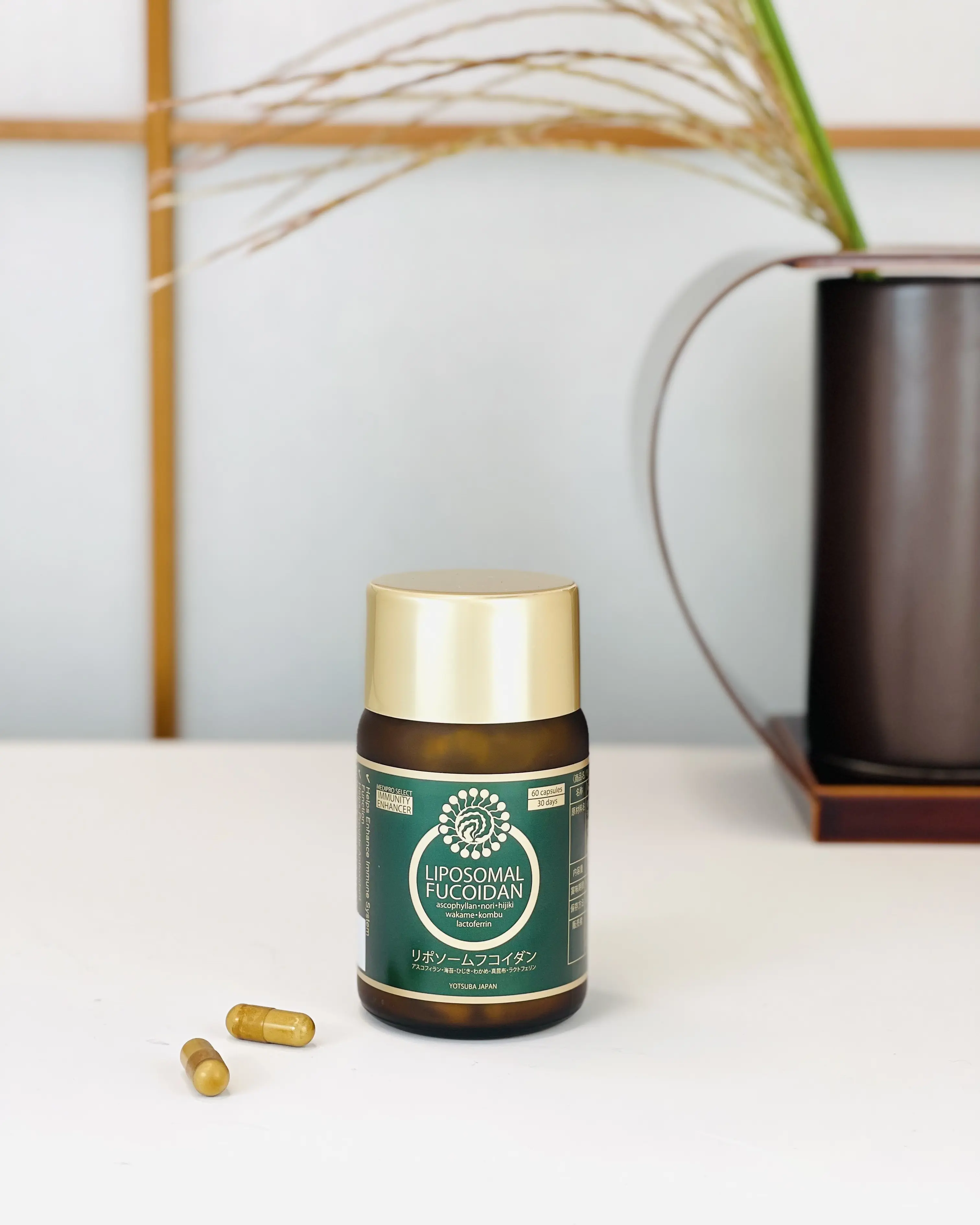
A measured marine ritual
Seven active components.
Two capsules daily.
The current composition brings together 350 mg of two declared seaweed-extract ingredients, 40 mg of four seaweed powders and 100 mg of lactoferrin.
Two capsules daily30-day systemMilk and soy declared
Ingredient evidence library
Evidence, with the
right boundaries.
Important distinctionThe publications below concern other fucoidan sources, doses or liposomal technologies. They are not clinical trials of Yotsuba Liposomal Fucoidan and do not prove superior absorption or a health outcome for this finished formula.
Oral fucoidanHuman absorption study
Absorption study of mozuku fucoidan
After 396 Japanese volunteers ingested 3 g of mozuku fucoidan, fucoidan was detected in urine in 385 participants. The authors also describe human absorption as extremely low. The study did not test this liposomal formula or its 250 mg extract serving.
FucoidanRandomised human study
Immune response after high-intensity exercise
A double-blind crossover study used 1 g/day of Undaria pinnatifida fucoidan for two weeks. It reported modest cytokine differences but no effect across most immune markers or performance outcomes.
FucoidanHuman supplementation study
Response to seasonal influenza vaccination
A randomised, placebo-controlled, double-blind study in 70 Japanese adults over 60 evaluated a different mekabu fucoidan preparation alongside seasonal influenza vaccination. It was not a trial of Yotsuba Liposomal Fucoidan.
Liposomal systemsSystematic technology review
Liposomes as nutrient-delivery platforms
A systematic review describes liposomal nanoencapsulation as a strategy used to protect and deliver vitamins and other bioactives. This technology context does not establish greater absorption for this finished fucoidan product.
Professional product data
Complete details,
clearly organised.
Professionals can review the verified composition, allergens, format, serving, nutrition and handling information below.Complete ingredients & allergens01
Current pack composition: Seaweed extract (ascophyllan; manufactured in Japan), mozuku extract, dextrin, edible oils and fats, nori powder, hijiki powder, wakame, kombu, black pepper extract, brewed vinegar / HPMC, lactoferrin, lecithin, cyclodextrin, silicon dioxide, gelling agent (gellan gum) and caramel colour.
Allergen information: Contains milk components and soybeans. The product is not vegan. The approved market-specific label remains authoritative.
Format & daily serving02
Format 60 capsulesDaily serving 2 capsulesSupply 30 daysNet weight 22.3 gCapsule weight 372 mgCapsule contents 297 mgAlso available 30-capsule pouch
Nutrition per daily serving03
Energy 2.89 kcalProtein 0.11 gFat 0.06 gCarbohydrate 0.48 gSalt equivalent 0.0394 g
Nutrition values are stated per two-capsule daily serving (0.744 g).
Use, storage & precautions04
The current directions indicate two capsules daily with water or warm water. Store away from high temperature, humidity and direct sunlight. People receiving medical treatment, using medicines, pregnant or breastfeeding should seek qualified professional guidance before use. Discontinue use if an unexpected reaction occurs. Keep out of reach of infants. This is a food supplement, not a medicine.
日本MADE
IN JAPAN
IN JAPAN
Japanese quality & provenance
Okinawan marine heritage,
completed in Japan.
Mozuku fucoidan, ascophyllan, four familiar Japanese seaweeds and lactoferrin form a distinctive 60-capsule professional export product.
Frequently asked
Clear answers,
without overclaiming.
01What is the daily serving?+
The current packaging indicates two capsules daily with water, providing a 30-day supply. Follow the approved destination-market label.
02What does liposomal mean here?+
Liposomal describes a lipid-based delivery concept, not a type of extraction. The ingredient declaration includes edible oils and fats and lecithin, alongside cyclodextrin. The package does not state particle size or encapsulation efficiency.
03Is better absorption proven for this finished product?+
No product-specific comparative human bioavailability trial was identified. Liposomes are widely studied as delivery systems, so the page presents a designed bioavailability pathway rather than a guaranteed absorption claim.
04What allergens are declared?+
The packaging declares milk components and soybeans. Lactoferrin is milk-derived, and the product is not vegan.
05Are the cited studies trials of Yotsuba Liposomal Fucoidan?+
No. They concern other fucoidan sources, doses or liposomal technologies and do not establish a clinical outcome for this complete formula.
Liposomal Fucoidan · 30-day daily system