How Japan develops new ingredients for health & beauty.
Seaweed, fermentation and the science of formulation.
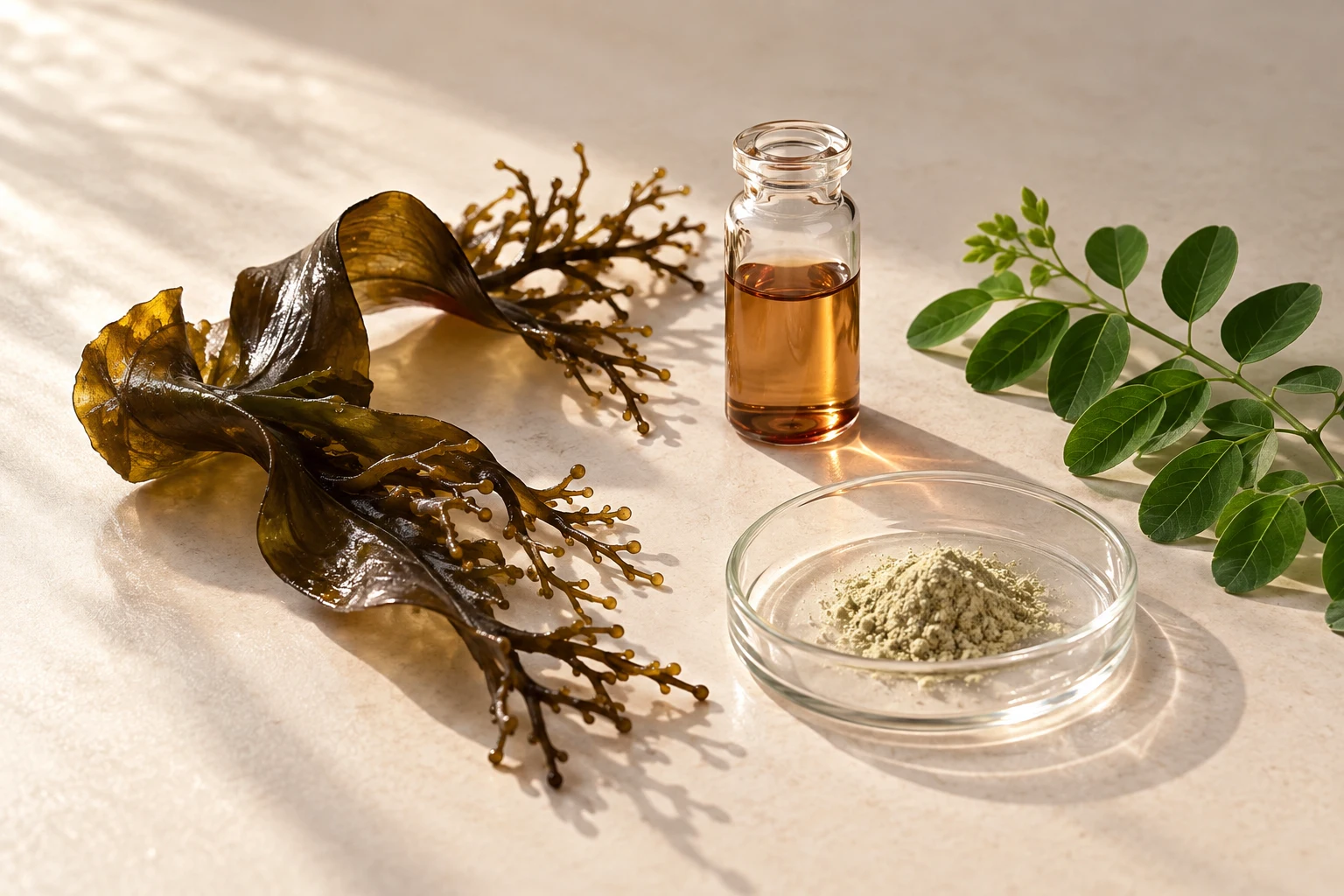
Seaweed, leafy plants and fermented foods have long been part of Japanese food culture. Today, researchers are studying their relationship with the microbiota, isolating valuable components and investigating new applications. This autumn’s view of Japan’s health industry brings several of these directions into focus.
THE PLACE / KYUSHU
A place where
ingredients begin.
Kyushu is one of the centres of this work. Young barley leaves, moringa and other plants are grown here for food ingredients. Local businesses and universities contribute to product development: a familiar plant gains a more detailed scientific description, while processing becomes part of its future formulation.
At Kyushu University, Kuniyoshi Shimizu, Associate Professor in the Faculty of Agriculture, studies biologically active substances from plants and mushrooms. His research includes applications in functional foods and cosmetics. Behind a short ingredient name lies a much longer story of cultivation, processing and investigation.
THE OCEAN / MICROBIOTA
The ocean meets
the microbiota.
New findings on seaweed are particularly interesting. In September 2026, an analysis of data from 1,000 people was presented at the 73rd Annual Meeting of the Japanese Society of Nutrition and Dietetics. More frequent seaweed consumption was associated with a higher relative abundance of certain gut bacteria capable of producing butyrate, a metabolite involved in supporting the intestinal barrier.
The study was observational: it identifies a relationship between dietary patterns and the microbiota, without establishing cause and effect. It provides a foundation for intervention studies that can examine the relationship more closely. These findings concern seaweed in the diet; individual extracts need their own evaluation.
73rd Annual Meeting of the Japanese Society of Nutrition and Dietetics · September 2026
observational analysis
More frequent intake was associated with a higher relative abundance of certain butyrate-producing bacteria.
THE CULTURE / FERMENTATION
Fermentation,
with a second chapter.
Another direction begins with Japanese fermentation. The plant material remaining after traditional beverage production can contain dietary fibre, protein components and other valuable substances. New technologies help find food and cosmetic uses for it. This approach is known as upcycling: a production by-product becomes the starting material for a new ingredient.
A cell’s own
recycling system.
- Enclosure
- Lysosomal fusion
- Breakdown & reuse
One example comes from the production of sweet-potato shochu, a Japanese distilled beverage. In collaboration with Waseda University, researchers investigated the resulting material’s influence on autophagy in cellular models. Autophagy is a natural process through which a cell breaks down and reuses some of its own components. These laboratory findings are of interest for further development; on their own, they do not demonstrate a rejuvenating effect when consumed by people.
Other developments have a longer history, including the extraction of ceramides from soy-sauce production by-products. Ceramides are lipid components important to the skin barrier. Researchers from the Fukuoka Industrial Technology Center participated in the project, in which this food-derived material became a source of ceramides for cosmetic formulations. Knowledge of fermented foods can find applications well beyond the kitchen.
Waseda University
Fukuoka Industrial Technology Center
THE BALANCE / AMINO ACIDS
The science
of balance.
In amino-acid research, compact formulations with carefully considered proportions are attracting attention. Japanese developers are investigating mixtures of the nine essential amino acids, which the body needs to obtain from external sources.
In one 12-week study in healthy adult men, a particular mixture combined with exercise produced findings of increased muscle mass. Coauthors of the study, published in 2025, include Toshio Moritani, Emeritus Professor at Kyoto University. The results help researchers examine composition and dosage in nutrition for physically active people. They apply to the formulation and conditions studied.
AMINO ACIDS
- 01Leucine
- 02Isoleucine
- 03Valine
- 04Lysine
- 05Methionine
- 06Phenylalanine
- 07Threonine
- 08Tryptophan
- 09Histidine
THE FUTURE / BLUE BEAUTY
A new perspective
on marine beauty.
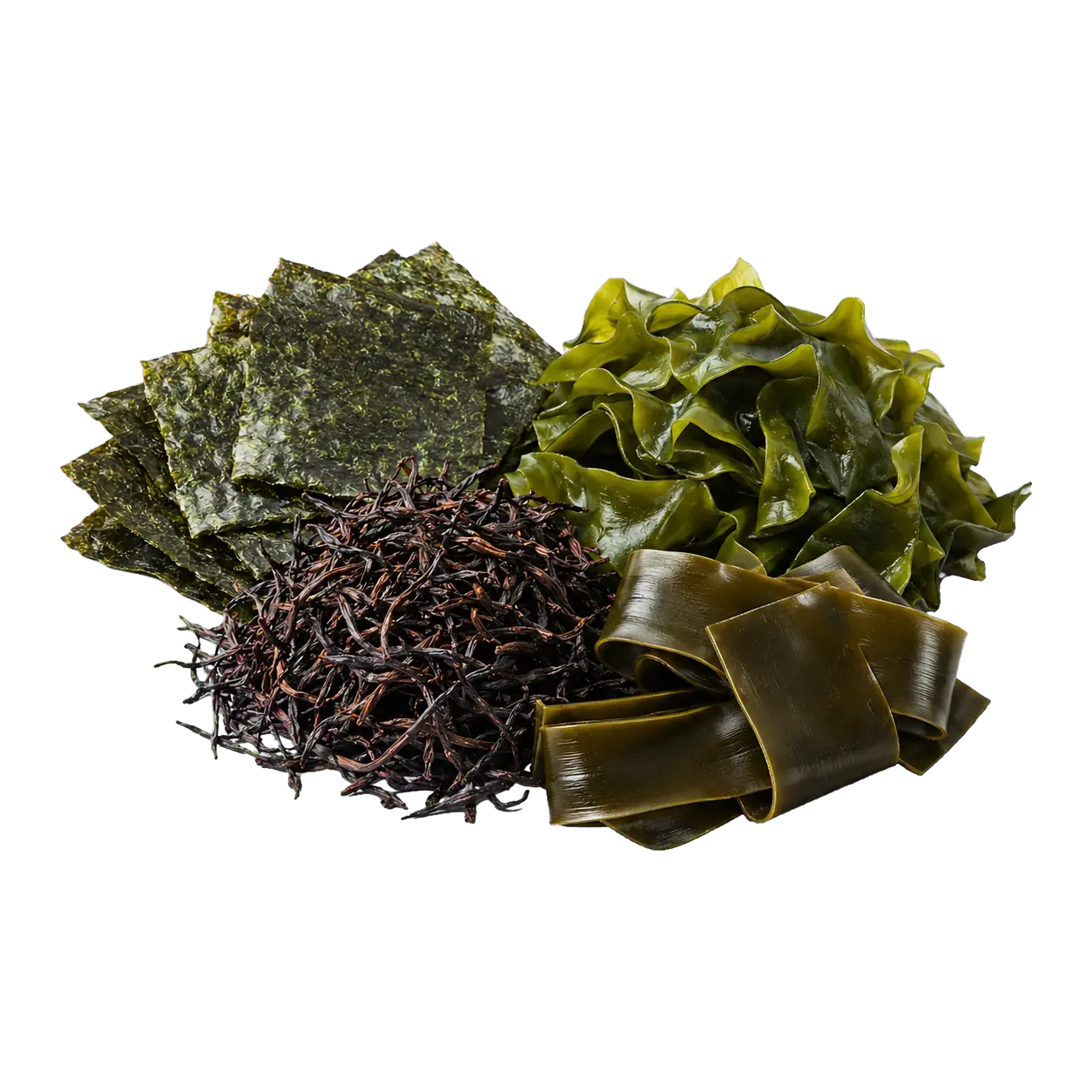
Marine ingredients are finding new applications in skin and hair care, too. In autumn 2026, a Japanese cosmetic project introduced brown-seaweed extracts in care designed for after marine activities. The development was connected with marine-conservation programmes and the use of previously underutilised raw material. It is one example of Blue Beauty, in which ingredient origin and environmental work become part of a product’s story.
Ingredient origin. Responsible use of marine resources. Conservation projects connected with product development.
Origin. Process.
Understanding.
For Yotsuba Japan, the connection between a component’s origin, the way it is obtained and the research behind it is especially interesting. We follow Japanese developments to better understand ingredient possibilities and explain them clearly. Behind each new name in a formulation are a particular raw material, a technology and findings that help us evaluate its application.
Explore the ingredient library