Based on The Health Industry News, issue 1845, 7 October 2026, with published collagen research.
Type II collagen. Structure matters.
From the cartilage matrix to a prepared ingredient: why collagen type, form and study design belong in the same conversation.
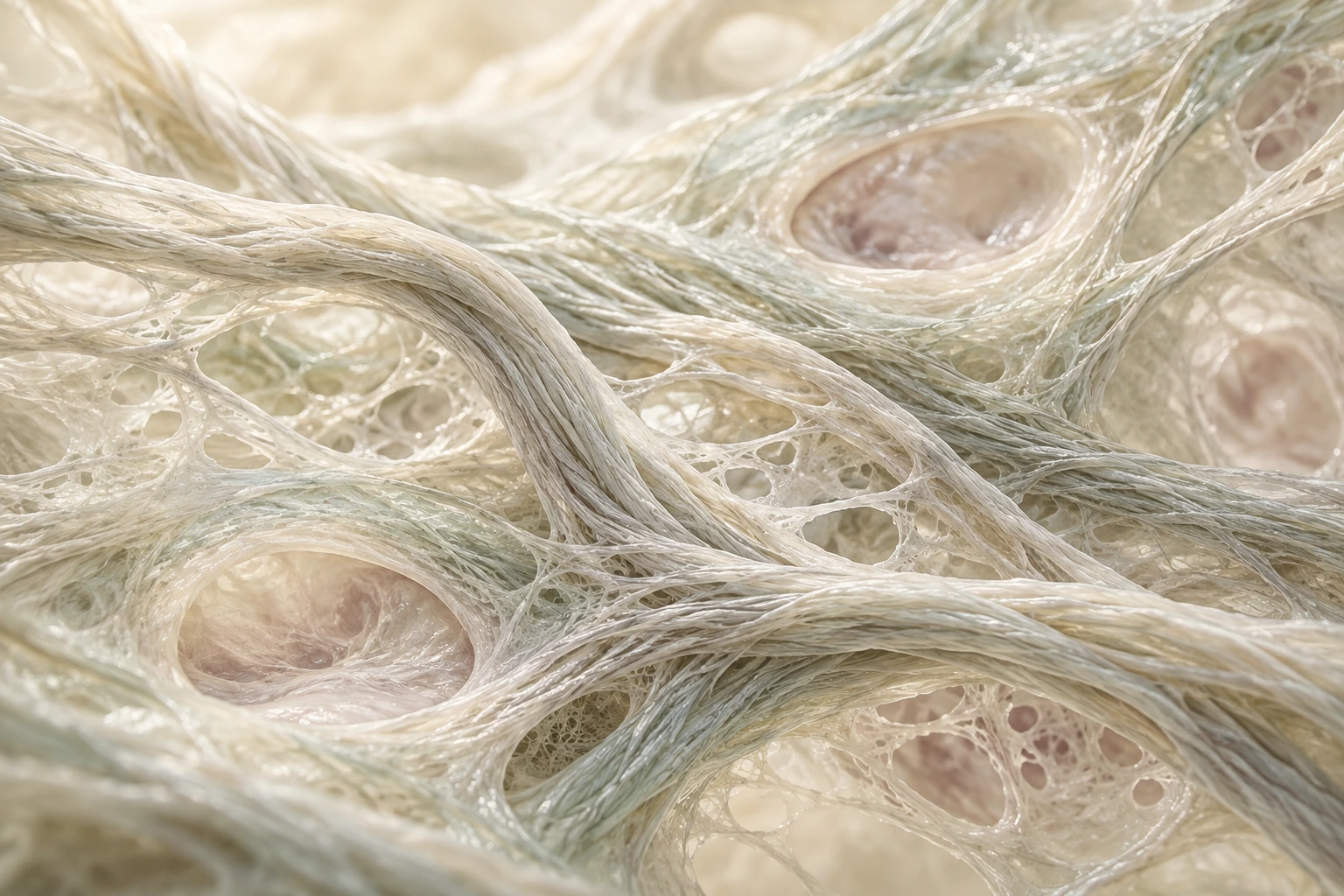
Climbing stairs, crouching down, taking a long walk — familiar movements depend on the complex work of our joints. One part of that system is the cartilage covering the ends of bones. Its properties depend on an organised extracellular matrix, in which type II collagen has a distinctive place.
This protein is particularly abundant in hyaline cartilage. It contributes to the tissue’s structural framework and strength. That role makes type II collagen an important subject for researchers studying joint function and mobility.
For a food ingredient, however, the type is only the beginning. The source and preparation help explain what the material is — and which research questions are relevant to it.
A retained structure. Shorter peptide fragments.
Undenatured collagen
Characteristic features of the original three-dimensional structure are retained.
Hydrolysed collagen
Processing breaks collagen down into shorter peptide fragments.
Two studies. Specified preparations.
- 191
Participants with knee osteoarthritis
Lugo, Saiyed & Lane · Nutrition Journal, 2016. Randomised, double-blind study over 180 days. A specified UC-II® ingredient at 40 mg/day was compared with glucosamine plus chondroitin and placebo.
- 64
Adults randomised to NEXT-II® or placebo
Shiojima and colleagues · Published online in 2022; journal issue 2023. A 12-week study assessing knee movement, discomfort and motor function.
What changed — and how was it measured?
Symptoms
Questionnaires can record pain, stiffness and daily difficulties.
Function
Movement tests can assess range of motion and performance.
Structure
Tissue or imaging assessments address a different research question.
More than a collagen type
Type II identifies a particular collagen protein. To understand an ingredient, we also need to know its form. Undenatured collagen retains characteristic features of its original three-dimensional structure. Hydrolysed collagen has been broken down into shorter peptides. These preparations differ, so a study of one cannot automatically describe the other.
For undenatured type II collagen, researchers investigate a mechanism involving oral immune tolerance — an immune response to material encountered through the intestine. This is a proposed explanation that differs from viewing collagen solely as a source of amino acids. Its mechanistic details continue to be studied.
A type II collagen declaration becomes more informative when its source, processing and specified ingredient amount are considered together.
What clinical researchers measure
A 2016 Nutrition Journal study by James P. Lugo, Zainulabedin M. Saiyed and Nancy E. Lane randomised 191 people with knee osteoarthritis. Over 180 days, participants received a specified undenatured collagen ingredient, glucosamine with chondroitin, or placebo. The collagen group received 40 mg of the studied ingredient daily.
By the end of the study, the authors reported a greater reduction in the total WOMAC score in the collagen group than in either comparison group. WOMAC assesses pain, stiffness and difficulty with daily activities. This result concerns symptoms and function; it does not demonstrate cartilage regeneration.
Another study, by Yoshiaki Shiojima and colleagues, was published online in 2022. It randomised 64 adults to NEXT-II® or placebo over 12 weeks. Researchers assessed knee range of motion, discomfort and motor-function measures. It is a separate example of research on a specific type II collagen preparation.
Different questions need different outcomes
Changes in symptoms, greater range of motion and changes in tissue structure are different findings. Each requires its own assessment. A symptom score cannot by itself establish a structural change, just as a structural observation does not fully describe how a person moves or feels.
This is why the strongest ingredient stories keep the study population, preparation and measured outcome visible. They help readers understand what a result actually describes.
One collagen type, two formulation approaches
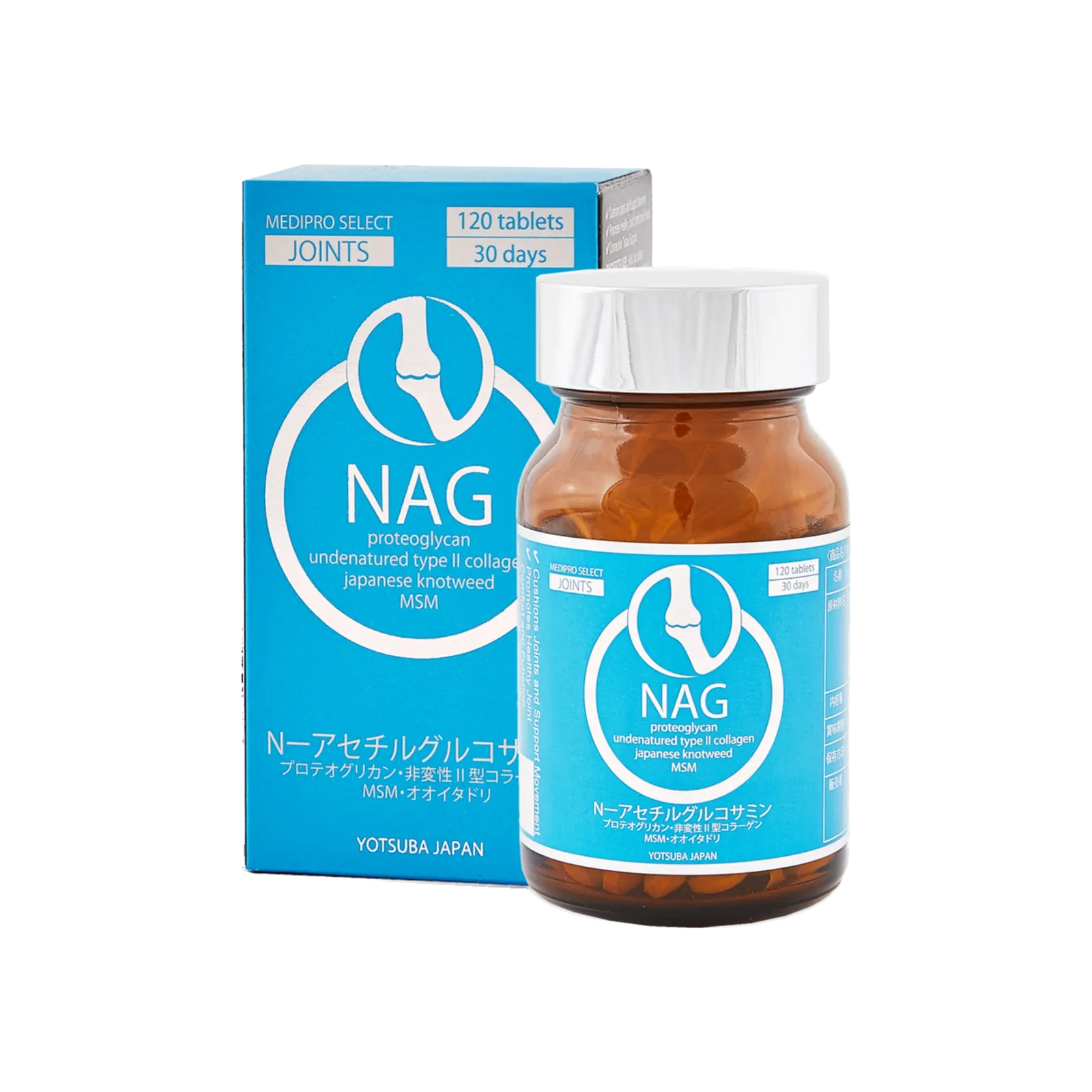
Type II collagen appears in two Yotsuba Japan products with different compositions. NAG combines N-acetylglucosamine with salmon nasal cartilage extract supplying proteoglycan and undenatured type II collagen, alongside Japanese knotweed and MSM. Here, collagen sits within a cartilage-complex and mobility-oriented formulation.
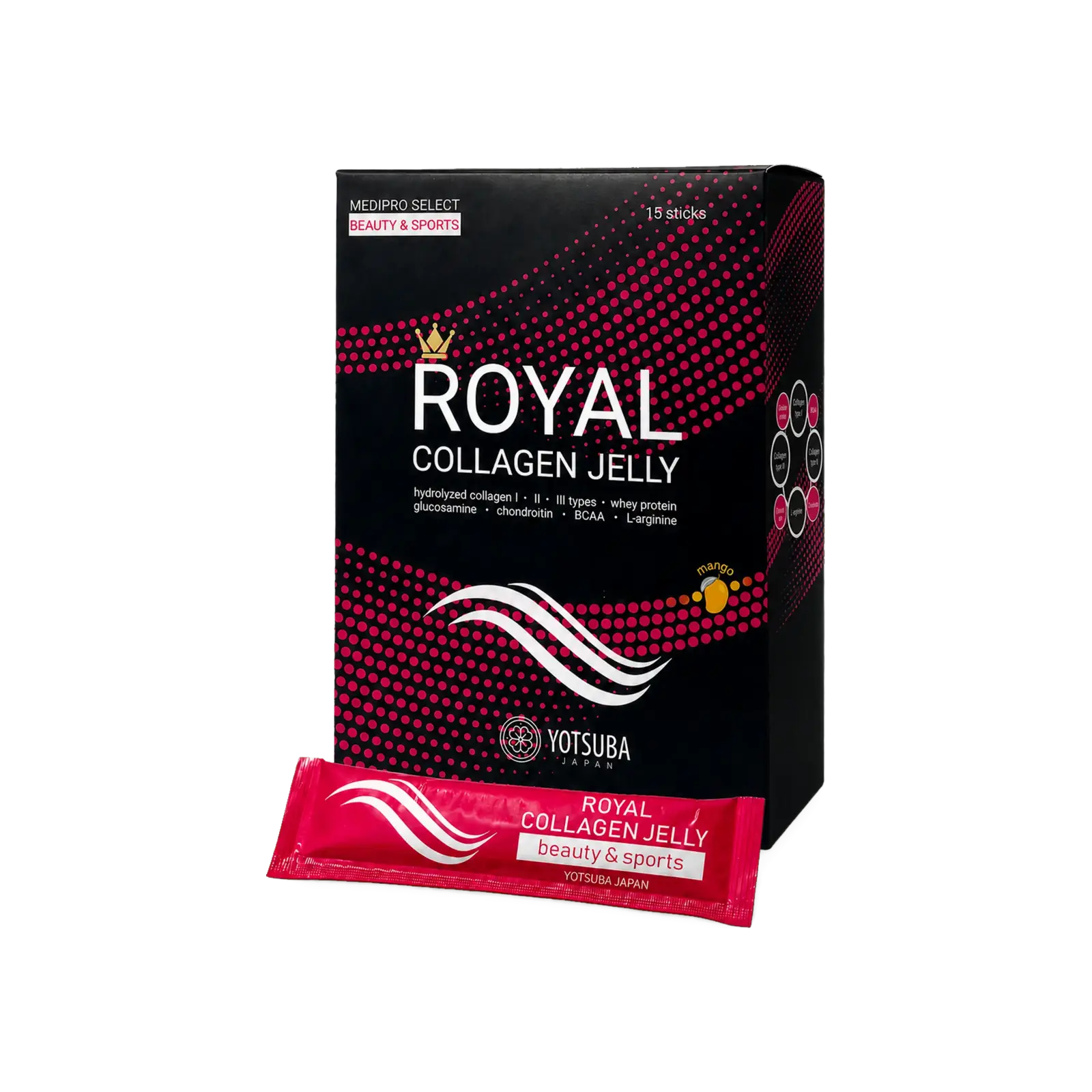
Royal Collagen Jelly brings together collagen types I, II and III. Its type II collagen component comes from chicken cartilage; chondroitin, glucosamine and other ingredients complete the broader composition, connecting beauty-from-within with an active lifestyle.
Both formulas contain type II collagen within their own ingredient combinations. Reading the complete composition makes their respective approaches clearer: the source, preparation and amount give each ingredient its place in the formula.
Behind the familiar word collagen is a family of materials. Looking more closely at their structure and preparation makes the science behind each one more understandable.
Explore two different compositions containing type II collagen in the Yotsuba Japan collection.
The cited ingredient studies use specified preparations and populations. WOMAC measures symptoms and function; its improvement does not demonstrate cartilage regeneration. NEXT-II® is discussed as a research example, separately from the compositions of NAG and Royal Collagen Jelly.