Inspired by The Health Industry News, No. 1845 · 7 October 2026, pp. 38–40, with additional published research.
Salacia, beyond the botanical name.
From carbohydrate digestion to the analytical laboratory: a closer look at a botanical ingredient and the people studying it.
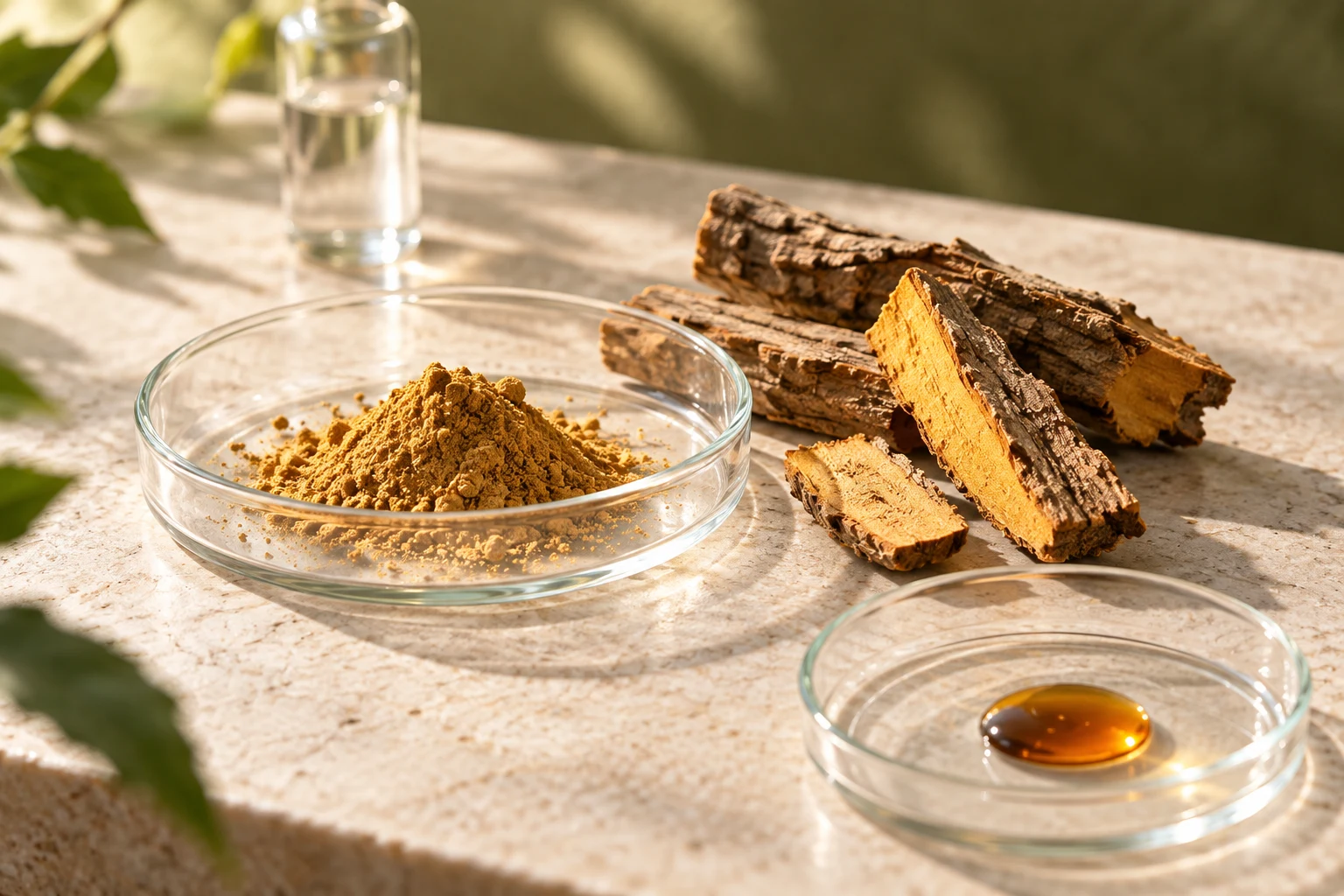
An ingredient becomes more interesting when we understand the question behind its research. For Salacia, that question begins with a meal: how might plant constituents influence the way carbohydrates are broken down?
The story connects digestive enzymes, carefully identified extracts and measurements made in the laboratory. Following those connections takes us from a botanical name to a much more precise understanding of an ingredient.
Where the mechanism begins
- 01
Carbohydrates
A meal provides carbohydrates that need enzymatic breakdown.
- 02
Enzyme activity
Alpha-glucosidases help complete digestion in the small intestine.
- 03
Simple sugars
The resulting sugars become available for absorption.
Research focus at step 02: salacinol and kotalanol inhibit alpha-glucosidase activity. Simplified mechanism; not a quantitative model.
A measured difference after a meal
Reduction in positive glucose area under the curve vs the control meal
The people behind the papers
Jennifer A. Williams & colleagues
Ross Products Division, Abbott Laboratories · Columbus, Ohio, USA
A controlled meal study measuring glucose and insulin responses.
View publicationOsamu Muraoka, Toshio Morikawa & colleagues
Pharmaceutical Research and Technology Institute, Kinki University · Higashi-Osaka, Japan
A method to measure salacinol and kotalanol in botanical materials.
View publicationH. N. Shivaprasad & colleagues
Research and Development Centre, Olive Lifesciences · Bengaluru, India
A small trial comparing leaf and root-bark extracts over six weeks.
View publicationInstitutions are the affiliations reported in the cited papers. These credits identify the research authors; they do not imply endorsement of Yotsuba.
A closer look at digestion
Before carbohydrates can be absorbed as simple sugars, digestive enzymes help break them into smaller units. Alpha-glucosidase enzymes take part in the final steps of this process in the small intestine.
Two Salacia constituents, salacinol and kotalanol, have been investigated for their ability to inhibit these enzymes. This gives researchers a specific mechanism to explore: influencing the rate at which certain carbohydrates become available as glucose. It does not mean that every carbohydrate is blocked or that a meal loses its calories.
What happened after a meal?
In 2007, Jennifer A. Williams and colleagues conducted a blinded, randomised crossover trial in 66 people with type 2 diabetes. Each participant received a liquid meal alone and with two amounts of Salacia oblonga extract on separate study occasions. Blood sampling continued for three hours.
The graph presents the reported reductions in positive glucose area under the curve relative to the control meal. This measure summarises the glucose rise over the observation period. An acute meal response answers a different question from long-term glucose control.
Inside the analytical laboratory
In Osaka, Osamu Muraoka, Toshio Morikawa and colleagues at Kinki University’s Pharmaceutical Research and Technology Institute developed an HPLC–MS assay for salacinol and kotalanol. Their 2010 paper compared three Salacia species and materials from four plant parts.
Liquid chromatography separates constituents; mass spectrometry helps detect them. Together, these techniques make it possible to quantify selected compounds. The work shows why the species, plant part and chemical profile belong alongside the ingredient name.
One genus, different research materials
Salacia reticulata, Salacia oblonga and Salacia chinensis are distinct species within the same genus. Research also examines different plant parts and preparations. Those details help us understand what was actually measured.
A six-week trial published in 2013 by H. N. Shivaprasad and colleagues studied leaf and root-bark extracts of Salacia reticulata in 29 people with prediabetes and mild to moderate hyperlipidemia. Participants received 500 mg daily of an extract or placebo, alongside lifestyle changes. The authors reported improvements in fasting glucose, with the pattern differing between the two extracts. Its small size and short duration leave questions for larger studies.
From measurement to formulation
A botanical ingredient’s practical identity includes its preparation, composition and amount. These details also guide the development of capsules, powders, drinks and jellies: formats that bring different requirements for flavour, texture and consistency.
Reading the research this way gives a plant name more depth. We can ask which material was characterised, what the researchers measured and how an ingredient fits into a clearly described formula. That curiosity is what makes Salacia an interesting subject for our ingredient journal.
Blood Sugar Support SIRTMAX® contains 66.67 mg of Salacia extract powder per daily serving of three capsules, together with bitter melon, SIRTMAX® black-ginger extract, organic mulberry leaf and banaba. Explore the complete composition and the role of each botanical.
Explore the ingredient library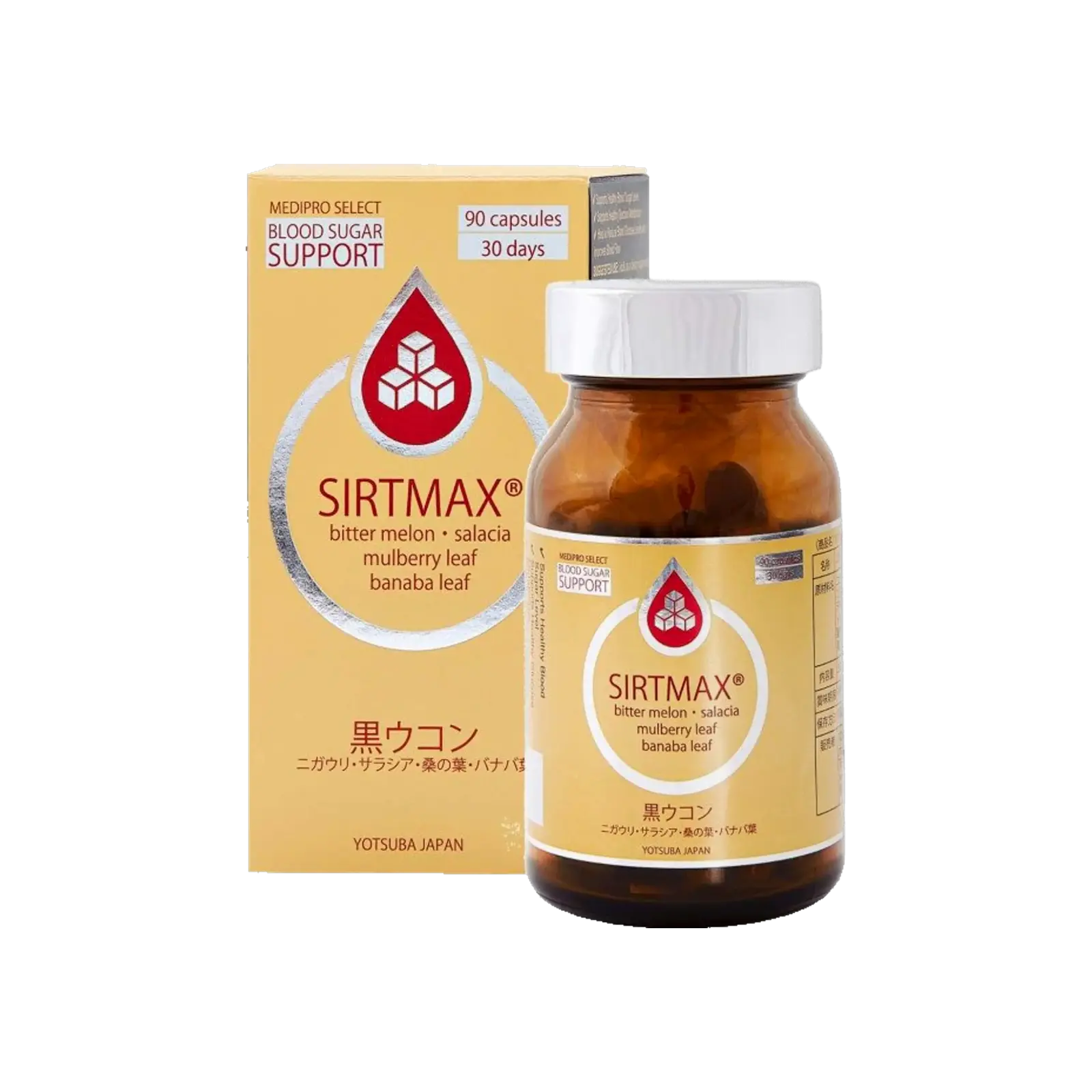
Study details accompany each result. The chart summarises an acute meal experiment; the analytical study measures constituents, while the six-week trial examines fasting outcomes. These are different research questions and should be read in their own study context.