Based on The Health Industry News, issue 1845, 7 October 2026, Oryza Oil & Fat Chemical materials and published research.
From cherry blossom to microbiota.
SAKULORA™, a distinctive bacterial strain and two different paths of human research.
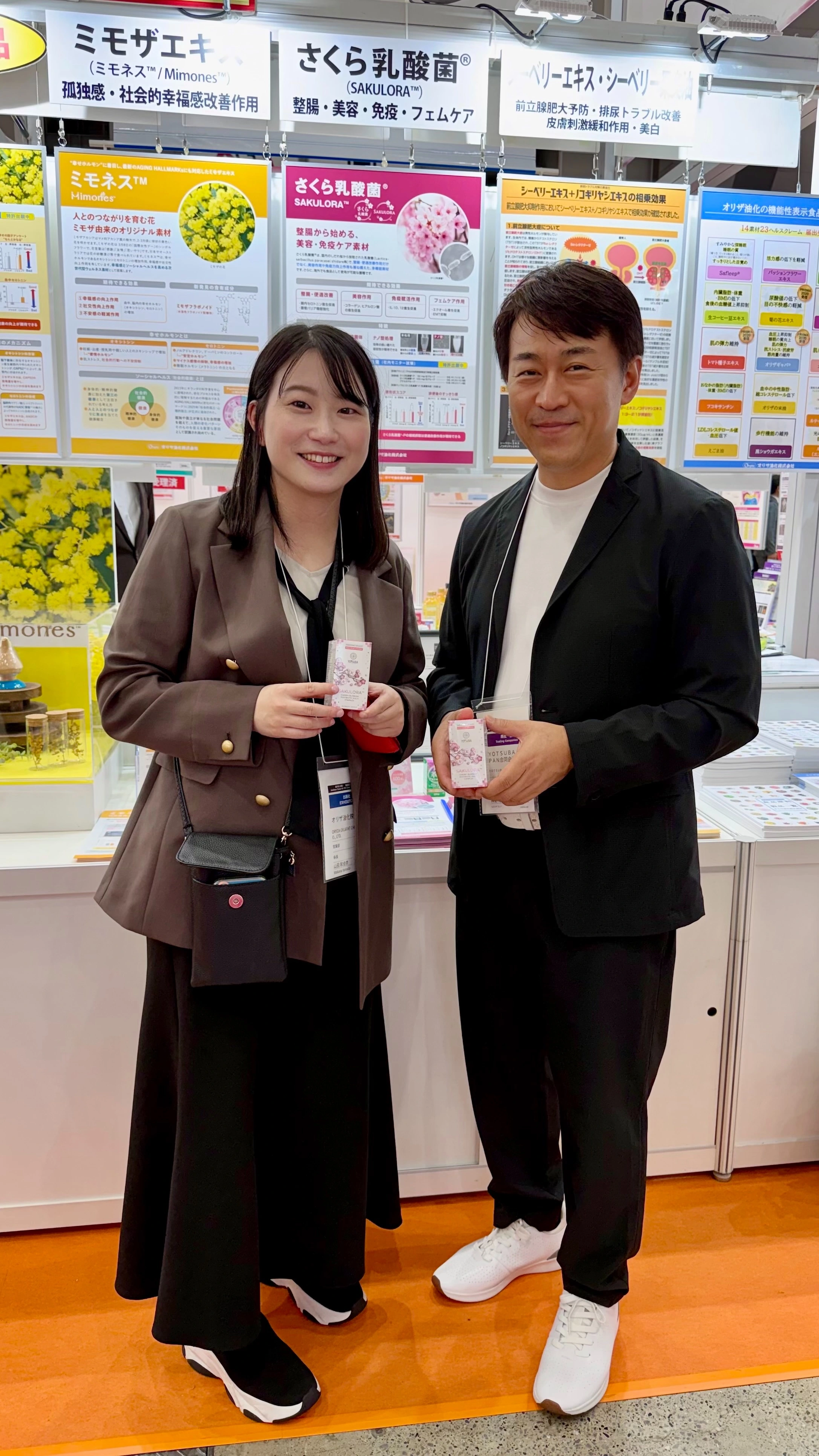
A cherry blossom became the starting point for a Japanese ingredient. Lacticaseibacillus paracasei strain Shidare was isolated from the flowers of weeping cherry blossom and developed into SAKULORA™.
The preparation studied here uses heat-inactivated bacterial cells. It is a different approach from a live probiotic culture: researchers examine the properties of a defined, non-living preparation and its relationship with intestinal function.
Our photograph from the exhibition stand places that research in a real setting, alongside the ingredient display and Yotsuba packaging. The scientific story continues through two separate questions: bowel function and the microbial conversion of a soy isoflavone into equol.
A conversion that depends on the microbiota
Daidzein
A soy isoflavone provides the starting compound.
Microbial conversion
Certain intestinal bacteria carry out the transformation; capacity varies between people.
Equol
Researchers can assess its production through urinary measurements.
Read the study design before the result
- 44 adults
Bowel-function trial
2 weeks · randomised · double-blind · placebo-controlled. Weekly bowel-movement frequency was higher with the ingredient. Microbiota and short-chain-fatty-acid endpoints were not significantly different.
- 11 women
Exploratory equol study
12 weeks · 50 mg/day · manufacturer-reported internal study. Urinary equol-to-daidzein ratio rose against baseline after 2–3 months. No placebo group is described in the release.
What was measured, and when
- Baseline
Before intake
Urinary equol-to-daidzein ratio was assessed.
- 12 weeks
Daily intake
11 healthy women took 50 mg of the ingredient per day.
- 2–3 months
Reported observation
The manufacturer reported a significant increase in the ratio relative to baseline.
Why equol enters the picture
Some dietary compounds undergo further transformations through intestinal microorganisms. Daidzein, a soy isoflavone, is one example: certain gut bacteria can convert it into equol. The capacity for this conversion varies between people.
This raises a research question about the conditions supporting that transformation. For the developers of SAKULORA™, equol production has become one branch of a wider ingredient research programme.
An exploratory observation over twelve weeks
In January 2026, Oryza reported an internal study in 11 healthy women who took 50 mg of the ingredient daily for 12 weeks. The researchers measured the urinary equol-to-daidzein concentration ratio.
The company reported a statistically significant rise relative to baseline after two to three months. Equol production was also detected after three months in both of the two participants in whom it had not been detected at entry.
The public release does not describe a placebo group. These small, exploratory observations call for further confirmation. They do not establish that every person will develop equol-producing capacity.
A separate controlled study of bowel function
A different study was published in February 2026 in Functional Foods in Health and Disease by Tsuyoshi Takara, Naoko Suzuki, Hiroshi Shimoda and colleagues. Forty-four adults with mild constipation were randomly assigned to the ingredient or placebo for two weeks in a double-blind trial.
The ingredient group had a significantly higher weekly bowel-movement frequency than placebo. No significant differences were reported for secondary endpoints, including microbiota composition and faecal short-chain fatty acids.
This paper concerns bowel function. Its findings should be read alongside, rather than merged with, the separate exploratory equol study.
The ingredient in the Yotsuba collection
Yotsuba Japan’s SAKULORA™ combines a vitamin-and-mineral foundation with 50 mg of the heat-inactivated Shidare ingredient per daily serving. Its identity brings together micronutrient formulation and a specific Japanese bacterial preparation.
From a flower to an identified strain, and from a prepared ingredient to measured research outcomes, the story illustrates how a natural origin can become the beginning of scientific investigation.
Explore the full composition of SAKULORA™ in the Yotsuba Japan collection.
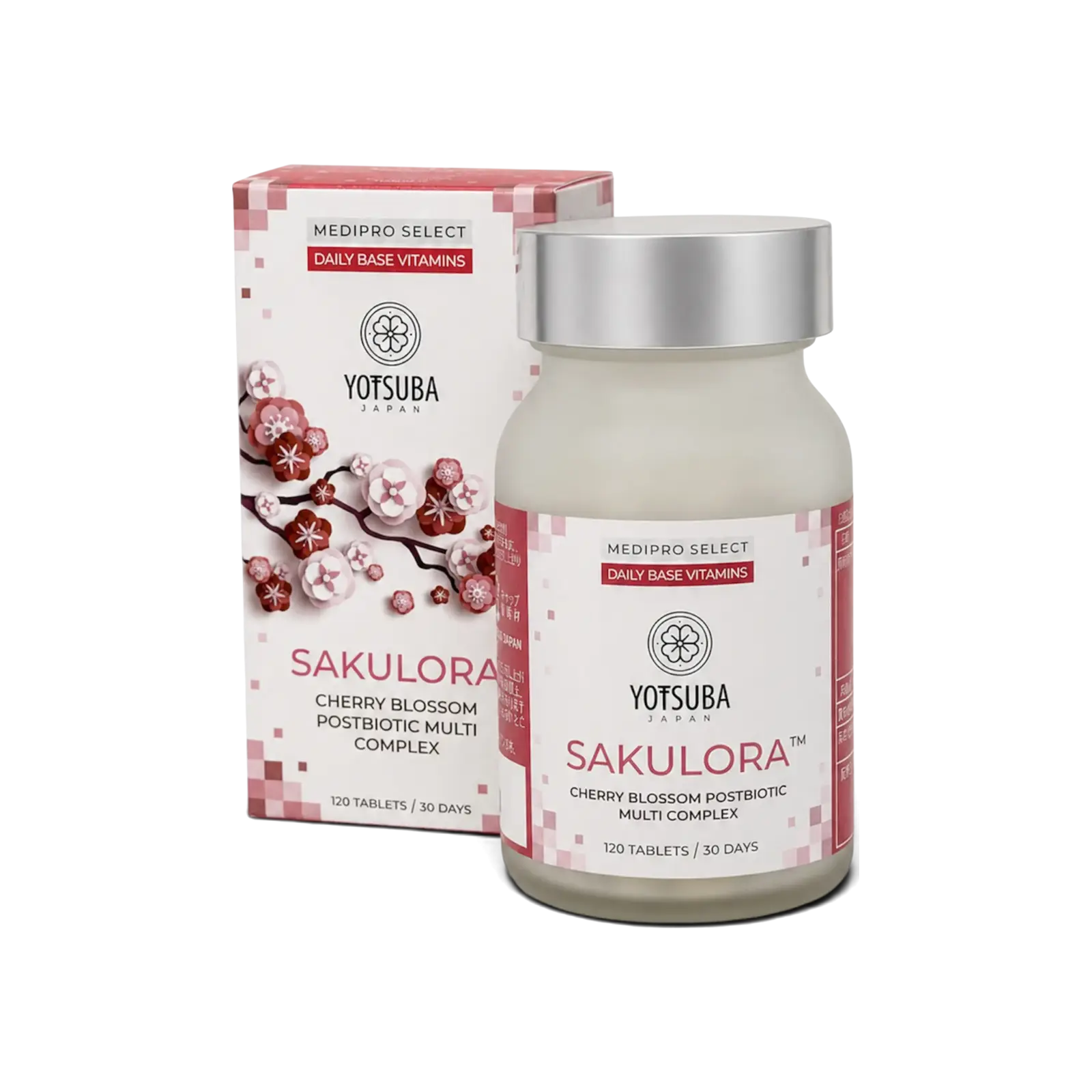
The two studies concern different endpoints and designs. The bowel-function paper is a placebo-controlled ingredient trial; the equol observations are reported in a manufacturer release.