The quality of a single tablet.
From incoming ingredients to the review of a finished batch: the measurements, people and records behind a carefully made supplement.
What the bottle cannot show
A finished supplement looks reassuringly simple: a bottle, a label and a daily serving. Inside production, that simplicity is the result of many separate decisions. A powder must be suitable for processing; a tablet must retain its structure during handling; the relevant checks must be reviewed.
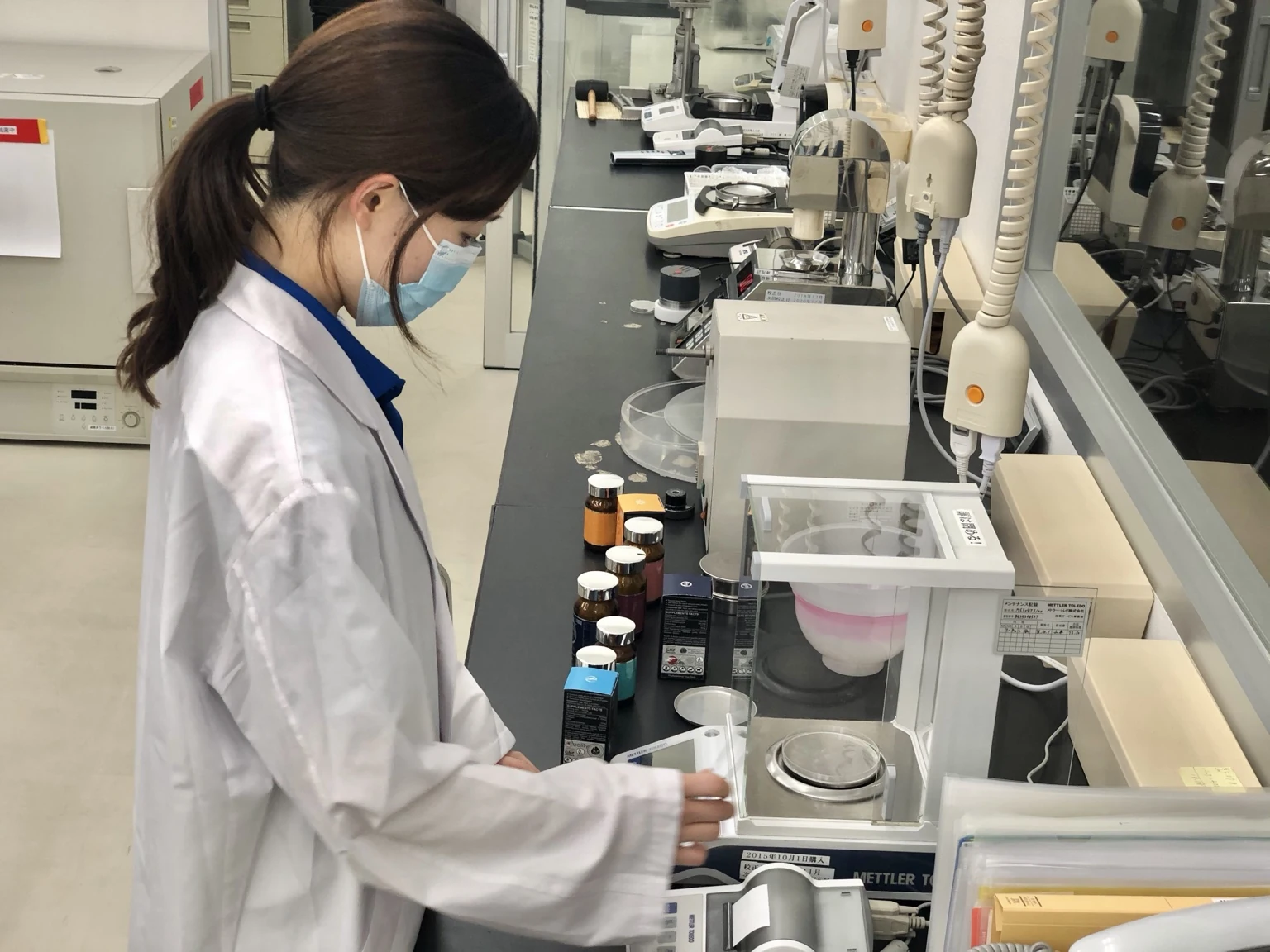
Our laboratory photographs bring that work into view. They were taken at a Japanese manufacturing partner, where sample handling, analytical balances and product packaging share the same working environment. They are part of the Yotsuba production archive.
This notebook follows the questions behind those scenes. What is being checked? What does a measurement tell us? And how do ingredients, equipment, people and records become one system of manufacturing quality?
From incoming material to a reviewed batch
Receive
Identify the material and connect it with its lot and specification.
Develop
Prepare trial samples and evaluate the chosen production process.
Check
Assess the properties relevant to the product and its form.
Review
Connect results with records before the batch proceeds.
Before a material becomes an ingredient
Quality work starts at the receiving stage. An incoming material has an identity, a supplier lot and a specification. Those details connect the material used in production with its supporting documentation.
Our partner’s published programme describes checks of raw materials as well as products. Inspection results act as a condition for continuing production. Quality review becomes a practical step in the workflow.
A useful specification gives the laboratory a defined basis for deciding whether a material is suitable. The examination needs to reflect the material and its intended use.
A formula must also be made consistently
The quantities on a formulation sheet must become a product that can be manufactured repeatedly. Development therefore includes trial samples and checks using production equipment. A small laboratory sample cannot answer every practical question about manufacture.
The manufacturing background reviewed for this article describes laboratory prototyping, production-machine trials and testing before commercial manufacture. These stages connect the intended composition with the physical form people eventually handle.
For a brand, this is an important part of formulation work: ingredients, process and presentation need to be considered together.
A powder becomes a presentation

Five measurements. Five different questions.
The published production description identifies five areas of testing: microbiology, moisture, disintegration, hardness and mass. Together they illustrate why appearance alone cannot tell the whole quality story.
Each result has a particular meaning. Consistent mass is a physical characteristic; on its own, it does not establish the amount of every ingredient in each unit. A microbiological examination addresses the organisms covered by its method. These measurements complement one another.
What is each check asking?
Microbiology
What does the specified microbiological examination detect?
Moisture
Does the measured moisture meet the intended specification?
Disintegration
Does the unit break down under the specified test conditions?
Strength
Is the tablet’s mechanical integrity suitable for its intended use?
Mass
Does the measured mass meet the defined requirements?
Strong enough for the journey
A tablet encounters mechanical stresses during manufacture, coating, packaging and transport. Its structure must be appropriate for those demands. Mechanical testing helps evaluate this aspect of the dosage form.
The term tablet hardness is widely used in production. Pharmacopoeial discussion more precisely refers to breaking force: the force required to break a tablet under a defined arrangement. The method and the tablet’s geometry matter when interpreting a result.
Strength must also be considered alongside the intended behaviour in liquid. The aim is a suitable balance for the formulation, rather than the highest possible number.
What happens when the tablet meets liquid?
Disintegration testing examines whether a tablet or capsule breaks down within a specified time under defined conditions in a test liquid. The Japanese Pharmacopoeia makes an essential distinction: disintegration does not mean that the dosage unit, or its active constituent, has completely dissolved.
Dissolution asks about a substance entering solution. Absorption concerns its passage into the body. These are related stages, but one test does not establish all the others.
The Japanese health-food association has specifically emphasised disintegration testing within its GMP programme for tablet- and capsule-type products. The method and acceptance criteria need to suit the product.
Breaking apart is one stage of the story
Disintegration
The dosage unit breaks down in the test liquid.
Dissolution
A substance enters solution.
Absorption
A substance crosses into the body.
The shell and coating belong to the design
Capsule shells and tablet coatings contribute to the finished presentation. Depending on the material and design, a coating can help with handling, mask an unwelcome taste or odour, or protect the preparation.
The production capabilities reviewed for this notebook include different hard-capsule materials and tablet-coating processes. These are development choices. A shell alone does not establish that a product is enteric or has controlled release.
The useful question is specific: which shell or coating is used in this formulation, for what purpose, and how has the resulting presentation been evaluated?
Hygiene includes the equipment between batches
The production environment is part of the quality system. Our partner’s quality information describes checks of equipment, machinery and the factory itself, alongside examinations of materials and products.
The archived factory overview adds a practical detail: equipment is disassembled for thorough cleaning, and washed parts are dried. It also describes hygiene inspections extending from machinery to frequently touched surfaces.
These activities explain some of the less visible work around a production run. The condition of the working environment deserves attention alongside the sample on the laboratory bench.
Inside the laboratory
Equipment in context
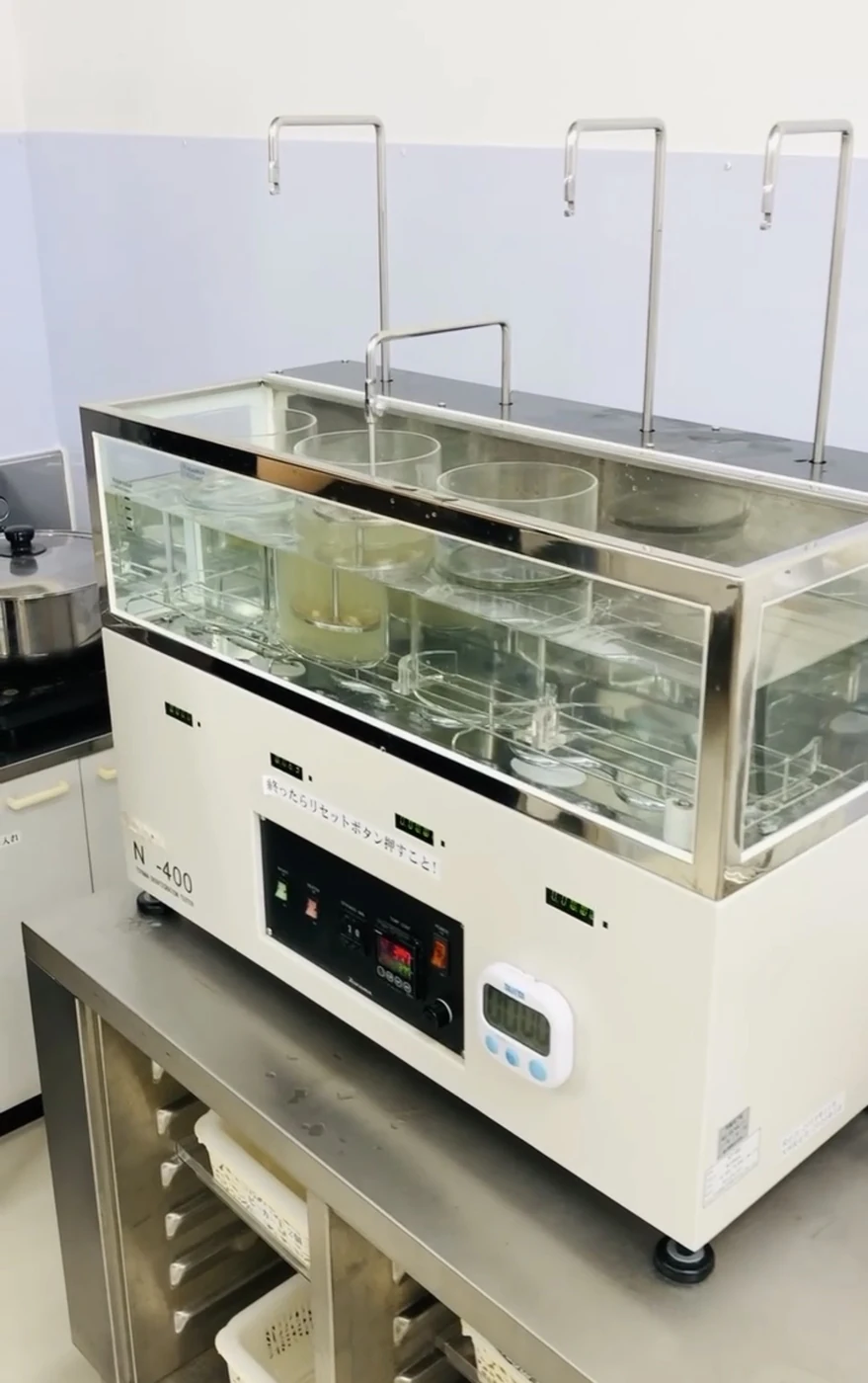
Liquid-bath apparatus photographed during the factory visit. The image records equipment rather than a reported batch result.
Working with the sample
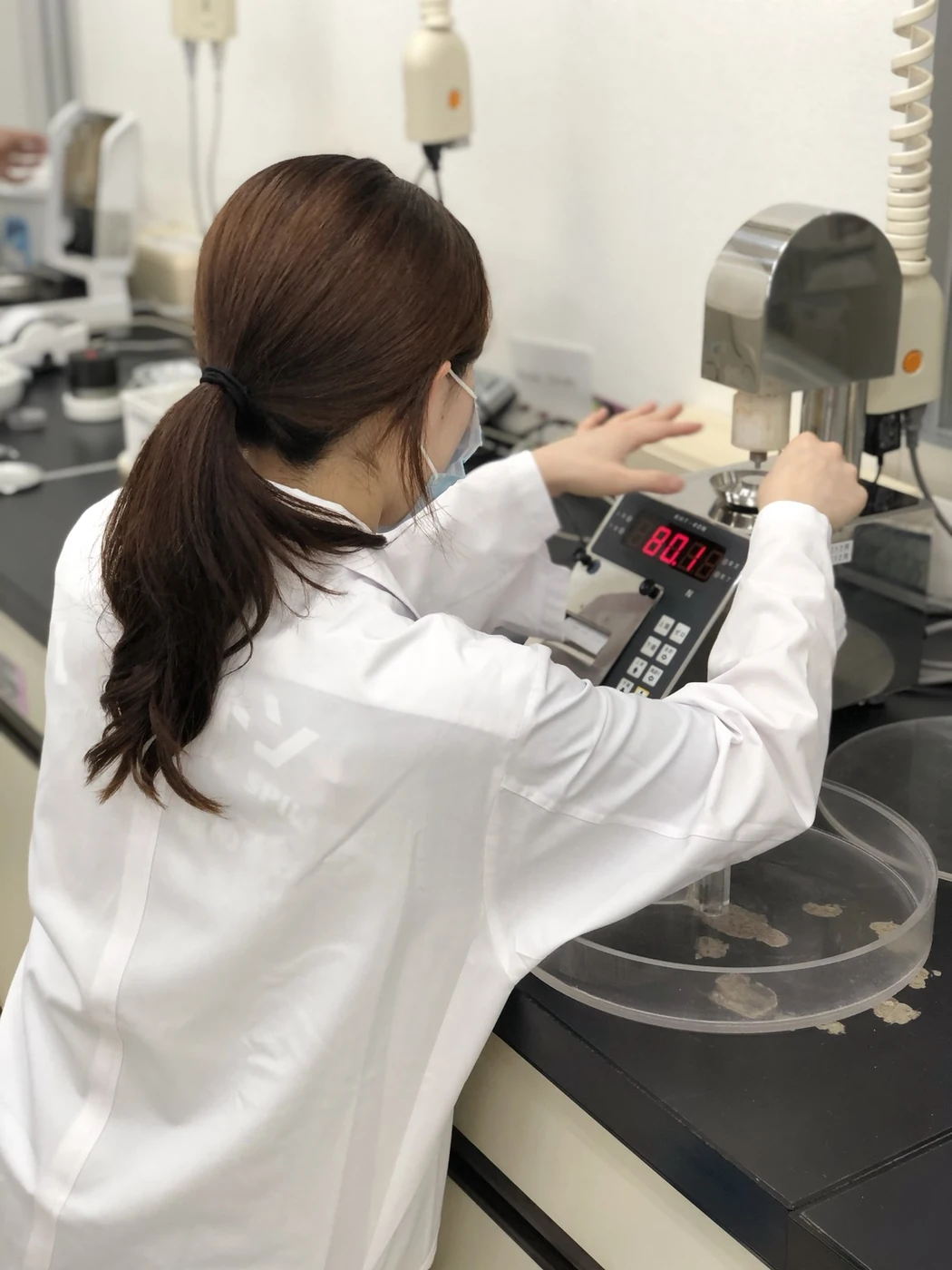
A specialist handling a sample at a laboratory instrument. Original field photography supplied by Yotsuba Japan.
People and instruments work together
Published manufacturing material describes visual inspection of individual tablets and capsules, alongside instrumental checks. An operator examines appearance; a laboratory instrument measures a defined property. These observations serve different purposes.
The archived overview also describes a final metal-detector check. This targeted examination for metallic contamination complements other checks.
The useful view of inspection is a combination: trained observation, suitable instruments and clear decisions about what their results mean.
Why records matter as much as a reading
A number on a screen becomes meaningful when its context can be recovered: the sample, method, instrument and acceptance criterion. Batch and laboratory records connect a result with the material or product it represents.
Good Manufacturing Practice addresses manufacturing and quality control throughout the process, from receiving materials to dispatching the finished product. Its value lies in the way the system is operated and documented.
Manufacturing quality and clinical evidence answer different questions. A controlled process helps a product meet its specification. Evaluating a health outcome requires evidence relevant to that outcome and preparation.
A lot number keeps the story connected
A batch identifier allows a finished product to be followed back through its manufacturing history. The production materials reviewed for this article describe retained samples and follow-up checks of identifiable lots after dispatch.
Retained samples provide a physical reference if a later question arises. Records make it possible to investigate which materials and manufacturing steps belong to the lot under review.
For Yotsuba, this continuity is part of working closely with production partners. The relationship extends from development to questions that may arise after a product has left the factory.
The meaning of a carefully made supplement
The ingredient list is a useful starting point. Manufacturing adds further questions: can the chosen form be produced consistently, do its properties meet the intended specification, and can the history of a batch be followed?
Our production photographs show the people, samples and equipment behind that work. The educational diagrams explain what each check addresses. Together they offer a closer view of the care involved in bringing a formulation into its finished form.