Based on The Health Industry News, issue 1844, 16 September 2026, ingredient documentation and scientific publications.
Proteoglycans. The architecture of resilience.
A salmon-derived ingredient connects skin and joint research — through molecular structure, Japanese ingenuity and new scientific questions.

When we think about the structure of skin and cartilage, collagen usually comes to mind first. Yet living tissue depends on a whole system of molecules: some build a strong framework, while others help organise the space between cells and hold water within it.
Proteoglycans belong to this second group. Their distinctive architecture helps explain why the same family of substances interests researchers in two directions — skin condition and joint health.
A molecule shaped like a bottlebrush
A proteoglycan consists of a protein core with long carbohydrate chains called glycosaminoglycans attached to it. Its architecture is often compared with a bottlebrush: a central backbone surrounded by many projecting chains.
These chains carry electrical charges and interact with water. In cartilage, proteoglycans function within a collagen network, contributing to resistance to compression and the ability to bear loads.
The collagen framework and the water-rich space within it together give cartilage its mechanical properties.
Proteoglycans also occur in skin, where they help organise the extracellular matrix. They form a large molecular family, with structures and functions that vary between tissues. Research on food ingredients therefore needs to identify the particular material, its source and how it was prepared.
A protein core. Many water-interacting chains.
Protein core
The central backbone supports the attached carbohydrate chains.
Glycosaminoglycans
Long, charged sugar chains extend from the protein core.
Water interaction
The chains help create a hydrated environment within the matrix.
A Japanese story that began with local cuisine
Salmon nasal-cartilage proteoglycan has an unusual history. Researchers at Hirosaki University took inspiration from hizu namasu, a traditional dish made with thinly sliced salmon cartilage and vinegar.
According to the university, this local food inspired Professor Takagaki’s development of an extraction method using food-grade acetic acid in 1998. Collaboration between university researchers and industrial partners helped make the material available for further investigation and functional-ingredient production.
The supplied documentation describes Proteoglycan F as a dried, proteoglycan-containing ingredient obtained from salmon nasal cartilage. Behind a familiar line on a product’s ingredient list lies a sequence of technological steps: extraction, purification, standardisation and production of a powder.
A framework with a water-rich interior.
Collagen network
Fibres provide the surrounding structural framework.
Proteoglycans
Bottlebrush molecules occupy spaces within the network.
Hydrated space
Water and matrix molecules contribute to resistance to compression.
Skin: from tissue structure to measurement
Studies of orally consumed proteoglycan examine specific skin parameters.
In a randomised, double-blind study published in 2015, Tatsuji Takahashi and colleagues assigned 19 adults to proteoglycan or placebo.
The authors reported improvements in selected skin-elasticity measurements compared with placebo. They also assessed hydration, surface condition and other parameters. The small sample limits the reach of the findings, but the study illustrates how an ingredient can be investigated through instrumental measurements alongside participants’ experiences.
Joints: what the 2024 study added
A more recent Proteoglycan F trial appeared in Osteoarthritis and Cartilage Open in 2024. Huyen Thi Thanh Vu’s team included Vietnam’s National Geriatric Hospital, Hanoi Medical University and Japanese researchers.
The randomised, double-blind trial compared proteoglycan with placebo over 24 weeks. The test serving supplied 10 mg of proteoglycan daily: the amount of proteoglycan itself under the trial conditions.
Researchers assessed symptoms, quality of life, laboratory measures, ultrasound and knee MRI. More proteoglycan recipients met specified pain-reduction criteria. Certain MRI scores for subchondral bone — the area beneath the cartilage — also improved more in that group.
Ultrasound characteristics did not differ significantly between groups. The authors called for further research. These findings do not establish regeneration of lost cartilage.
A new direction: interaction with the intestine
In February 2026, Shintaro Hirasawa and Tomio Yabe of Gifu University investigated another question: could proteoglycan interact directly with intestinal epithelial cells? The fate of these large molecules after oral intake remains under investigation.
Using Caco-2 cells as a laboratory model, the researchers found changes in TIMP gene expression and gelatinase activity, part of the regulation of extracellular-matrix enzymes. The proteoglycan came from the manufacturer identified in the supplied ingredient dossier.
The work proposes an intestinal interaction that does not first require the entire molecule to enter the bloodstream. This is a cell study: it develops a possible mechanism, without establishing a clinical effect in humans.
Three studies. Three different questions.
- 2015
Skin · human study
19 adults · randomised, double-blind, placebo-controlled. Selected elasticity measurements; a small study.
- 2024
Knee joints · human trial
24 weeks · placebo-controlled. Pain criteria and imaging; further evaluation needed.
- 2026
Intestinal epithelium · cell model
Caco-2 cells · TIMP–gelatinase regulation. A mechanistic question, not a human trial.
One ingredient, three Yotsuba Japan compositions
Within the Yotsuba Japan collection, proteoglycan-containing ingredients appear in three products with different formulation directions.
N-Acetylglucosamine combines it with N-acetylglucosamine, undenatured type II collagen, knotweed extract and MSM. Here, proteoglycan forms part of a composition focused on joints and mobility.
Collagen Tripeptide brings proteoglycan together with collagen tripeptides, hyaluronic acid, rice ceramides, fish elastin and vitamins. In this formula, it belongs to the beauty-from-within direction.
Elixir Collagen Drink combines salmon proteoglycan with fish collagen peptides, swallow’s nest, silk peptide and selected beauty ingredients.
Proteoglycan connects the three compositions while each retains its own character. This is what makes proteoglycans so interesting: their architecture, origin, preparation and the specific questions researchers continue to ask.
Proteoglycan-containing ingredients appear in three distinct Yotsuba Japan compositions. Explore the complete formulas.
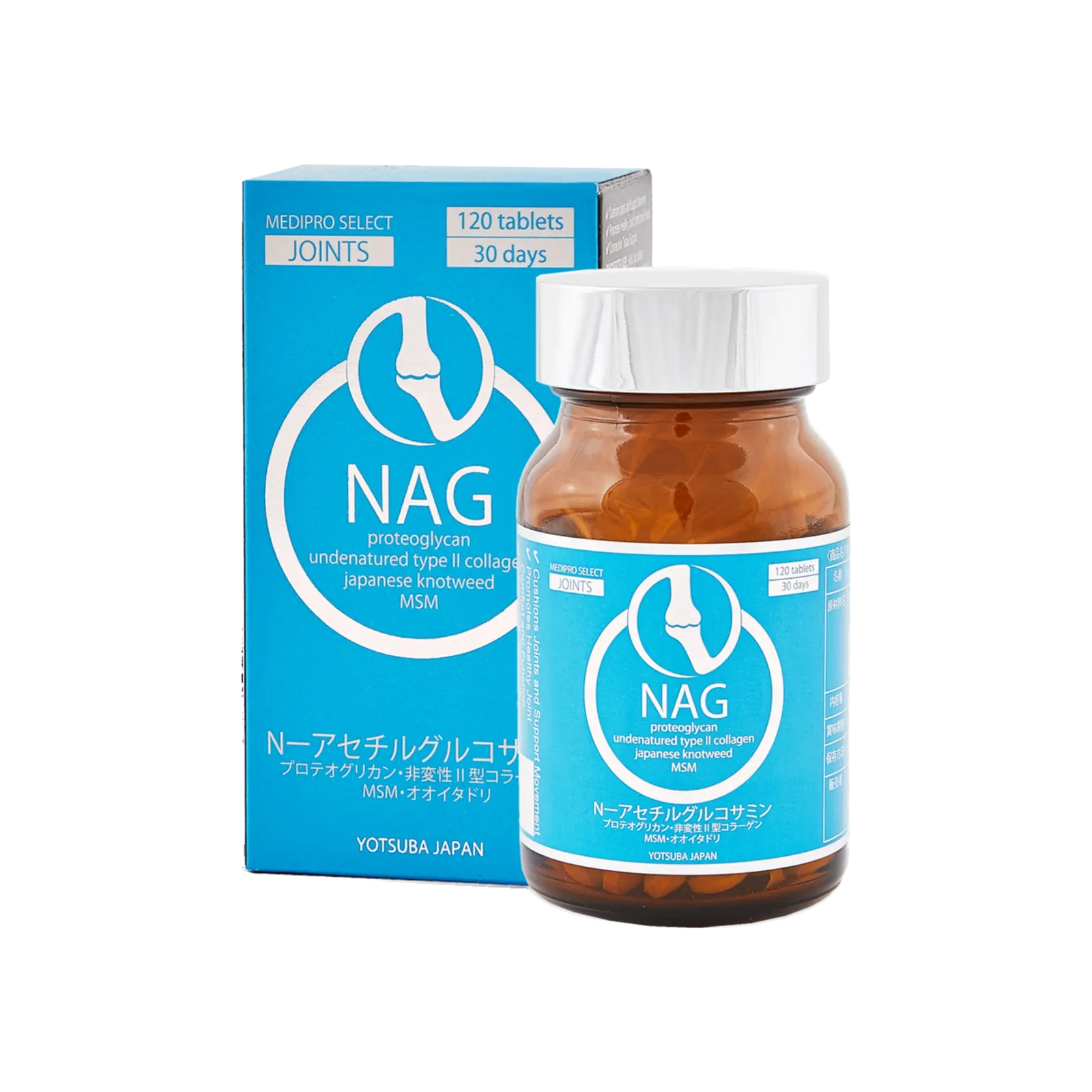
NAG
A joint-and-mobility composition with N-acetylglucosamine, a salmon cartilage complex, knotweed extract and MSM.
Explore the formula ◎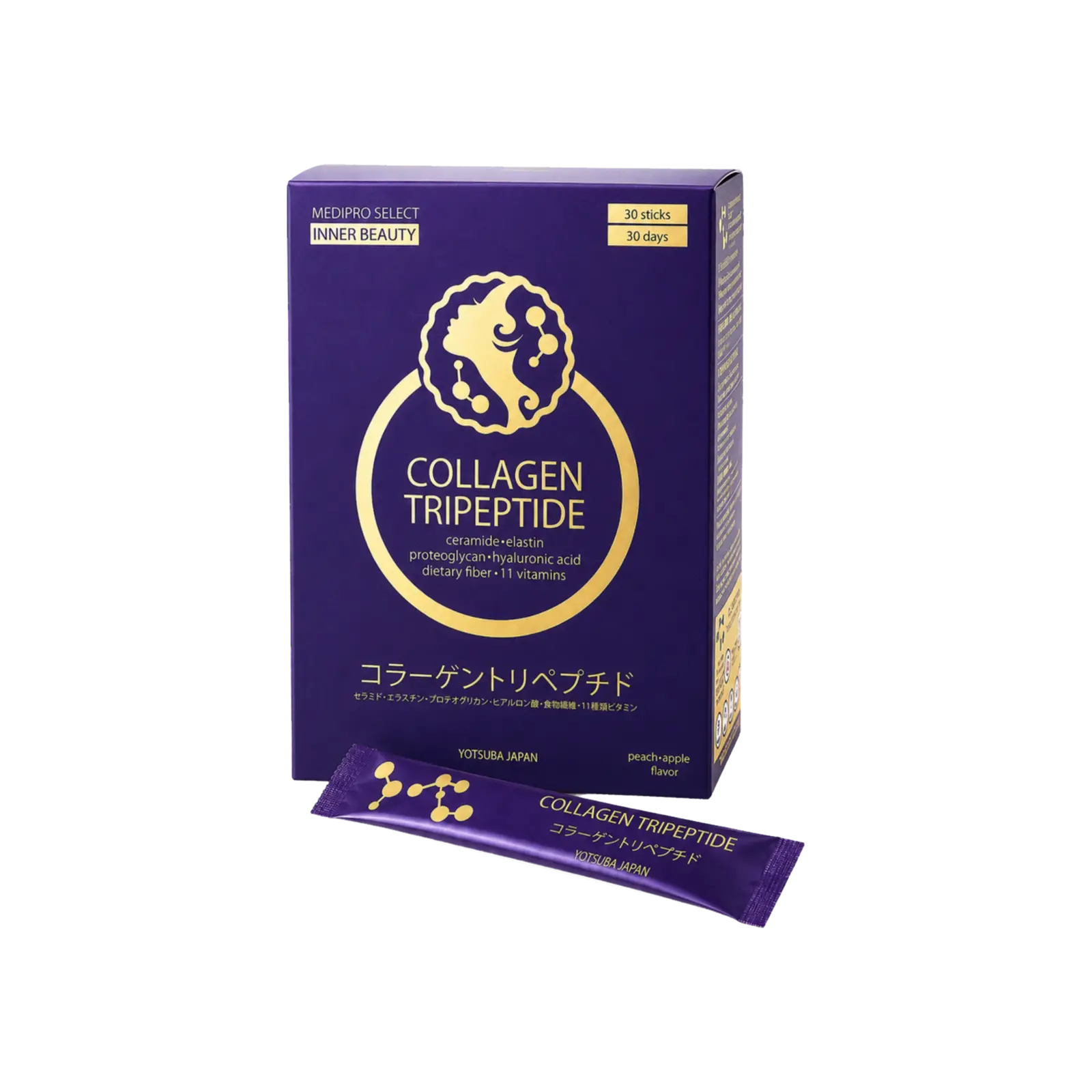
Collagen Tripeptide
Collagen tripeptides with salmon proteoglycan, hyaluronic acid, rice ceramides, fish elastin and vitamins.
Explore the formula ◎
Elixir Collagen Drink
Fish collagen peptides with salmon proteoglycan, swallow’s nest, silk peptide and selected beauty ingredients.
Explore the formula ◎The newspaper also presents other commercial proteoglycan preparations. The ingredient context here follows the supplied Proteoglycan F dossier. The 2026 paper identifies the same manufacturer, without establishing an identical commercial grade. Ingredient research is distinct from testing these complete Yotsuba formulas. Study amounts refer to the specified test material, not a product serving.