The future of longevity. Five days in Kobe.
Our extended report from MIRAI TECH CITY: cellular identity, regenerative medicine, emerging technologies and the people bringing longevity research closer to practice.
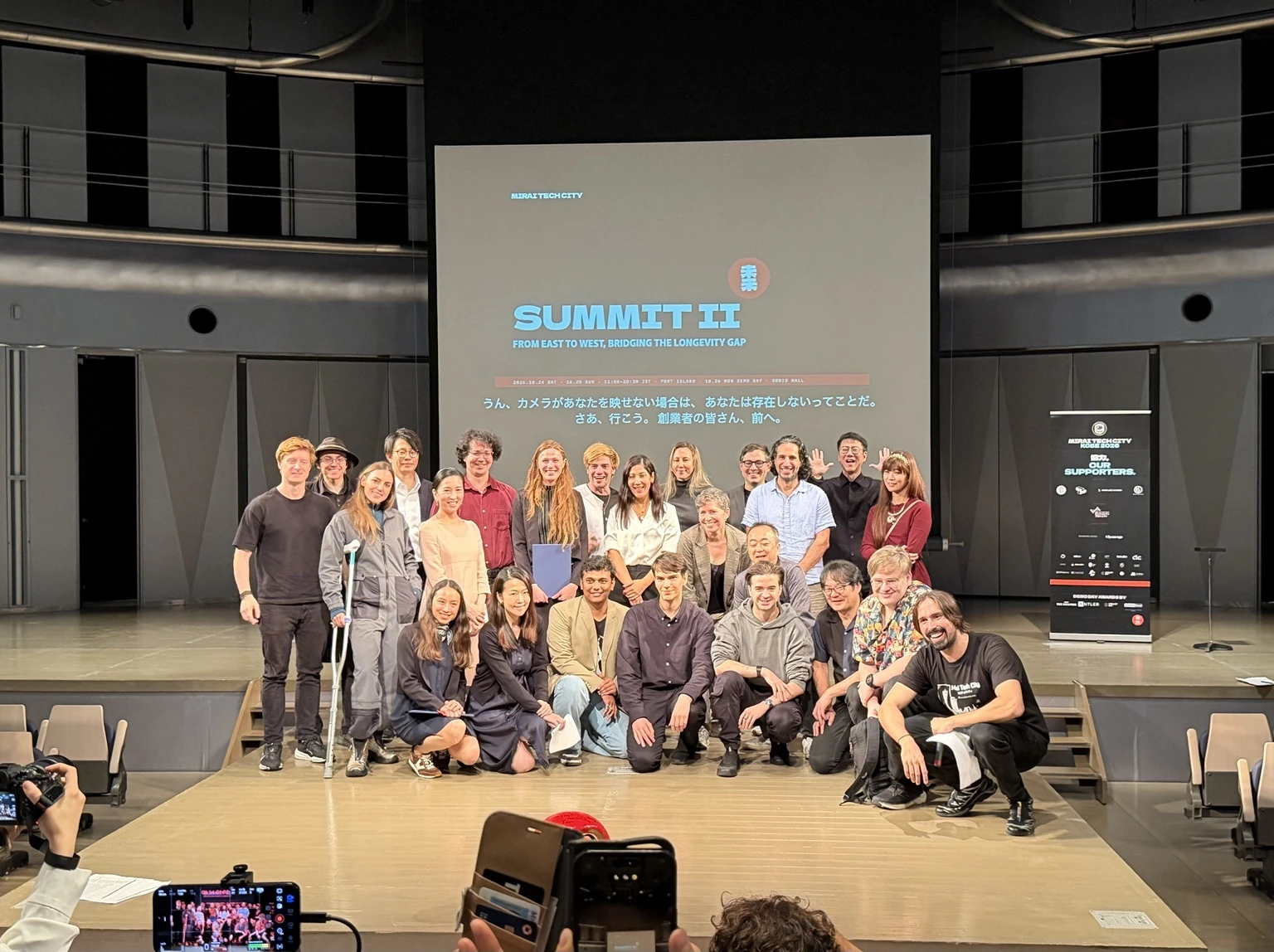
Why we came to Kobe
What does a longer life mean if strength, mobility and independence do not follow? We came to MIRAI TECH CITY with that question in mind. Representing YOTSUBA JAPAN, we wanted to understand how researchers and founders are approaching healthy ageing, and which ideas deserve closer attention as the field develops.
Our visit covered five days: Summit I on 17–18 October, Summit II on 24–25 October and Demo Day on 26 October. Together, they offered a wider perspective than a single keynote could provide: the science, the technologies being developed around it and the conversations needed to move an idea forward.
This expanded report brings those strands together. The photographs are from our own event collection; the scientific context below links back to published sources.
A city where research meets development
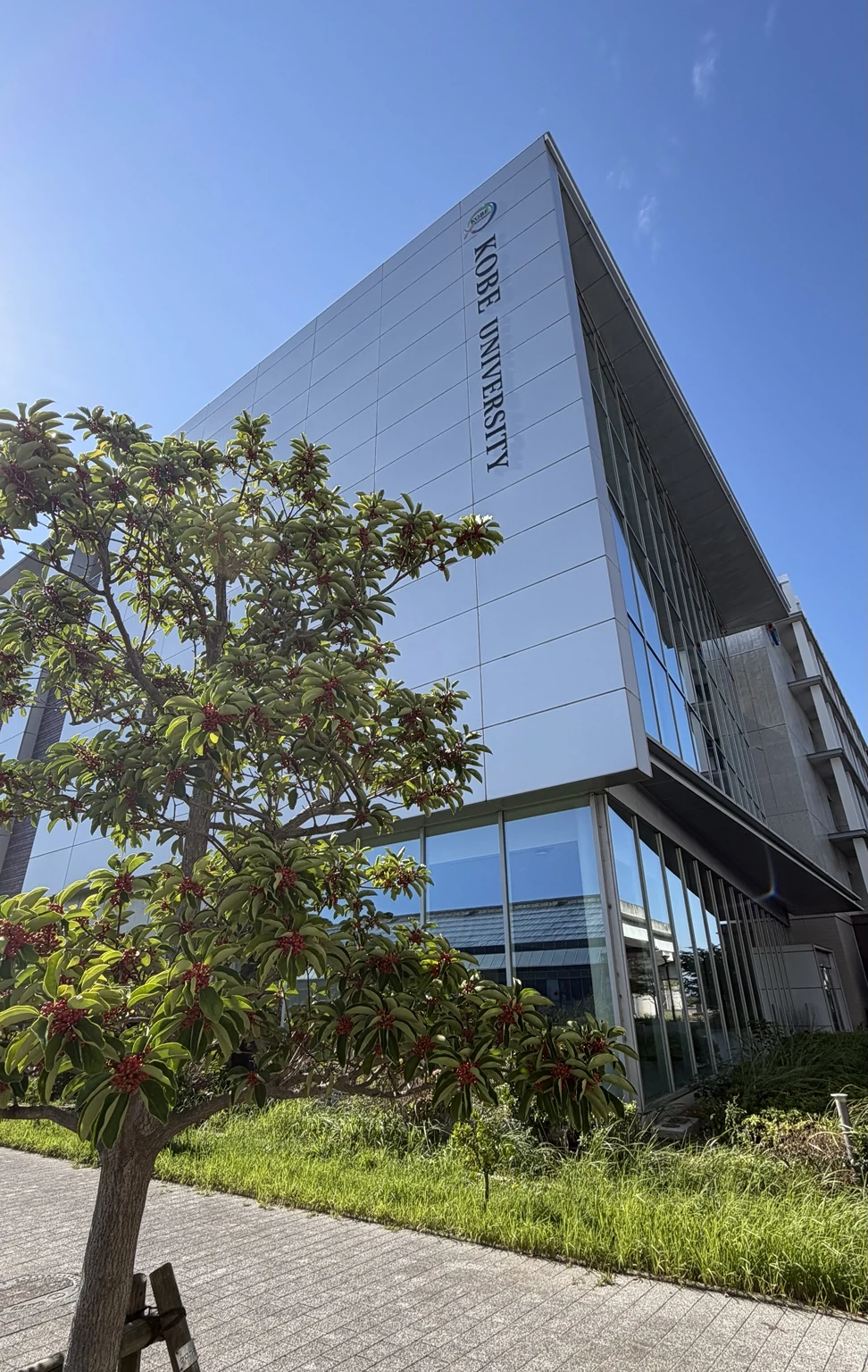
The programme moved between Kobe University’s Integrated Research Center, Kobe Portopia Hotel and Orbis Hall at the Kobe Fashion Museum. The setting made the relationship between university research, clinical expertise and new ventures tangible.
For us, the value lay in hearing different disciplines ask questions of one another. A researcher may focus on a mechanism; a clinician on meaningful patient outcomes; a developer on consistency, manufacturing and use. A convincing health technology needs those conversations to meet.
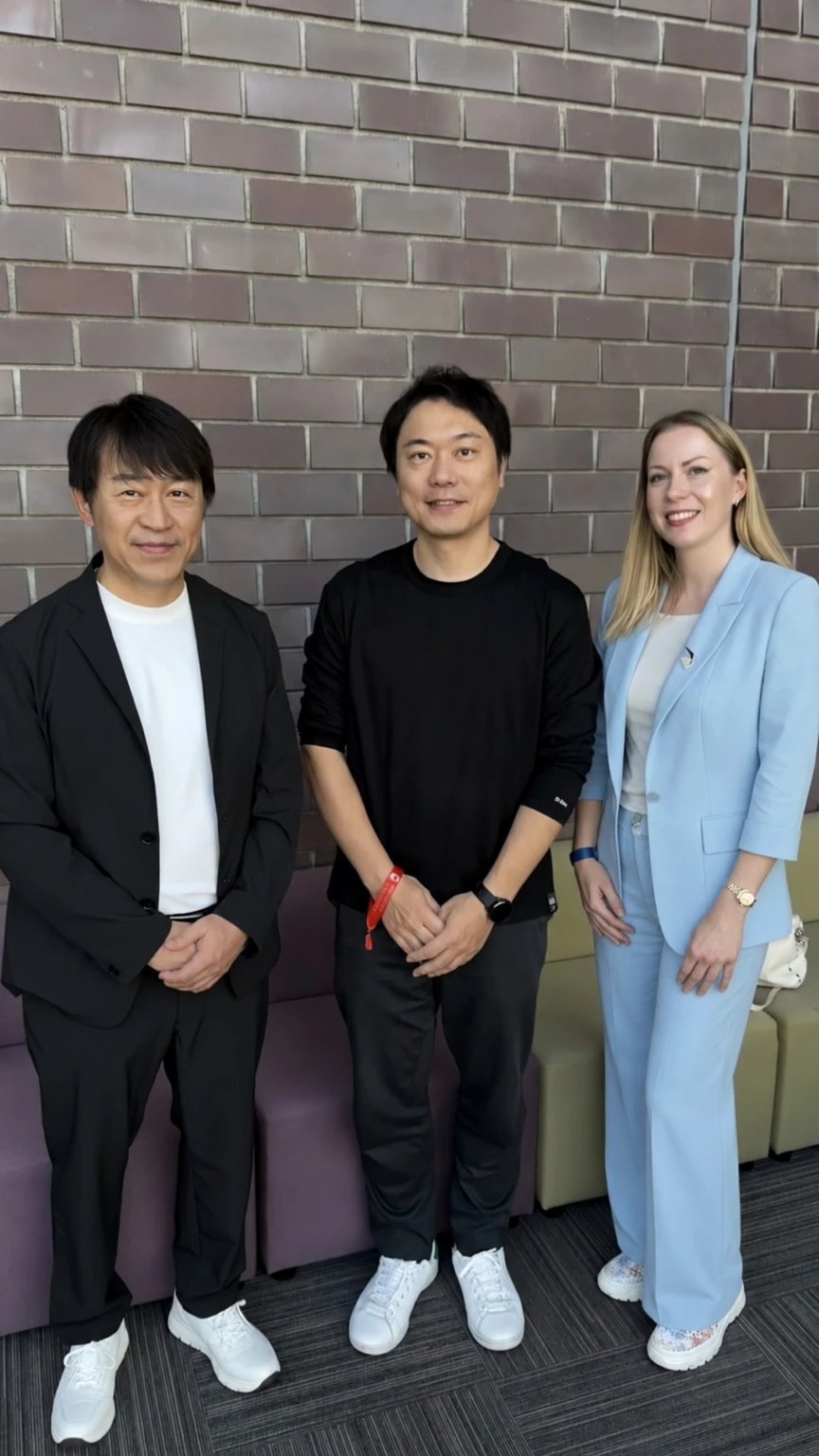
That is also why the moments between sessions mattered. Meeting people working from different starting points helped us look beyond a headline and towards the work behind it.
The setting for the conversation
Cellular identity: another way to read ageing
Motoshi Hayano’s programme keynote explored an information-based view of ageing. His coauthored 2023 Cell paper offers a scientific foundation for understanding this perspective.
DNA carries the genetic sequence, while epigenetic regulation helps determine how cells use that information. The paper investigated changes to this regulation in experimental cells and mice. Its results linked disrupted epigenetic information to ageing-related changes and examined the effects of partial reprogramming.
The striking idea is that studying ageing involves more than identifying accumulated damage: it also involves understanding how a cell maintains its identity. The important boundary is equally clear. These experimental findings do not demonstrate rejuvenation in people, nor do they establish an effect of an oral NMN preparation.
Our takeaway is a research question rather than a promise: which changes in biological regulation can be measured reliably, and which interventions can improve function safely?
iPS cells: from a discovery to specific medical applications
Takayuki Aoi’s Summit I session addressed iPS-based drug discovery and cell therapy. Induced pluripotent stem cells are mature cells reprogrammed to a state from which they can develop into many specialised cell types. They provide tools for modelling disease, screening medicines and developing regenerative treatments.
The connection to Kobe is also personal to the history of the field: Shinya Yamanaka, whose group first generated iPS cells in 2006, received his medical degree from Kobe University in 1987. This is historical context, rather than a claim that he spoke at the event.
In 2026, Japan’s AMED reported conditional and time-limited approvals for iPS-derived therapies targeting ischaemic cardiomyopathy and Parkinson’s disease. The significance is specific: defined cell preparations have reached a regulated clinical pathway for particular diseases. Continued evaluation remains part of that pathway.
Retinal research offers another important example. Masayo Takahashi’s work has investigated transplantation of iPS-derived retinal tissue. Here, the development challenge includes cell identity, quality control, reproducible cultivation and long-term follow-up. Regenerative medicine advances through these concrete steps, each attached to a particular disease and treatment.
The environment around a cell matters too
Eleanor Sheekey’s programme session focused on the extracellular matrix and tissue ageing. It widened the discussion from what happens inside a cell to the environment surrounding it.
For an editorial team interested in collagen and proteoglycans, this opens a useful line of inquiry: how do the structural setting of a tissue and the behaviour of its cells influence one another? It also helps explain why a single molecule rarely tells the whole story.
Our next step is to read the relevant experiments closely: which tissue was investigated, what changed and which function was measured? A conference topic can guide that reading, but cannot by itself establish that consuming a particular ingredient changes the tissue environment.
AI, gene technologies and the limits of prediction
The wider programme included gene-based approaches, AI-assisted medicine and Masataka Watanabe’s discussion of brain circuitry and artificial systems. These subjects spanned very different stages of development.
We read them through a common set of questions. Is the result a computational prediction, a laboratory experiment, a device demonstration or an observation in people? What was compared, and for how long? Can the result be reproduced?
These distinctions make ambitious ideas easier to understand. A system that helps generate a hypothesis still needs experimental validation. A prototype still needs evaluation in its intended setting. A vision for a future technology describes a direction of work, rather than a capability already available to patients.
The second weekend: what turns an idea into practice?
Summit II broadened the conversation to evidence standards, translation, regulation and the development of new ventures. Demo Day then brought founder presentations and questions into the foreground.
For Yotsuba, this was a reminder that the work after a discovery is substantial. An interesting mechanism needs a defined material or intervention, a reliable process and evidence appropriate to its intended use. The ability to repeat a result matters as much as the first observation.
The same discipline applies when we evaluate an ingredient: its identity, specification, dose and stability must be considered alongside the research. A promising paper becomes useful when we understand precisely what it tested.
Science is also a conversation
What we bring back to Yotsuba Japan
Our lasting impression is of a field asking increasingly connected questions. Cellular regulation, tissue structure, medical technology and everyday function are being discussed together. The most interesting developments are those that explain both their potential and the work still required.
For us, healthy ageing remains connected to living well: maintaining the capacity to move, work, learn and take part in daily life. That perspective shapes which research we follow and the questions we ask about future ingredients and formulations.
We return from Kobe with new conversations to continue and a clearer editorial responsibility: to describe discoveries precisely, show where the evidence stands and keep the complete formulation in view. The medical technologies discussed here belong to their own research and regulatory pathways; their results are not evidence for a nutritional supplement.
Our journal will continue following Japanese research with that combination of curiosity and care.