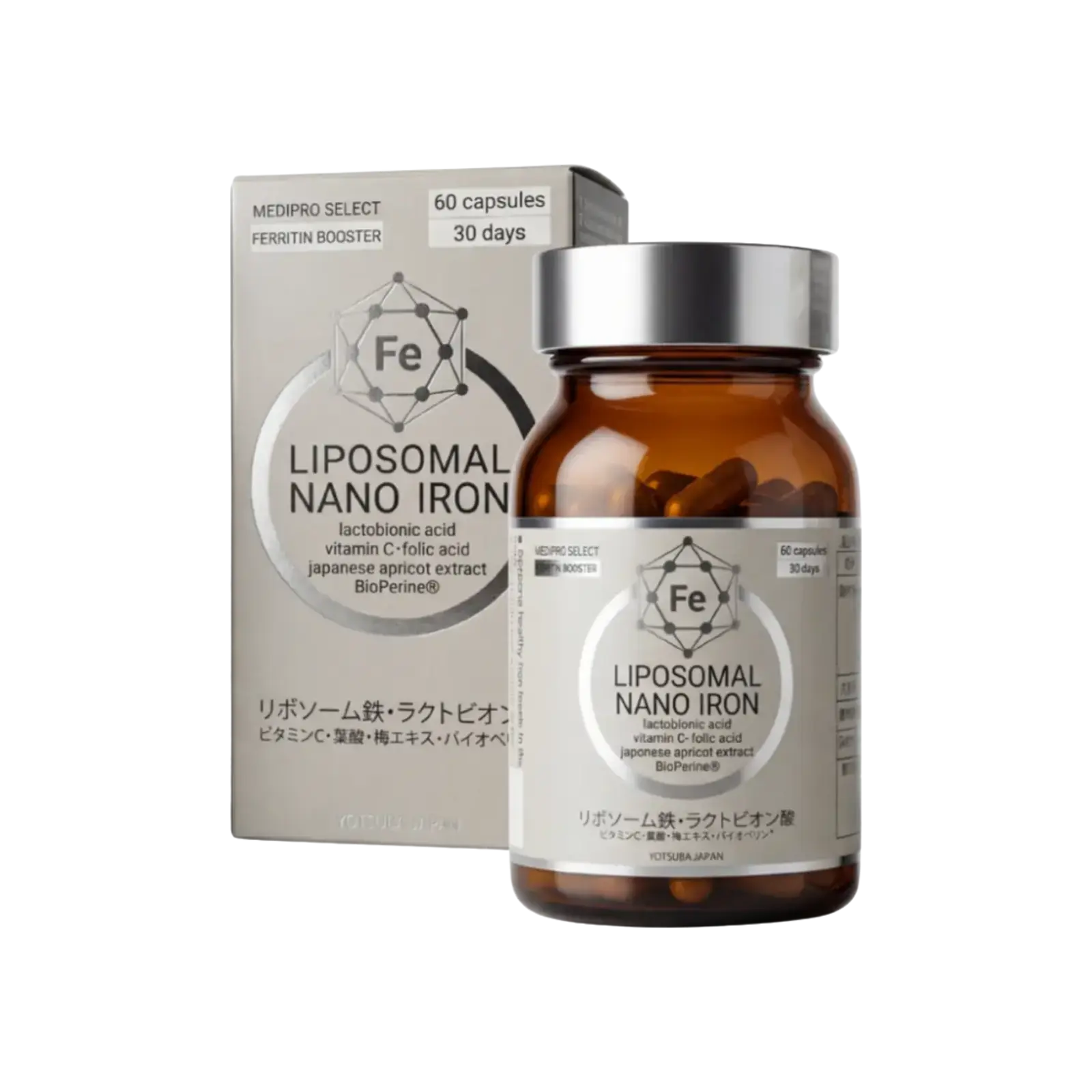
Iron. Form matters.
Japanese formulation, liposomal technology and a closer look at the ingredients accompanying iron.

A familiar mineral, a more detailed story
Iron is a familiar mineral with a complex absorption story. Its quantity can be expressed as a single number on a label. Behind that number are the iron source, the preparation method and the composition of the finished formula.
An August report in The Health Industry News introduced a Japanese gummy combining iron, folic acid and vitamin B12. It offers a small example of how developers are exploring convenient ways to bring important nutrients into everyday routines.
For YOTSUBA JAPAN, this subject unfolds through a different format: liposomal iron in capsules.
Why a number alone is not enough
Iron is part of haemoglobin, which carries oxygen to tissues, and myoglobin, which helps supply muscles with oxygen. It also contributes to normal cellular functioning.
The amount consumed and the amount absorbed are different measures. Ingredient form, the surrounding diet and the body’s iron status can influence absorption. Equal milligram amounts therefore do not necessarily produce equal outcomes.
Liposomal technology: attention to structure
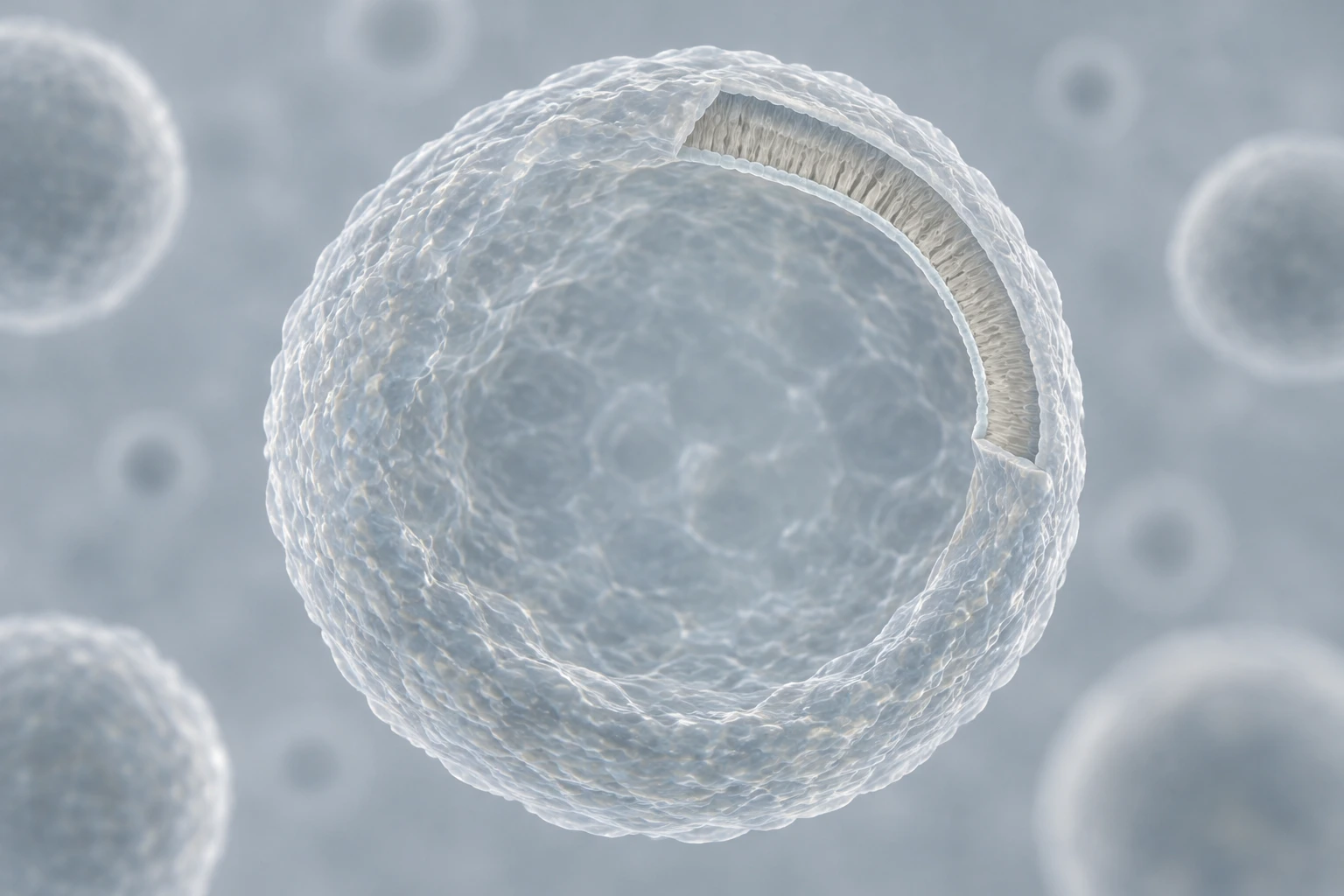
A liposomal approach uses a lipid structure around an iron-containing ingredient. The formulation story includes both the mineral and the way its delivery is organised.
Researchers have investigated specified liposomal preparations in people. The word liposomal does not make different developments interchangeable: the technology, dose and study conditions remain important.
The ingredient and its surrounding structure
What one human study observed
An open-label study published in 2019 evaluated a specified microencapsulated liposomal iron pyrophosphate preparation in non-pregnant women with iron-deficiency anaemia.
Of 558 participants, 437 completed the study. Mean haemoglobin increased over twelve weeks. The absence of a control group limits the conclusions: the study does not establish superiority over other iron preparations.
This was research on another product, rather than the complete YOTSUBA JAPAN formula. It illustrates scientific interest in the technology while preserving the need to assess each specific composition.
Ume: the organic acids of a Japanese fruit
Behind ume’s characteristic tartness is a distinctive organic-acid composition, particularly citric and malic acids. Japanese researchers have examined how their proportions vary with fruit maturity and the preparation of concentrated extract.
This is an interesting perspective for an iron formula. Organic acids can interact with iron, while vitamin C is recognised for its role in increasing non-haem iron absorption. Studies of food combinations suggest that the whole composition, including the balance of acids, can matter.
In LIPOSOMAL NANO IRON, ume extract is combined with vitamin C and liposomal ferric pyrophosphate. The composition can be considered through several connected elements: the mineral source, its preparation technology and the accompanying ingredients. The extent of their combined influence on absorption requires research on the finished formula itself.
Inside LIPOSOMAL NANO IRON
The formula uses liposomal ferric pyrophosphate. The declared two-capsule daily serving provides 12 mg of iron, 100 mg of vitamin C, 240 micrograms of folic acid, 16 mg of Japanese apricot extract, 4.5 mg of lactobionic acid and 5 mg of BioPerine® black-pepper extract.
Iron is the foundation of this composition. Vitamin C and folic acid complement its nutrient profile, while ume contributes a Japanese botanical ingredient. The declared extract amount does not specify the quantity of each organic acid.
Iron, with accompanying ingredients
 12 mg
Liposomal iron
Iron supplied as liposomal ferric pyrophosphate.
 100 mg
Vitamin C
Included alongside the liposomal iron system.
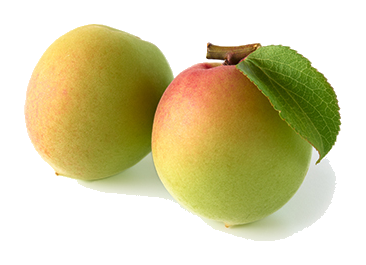 16 mg
Japanese ume extract
A plant preparation containing naturally occurring organic acids.
- 240 μg
Folic acid
Vitamin B9 completes the nutrient composition.
- 4.5 mg
Lactobionic acid
A separately declared sugar-acid ingredient.
- 5 mg
BioPerine®
Standardised black-pepper extract.
From composition to an informed choice
A modern discussion of iron begins with a few questions: which form is used, how much elemental iron does a serving provide, and which evidence relates to that particular preparation?
Individual need matters too. Iron stores may decline before anaemia develops, while ferritin measurements need interpretation in the context of inflammation and other circumstances. Choosing a supplement is best connected with an assessment of iron status together with a qualified professional.
LIPOSOMAL NANO IRON brings together a defined iron source, liposomal technology and a multi-ingredient composition. The complete ingredient information helps readers examine this system as a whole.