Sleep begins before we close our eyes.
GABA, glycine and Venetron® — the transition towards rest, and the research behind an evening formula.
The transition towards rest
The day has ended, yet our thoughts are still moving: conversations replay, unfinished tasks return, tomorrow takes shape. Even feeling exhausted does not always make it easy to fall asleep.
Care for sleep begins well before our head reaches the pillow. The time we wake up, daylight, movement, evening coffee and the habit of answering messages before bed all help shape the conditions in which we will rest.
Sleep quality cannot be reduced to a single number on a clock. How easily we fall asleep, how often we wake during the night and how we feel in the morning all matter. Enough time in bed does not always bring a sense of having rested well.
Nutrition and sleep research increasingly asks how individual ingredients might influence this transition towards rest. GABA and glycine are two examples. Their biological functions differ, and research helps identify which aspects of sleep deserve closer attention.
How quickly does someone fall asleep? How do the stages of sleep change? How rested do they feel in the morning? These are different questions, and each needs its own method of measurement.
GABA: from fermentation to sleep research
GABA, or gamma-aminobutyric acid, participates in inhibitory signalling in the nervous system. These signals help regulate the activity of neurons.
The role of GABA produced within the body and the effects of GABA taken orally are separate research questions. The mechanisms of dietary GABA remain under investigation, including uncertainty about its passage across the blood–brain barrier. Studies that directly record sleep are therefore particularly useful.
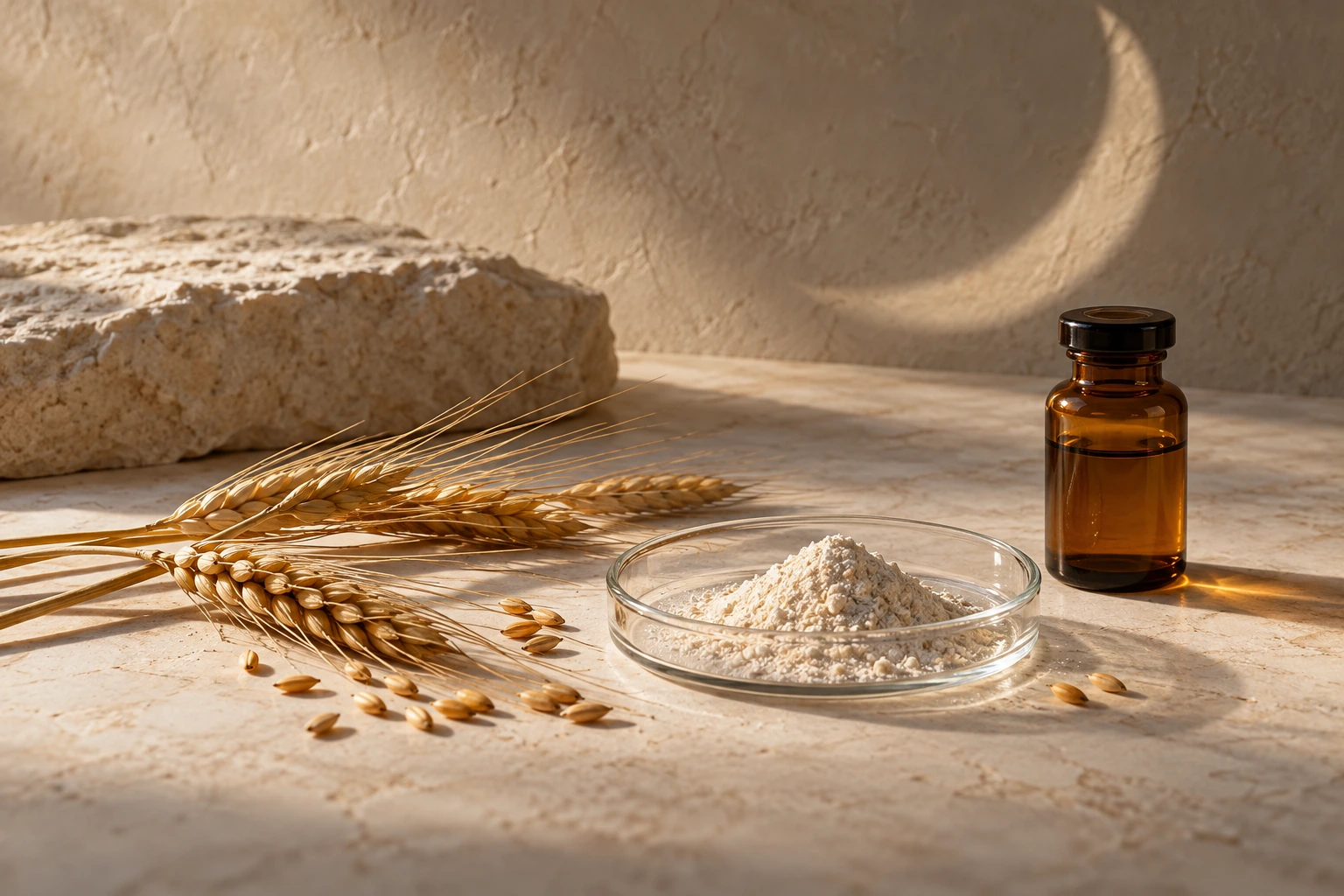
Japanese food biotechnology uses fermentation as one way to produce GABA. The raw-material documentation supplied for GABAVEN describes a process using fermented barley extract: lactic-acid fermentation is followed by separation of bacterial cells and production of a dried ingredient. A traditional fermentation approach becomes the foundation for a contemporary functional material.
From barley to a dried GABA ingredient.
Fermented barley extract
A barley-derived medium forms the starting point described in the ingredient documentation.
Lactic-acid fermentation
A controlled fermentation step produces a GABA-containing material.
Separation & drying
Bacterial cells are separated before the dried ingredient is prepared.
What Japanese researchers investigated
In a study published in Japanese Pharmacology & Therapeutics in 2018, Hideki Hokazono and colleagues investigated GABA in working adults experiencing unsatisfactory sleep, fatigue and stress.
The randomised, double-blind, placebo-controlled crossover study used two-week periods of the test food and placebo. Sleep was assessed through electrical brain activity, while questionnaires evaluated mood and fatigue.
The results showed changes in individual sleep stages. Longer deep N3 sleep was observed in particular subgroups, including participants with higher initial stress or fatigue measures. This detail matters: a subgroup finding helps refine further research, but does not establish the same response in everyone.
Glycine: a small molecule, a separate direction
Glycine is an amino acid that the body produces and also obtains from food. Alongside its role in proteins, it has functions in the nervous system.
In 2007, Wataru Yamadera of Jikei University School of Medicine in Tokyo and colleagues, including researchers from Ajinomoto and the Ohta Memorial Sleep Center, published a small crossover study involving 11 adults dissatisfied with their sleep.
The study compared 3 g of glycine before bedtime with placebo. This amount describes the experimental conditions. Researchers used polysomnography to record sleep and questionnaires to assess participants’ experiences.
Glycine was associated with shorter times to sleep onset and the first appearance of slow-wave sleep, alongside improvements in some subjective ratings. The proportions of the sleep stages did not change significantly. The small sample and short observation limit the scope of the findings, but the combination of objective measurements and personal experience is informative.
Mechanisms are studied separately. Experimental work by Nobuhiro Kawai, Seiji Nishino and colleagues examined glycine in relation to thermoregulation and brain structures involved in daily rhythms. These animal findings help develop mechanistic hypotheses that require testing in humans.
Different ingredients. Specific questions.
- 2 weeks
GABA · crossover periods
Hokazono and colleagues · 2018. Randomised, double-blind, placebo-controlled. EEG, mood and fatigue assessments. Longer N3 sleep was reported in particular stress and fatigue subgroups.
- 11 adults
Glycine · polysomnography
Yamadera and colleagues · 2007. Randomised, single-blind crossover study. Glycine at 3 g before bedtime compared with placebo; sleep recordings and subjective ratings.
Why the stages of sleep matter
The term non-REM sleep brings together stages N1, N2 and N3. Of these, N3 is the deep, or slow-wave, stage. An increase in total non-REM sleep does not, by itself, mean an increase in deep sleep.
A useful example is the small Japanese study by Atsushi Yamatsu and colleagues, published in 2015, which examined GABA and the Apocynum venetum leaf extract Venetron®. Researchers compared the ingredients individually, their combination and placebo.
Venetron® produced a statistically significant increase in total non-REM sleep. The study did not clearly establish an enhanced effect from combining it with GABA. This illustrates why formula research needs specific outcomes, rather than treating every change as a general promise of deeper sleep.
Non-REM includes more than deep sleep.
- N1
Light sleep · the transition into sleep.
- N2
A further stage of non-REM sleep.
- N3
Deep, slow-wave non-REM sleep.
A separate stage, outside the non-REM group.
Venetron: a larger study of sleep and stress
Venetron® is a standardised leaf extract of Apocynum venetum, known in Japan as rafuma. Its research programme explores sleep and emotional strain.
In 2025, a randomised, double-blind study was published involving 476 adults seeking improvement in self-reported anxiety and stress. For six weeks, participants received either 50 mg of the extract daily or a placebo. The authors reported greater reductions in perceived stress and self-reported sleep disturbance in the extract group than in the placebo group.
The study assessed these experiences through questionnaires. Its findings describe changes reported by participants; they are distinct from the brain-activity measurements used in the earlier studies. They concern the specific extract and conditions studied, rather than every product containing rafuma.
A larger trial. Self-reported outcomes.
- 476 adults
Randomised, double-blind trial
Adults seeking improvement in self-reported anxiety and stress; extract compared with placebo.
- 6 weeks
50 mg extract daily
Questionnaires assessed perceived stress and sleep disturbance. These were not EEG measurements or a trial of finished GABAVEN.
How this appears in GABAVEN
Within the Yotsuba Japan collection, GABAVEN represents the evening-balance direction. It combines a fermented barley ingredient with GABA, Venetron®, passion flower, day lily, a botanical complex with gardenia and fermented soybean, and vitamins B6 and B12.
Its ingredient architecture brings fermentation technology together with selected botanicals. Each has a story worth examining, from the origin of the material to the methods used to investigate its properties.
Glycine is a separate research direction. The studies discussed here did not test a GABA–glycine combination, so their findings help explain each ingredient individually.
Research on individual ingredients helps explain the thinking behind this combination; evaluating the finished formula requires evidence of its own.
Sleep science is built from details: time to fall asleep, electrical brain activity, the structure of overnight rest and how someone feels the next day. Those details make the conversation about recovery both meaningful and precise.
Giving the day time to end
For a contemporary formula, the plant’s origin, the standardisation of its extract and the amount included all matter. Two compositions with similar names on their labels can differ substantially. Scientific understanding begins when a familiar ingredient name can be connected to a particular material and evidence about it.
Everyday habits remain important. Regular sleep and waking times, daylight, a quieter evening and a dark, quiet bedroom provide a foundation for rest. Food supplements may be considered as additional support, while persistent sleep difficulties call for their underlying cause to be assessed.
Sometimes evening care begins with a simple decision: to leave some tasks until tomorrow and give ourselves time to bring the day gently to a close.