Based on The Health Industry News, issue 1845, 7 October 2026, with KOEI SCIENCE documentation and published ingredient research.
Fermentation, in finer detail.
What a culture creates: the science behind the fermented extract powder in 16 Lacto Perfection.
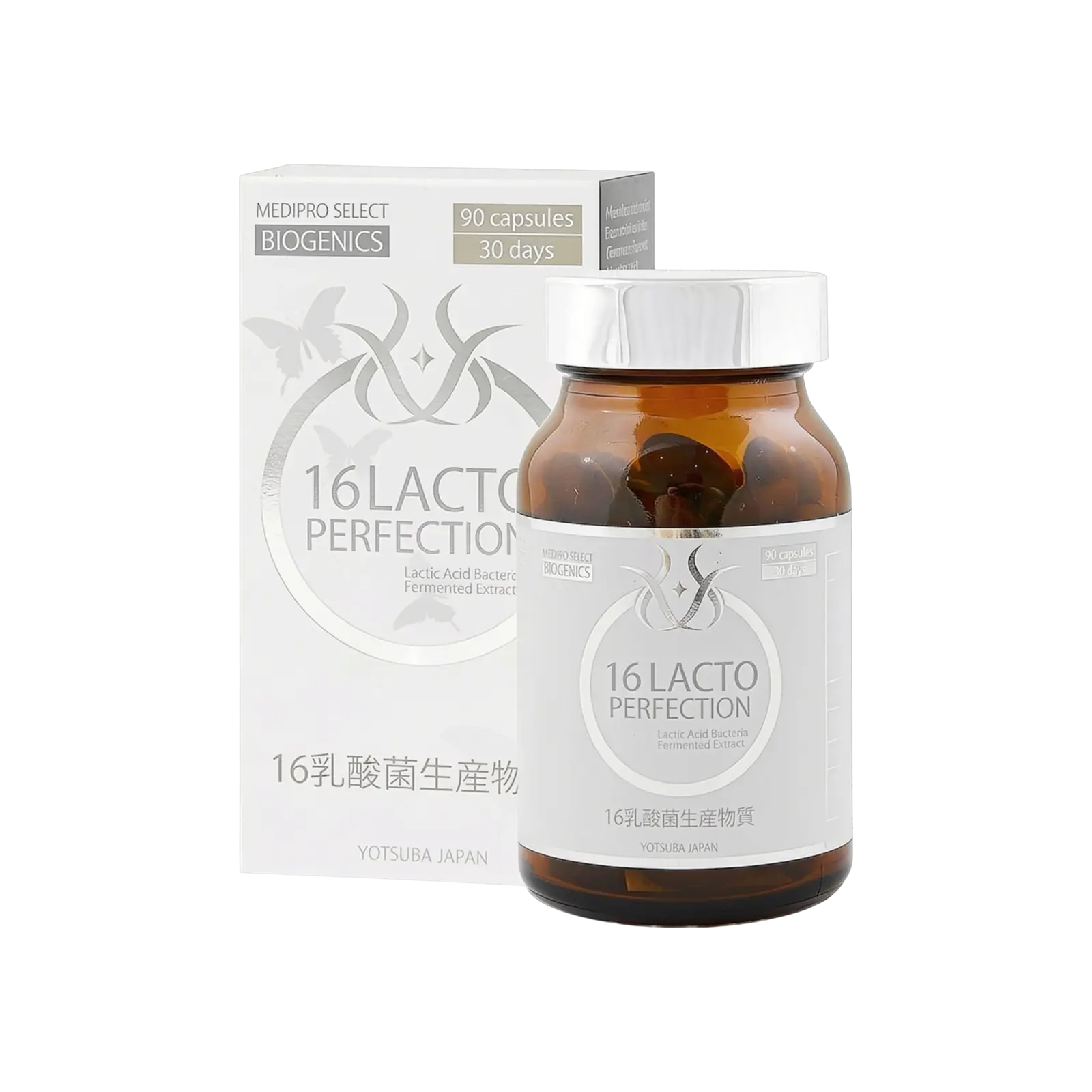
Fermentation is often described through its microorganisms: which bacteria are used, and how many. There is a further chapter, however — the substances present as a culture transforms its medium. This is the starting point for the fermented ingredient inside 16 Lacto Perfection.
Japanese developer KOEI SCIENCE uses Sixteens®, a co-culture of 16 species and 35 strains of lactic acid bacteria and bifidobacteria. The approach brings selected microorganisms into a shared cultivation process, with soymilk providing the fermentation medium.
For our formula, the resulting fermented soymilk extract is used in powder form. The preparation is part of its identity: from the culture and its medium to the material that ultimately enters the capsule.
From a shared culture to a powder
- 16 / 35
Selected culture
Sixteens® combines 16 species and 35 strains.
Fermentation medium
Soymilk supports the co-cultivation process.
Prepared ingredient
Fermented soymilk extract powder is the form used in 16 Lacto Perfection.
Three preparations, three chemical profiles
Detected component counts reported by KOEI SCIENCE. Each bar starts at zero.
- Fermented soymilk · starting material1,075
- Fermented extract · powder1,117
- Fermented extract · liquid900
The people behind the observations
- 20
Adults aged 41–61
Participants reported three to five bowel movements per week at entry.
- 150 mg
Fermented ingredient each day
A randomised, double-blind, crossover-controlled design.
Saori Seki, Yoko Onodera and colleagues
Nihon Pharmaceutical University · Specialist research and clinical teams.
From a culture to a prepared ingredient
Co-culturing means growing microorganisms together. It is different from simply combining separately prepared ingredients: the fermentation process itself is shared. KOEI SCIENCE describes this as a central feature of the Sixteens® platform.
The next question is chemical. What does the resulting fermented material contain? Metabolomics helps researchers examine many compounds together and build a more detailed profile of a sample.
A closer view of the powder
In its 2026 update, KOEI SCIENCE reports 1,117 detected components in the powder. The combined count across three analysed preparations is 1,186. That larger figure includes differences between the preparations; it is not the powder count alone.
These measurements describe chemical composition. They do not rank the preparations by clinical benefit or show that every detected component is present at a biologically effective amount. Composition analysis and human studies answer different questions.
What researchers studied in people
A 2022 paper in the Journal of Intestinal Microbiology by Saori Seki, Yoko Onodera and colleagues examined the fermented ingredient in 20 adults aged 41–61 whose bowel-movement frequency was three to five times per week. The author group brought together Nihon Pharmaceutical University and specialist research and clinical teams.
The randomised, double-blind, crossover-controlled study used 150 mg of the ingredient daily. The authors reported improvements in several bowel-function scores compared with the participants’ starting values, alongside differences in selected microbiota groups compared with placebo. The small study provides human observations to accompany the ingredient’s analytical profile.
From ingredient profile to a daily formula
16 Lacto Perfection contains fermented soymilk extract powder made with the Sixteens® culture. The technical composition specifies 150.6 mg per three capsules; the consumer panel rounds this to 150 mg.
Its story connects microorganism selection, co-cultivation, a prepared powder and methods for studying that material. Behind the word fermentation is a specific process — one that can be followed through the complete composition below.
Explore the complete composition and serving information for the formula containing fermented soymilk extract powder.
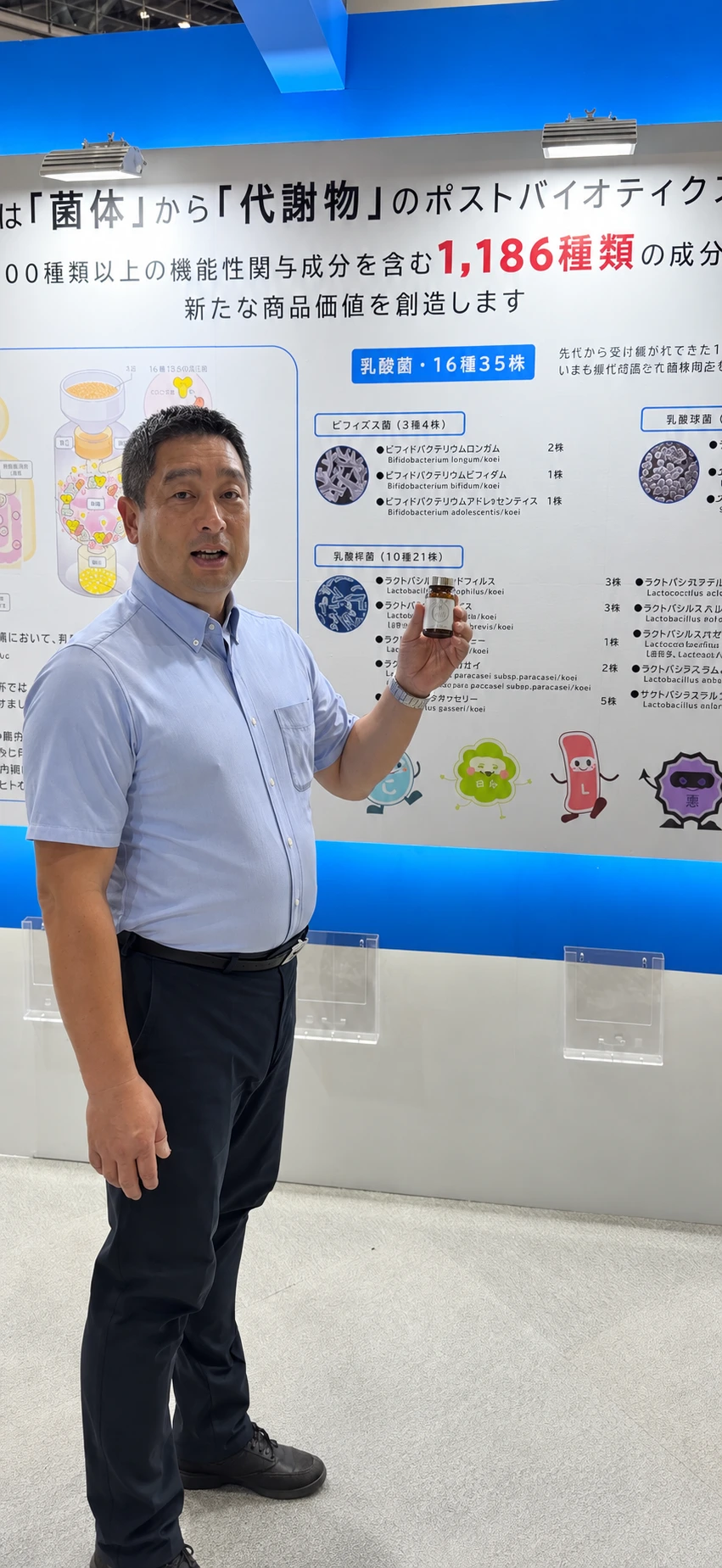
The analytical figures describe raw-material composition. The 2022 publication examines the specified fermented ingredient at 150 mg/day; its bowel-function and microbiota findings use different comparisons. The exhibition photograph documents the setting.