Inspired by the ginger feature in The Health Industry News, No. 1845 · 7 October 2026, pp. 41–42. Ingredient identity and SIRTMAX® research are reviewed separately below.
Black ginger, a closer look.
From a purple rhizome to SIRT1 research: the botanical story behind SIRTMAX®.
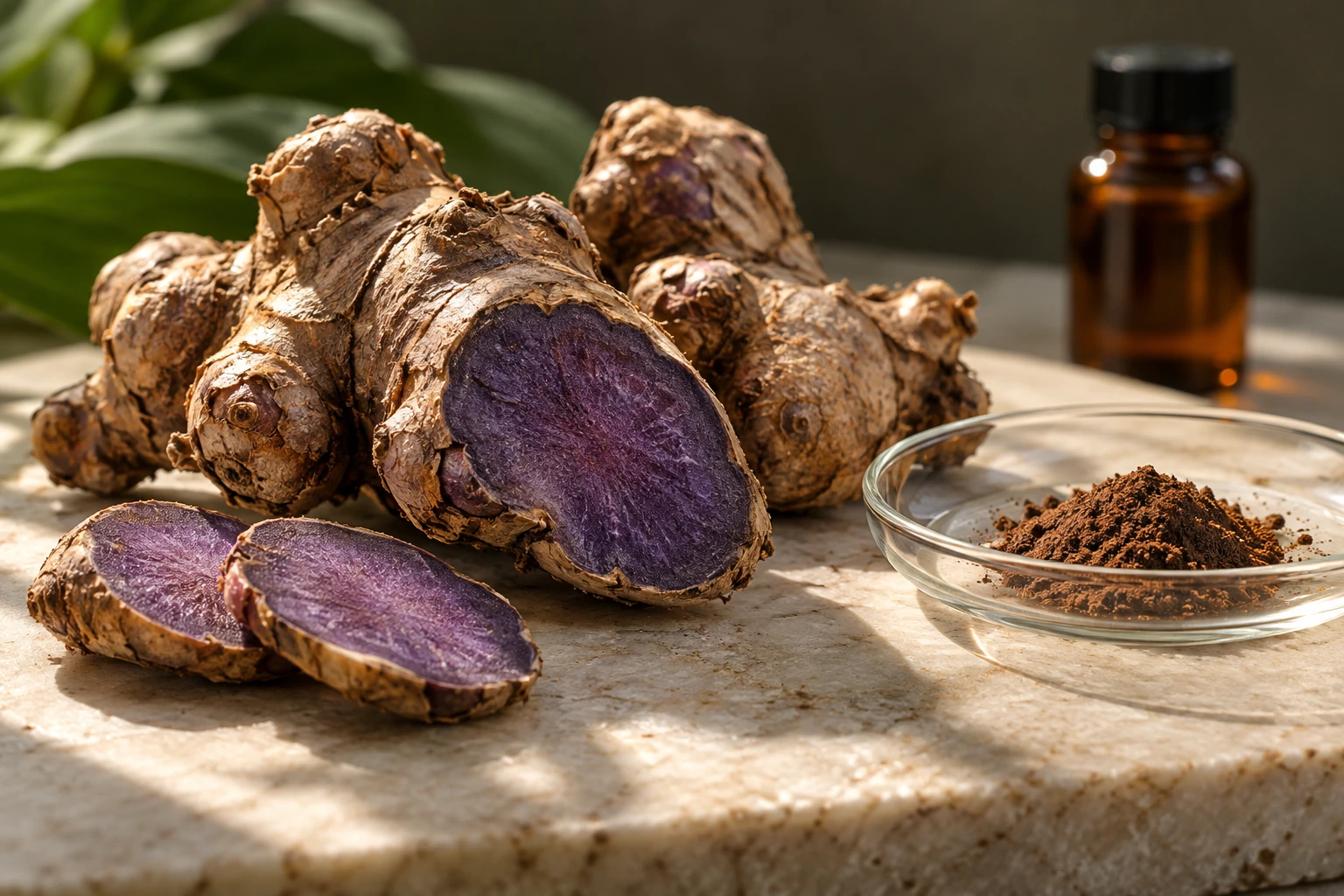
The first surprise is inside. Beneath the modest brown skin of black ginger lies a dark violet rhizome. Its appearance offers a memorable introduction to an ingredient whose scientific story reaches from plant chemistry to the proteins involved in cellular regulation.
For Yotsuba Japan, this story already has a place in the collection. SIRTMAX® is a defined black-ginger extract within our Blood Sugar Support formula. Looking closely at the plant, the extract and the research reveals how those three parts connect.
Three studies, different questions
- Molecular
2021 · An isolated compound
Biochemical and cultured-cell experiments examined KPMF-8 and human SIRT1. These are mechanistic measurements.
- 27 people
2015 · Seven-week crossover study
A preparation containing 100 mg SIRTMAX® was studied. Reported changes within a condition need to be read with the original comparisons.
- 28 people
2019 · Eight-week study
In the full population, sirtuin expression showed a trend, p = 0.08. This did not meet the conventional p < 0.05 threshold.
One plant, several names
The botanical name is Kaempferia parviflora. It is known as black ginger, black turmeric and Kra Chai Dam; Thai ginseng is another common name used in ingredient literature. The Latin name is the reliable point of reference across these different descriptions.
Black ginger and the ordinary ginger used for ginger koji are different plants. Here, the starting material is Kaempferia parviflora; ginger koji begins with Zingiber officinale and a fermentation process. A dark interior alone does not indicate fermentation. Botanical identity comes first.
An extract with a chemical signature
Black ginger contains a group of plant compounds called polymethoxyflavonoids. SIRTMAX® is an extracted, standardised preparation whose specification identifies this group and individual marker compounds. This gives the material a more precise identity than a plant name alone.
Standardisation connects botanical material with analysis. It describes a defined composition against which production batches can be assessed. For readers following ingredient research, it also helps establish whether the material in a study corresponds to the extract being discussed.
Why SIRT1 attracts researchers
SIRT1 is an enzyme that uses NAD+ in reactions removing acetyl groups from proteins. Those reactions help regulate cellular processes, linking the protein to research on metabolism and ageing biology. Enzyme activity, gene expression and a health outcome are separate measurements.
A 2021 paper in Communications Biology examined KPMF-8, a defined polymethoxyflavonoid from Kaempferia parviflora. Researchers reported direct interaction with human SIRT1 and enhanced activity in biochemical experiments, with additional work in cultured cells.
This is a molecular explanation worth exploring. It concerns a particular compound under experimental conditions; demonstrating an interaction with SIRT1 does not establish longer life in people. The next stage asks what happens when a specified preparation is taken orally.
What the human studies tell us
A 2015 randomised, double-blind crossover study included 27 volunteers and evaluated a preparation containing 100 mg of SIRTMAX® for seven weeks. The authors reported decreases in body weight and fasting glucose within the SIRTMAX® condition. Its small sample and the comparison underlying each result matter when interpreting the findings.
A separate 2019 placebo-controlled study tested 100 mg daily for eight weeks, with 28 participants completing the trial. In the full study population, sirtuin expression showed an upward trend, with p = 0.08. That did not meet the conventional p < 0.05 threshold. The abstract reported no other overall improvements compared with placebo; some findings came from subgroup analyses.
Together, these studies offer early human evidence with clear limits. They invite larger confirmatory trials and careful attention to the measured endpoint. They do not demonstrate reversal of ageing or establish a clinical outcome for every product containing black ginger.
The preparation makes the connection
Research on black ginger includes different extracts, compositions and experimental models. A result for one preparation belongs with its botanical source, processing method, chemical profile and studied amount.
SIRTMAX® is the specific extract discussed here. The other black-ginger materials featured in professional ingredient coverage may have their own specifications and studies. Keeping those identities visible makes the science more informative and the route from research to formulation easier to follow.
Within the Yotsuba formula
Our Blood Sugar Support SIRTMAX® provides 100 mg of this extract per daily serving of three capsules. Bitter melon, Salacia, organic mulberry leaf and Banaba complete the five-botanical composition.
That ingredient amount can be read alongside the published research, while the complete formula remains its own preparation. The linked studies evaluated the ingredient or other test preparations, rather than this finished combination.
The product page brings the full composition, serving information and ingredient references together. It is a practical next step for readers who want to move from a botanical story to the details of a formulation.
Explore the complete five-botanical formula containing SIRTMAX® black-ginger extract.
Explore the ingredient library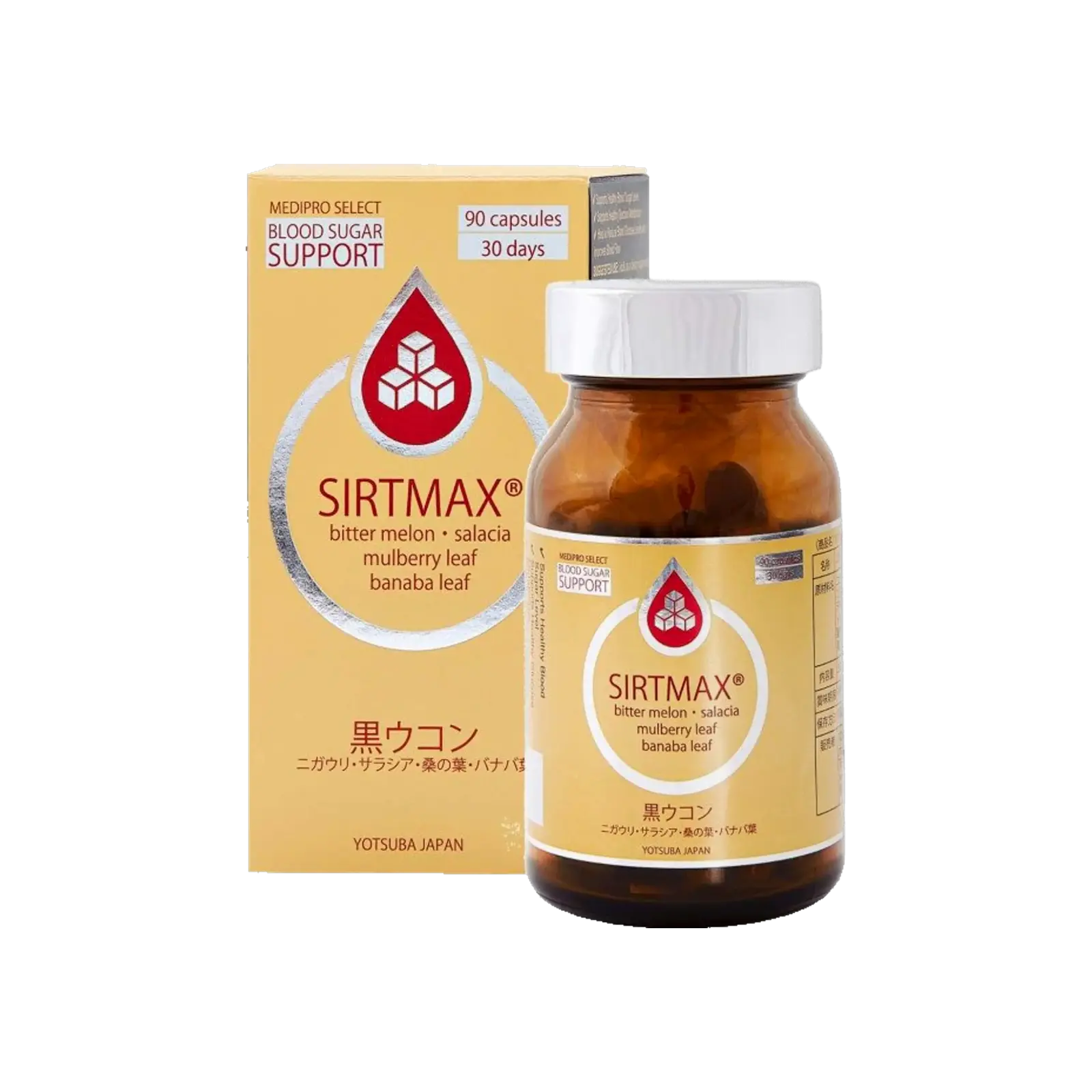
Molecular findings concern an isolated compound; human findings concern specified test preparations. The 2019 expression result was a trend (p = 0.08), not a statistically significant overall finding. None of these studies evaluated the complete Yotsuba five-botanical formula or demonstrated longer human lifespan.