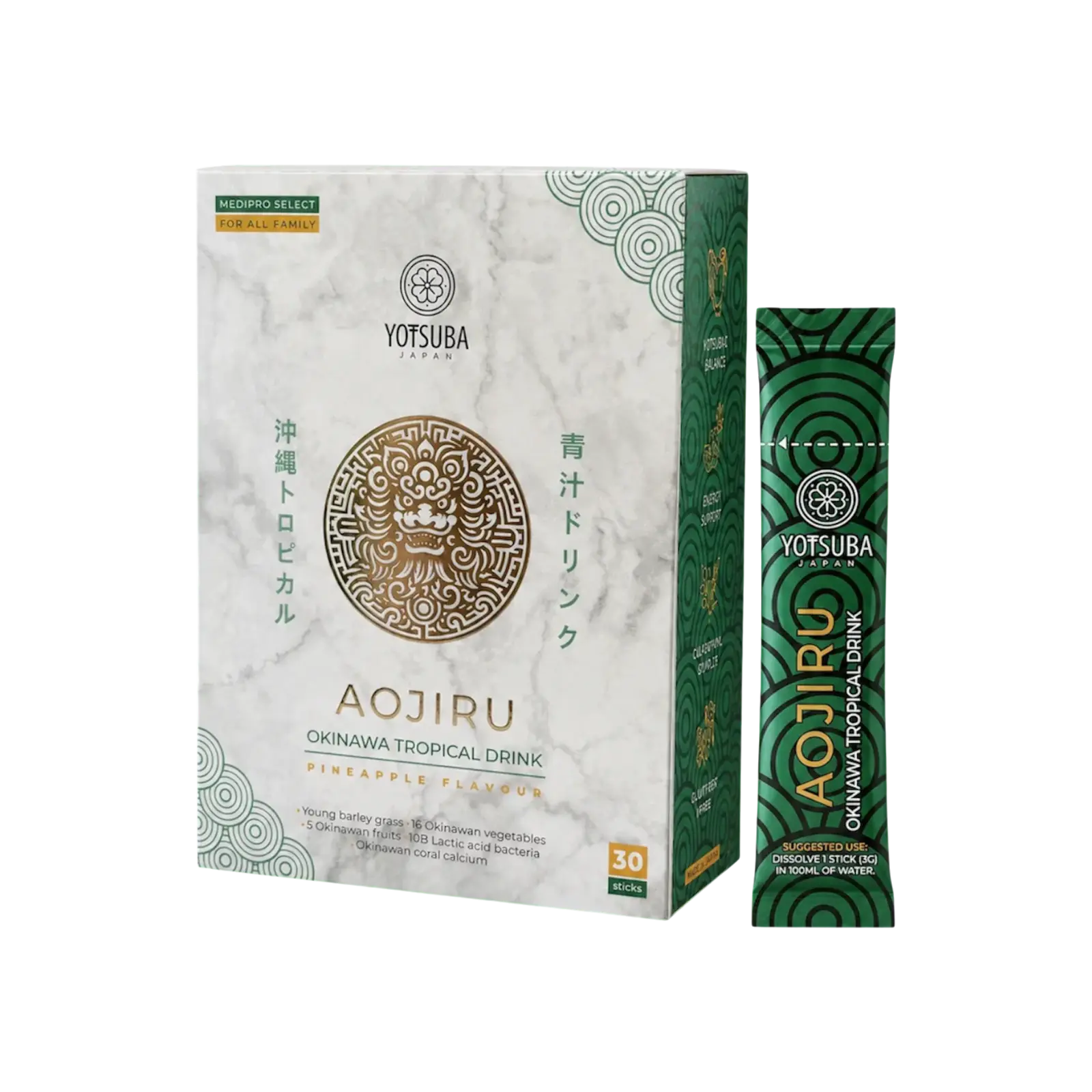
Aojiru. A new generation of greens.
Okinawan plants, Japanese fermentation and a closer look at everyday green nutrition.
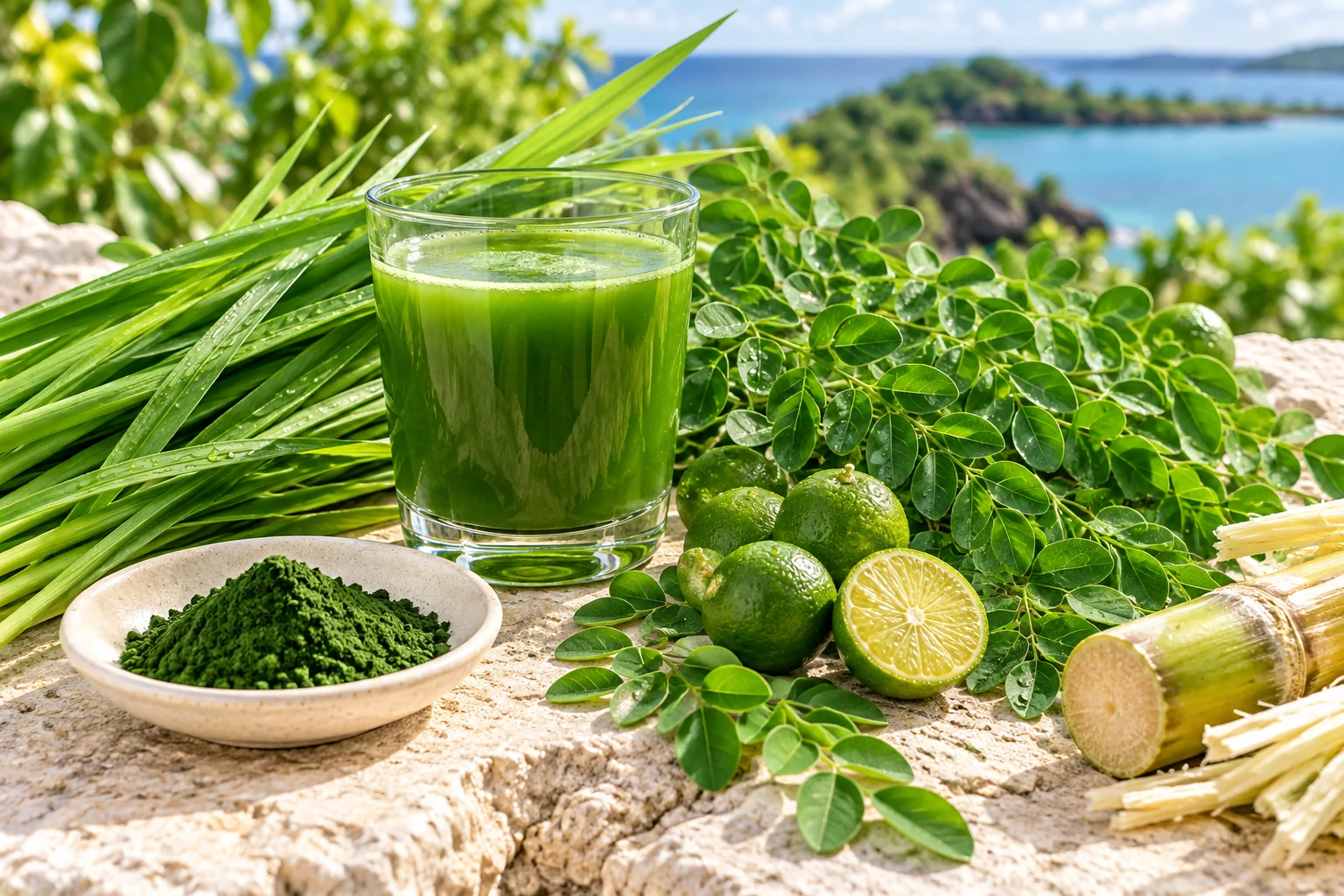
A familiar Japanese ritual, seen afresh
A glass of green aojiru is a familiar part of Japan’s food culture. Its colour may be instantly recognisable, yet the ingredients behind it can be remarkably different: young leaves, vegetables, microalgae, fruit preparations and fermented plant materials each bring their own identity.
In August 2026, The Health Industry News reported on a survey of 54 aojiru businesses. Its market coverage highlighted interest in young barley grass and moringa, alongside increasingly specific formulation concepts. This was a view of the industry, rather than a clinical assessment of a drink.
For YOTSUBA JAPAN, the interesting story begins inside the stick. Okinawa Tropical Aojiru brings together vivid greens, island-grown botanicals and selected fermented ingredients in a pineapple-flavoured daily format.
Why the young leaf matters
Young barley grass is a leaf ingredient. It has a different composition and food matrix from flour made from mature barley grain. That distinction matters when reading research: the plant part and the way it is prepared define the material being studied.
A Japanese paper published in 2013 investigated young barley leaf powder, its insoluble fibre and the viscosity of digestive contents in experimental models. In the human part of the study, a specified powder moderated the post-meal glucose rise in participants with a higher initial response; the finding did not apply uniformly across the participants.
The study used 1.5 g of the tested powder with a rice meal. Our formula declares 600 mg of young barley grass per stick. The paper helps explain why researchers examine leaf ingredients closely; it does not establish the same effect for this finished aojiru formula.
A palette that reaches beyond one green
The ingredient list unfolds in layers. Young barley grass forms the largest measured green component. A blend of 16 Okinawan vegetables sits alongside a five-fruit blend, while Okinawan moringa, Yaeyama chlorella and Peucedanum japonicum are separately declared ingredients.
This variety also raises a wider question: how does the diversity of foods we eat relate to our gut ecosystem? The 2018 American Gut study associated greater plant-food variety with differences in microbiome composition and metabolic profiles. It was an observational study, so it could not show that a particular blend caused those differences.
A multi-ingredient stick and a varied whole-food diet are different things. The appeal here lies in a clearly described combination of ingredients, while everyday meals remain the setting for dietary variety.
Many ingredients. One Okinawan palette.
The green foundation, the vegetable and fruit blends, and the separately declared botanicals.
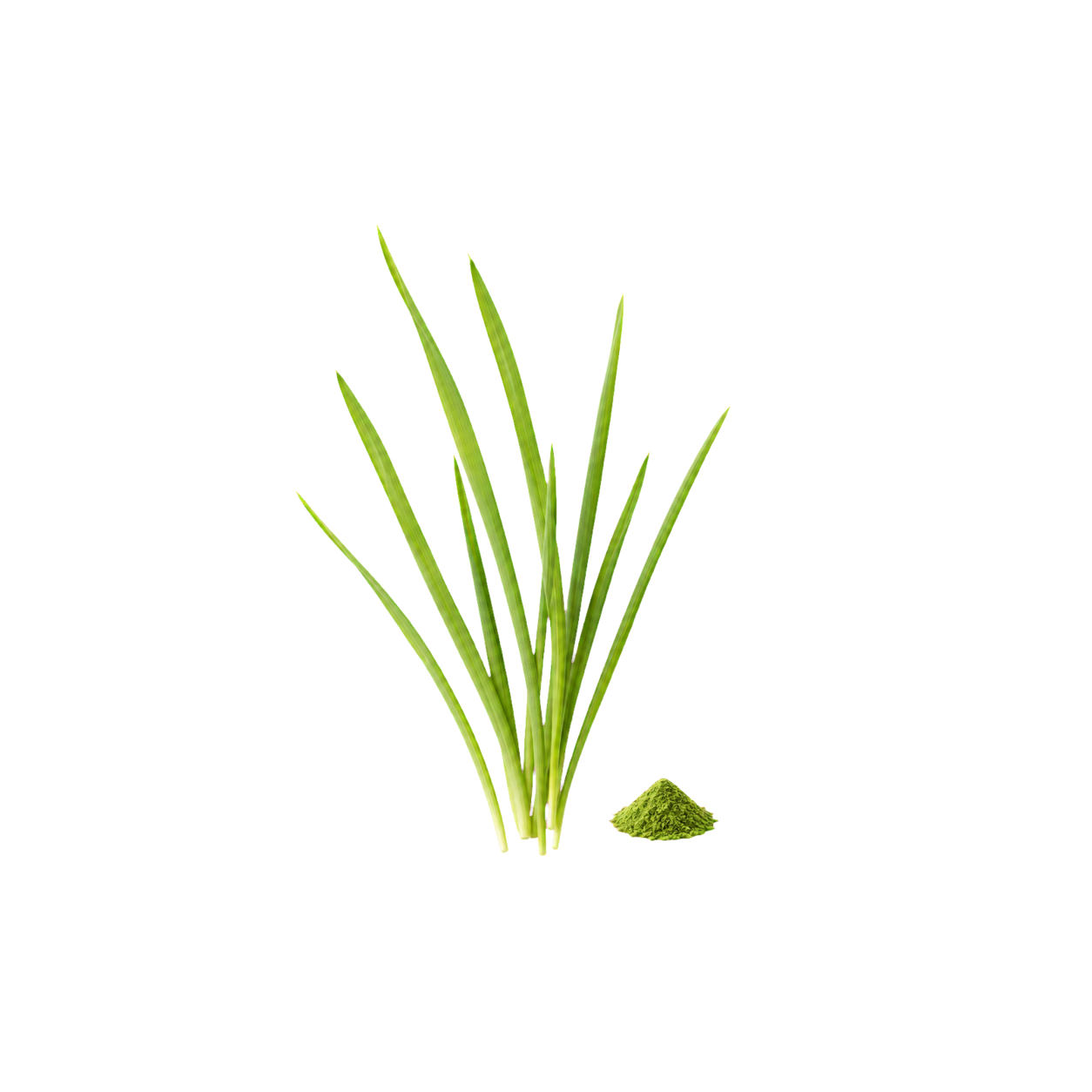 600 mg
Young barley grass
The young leaf forms the largest measured green component.
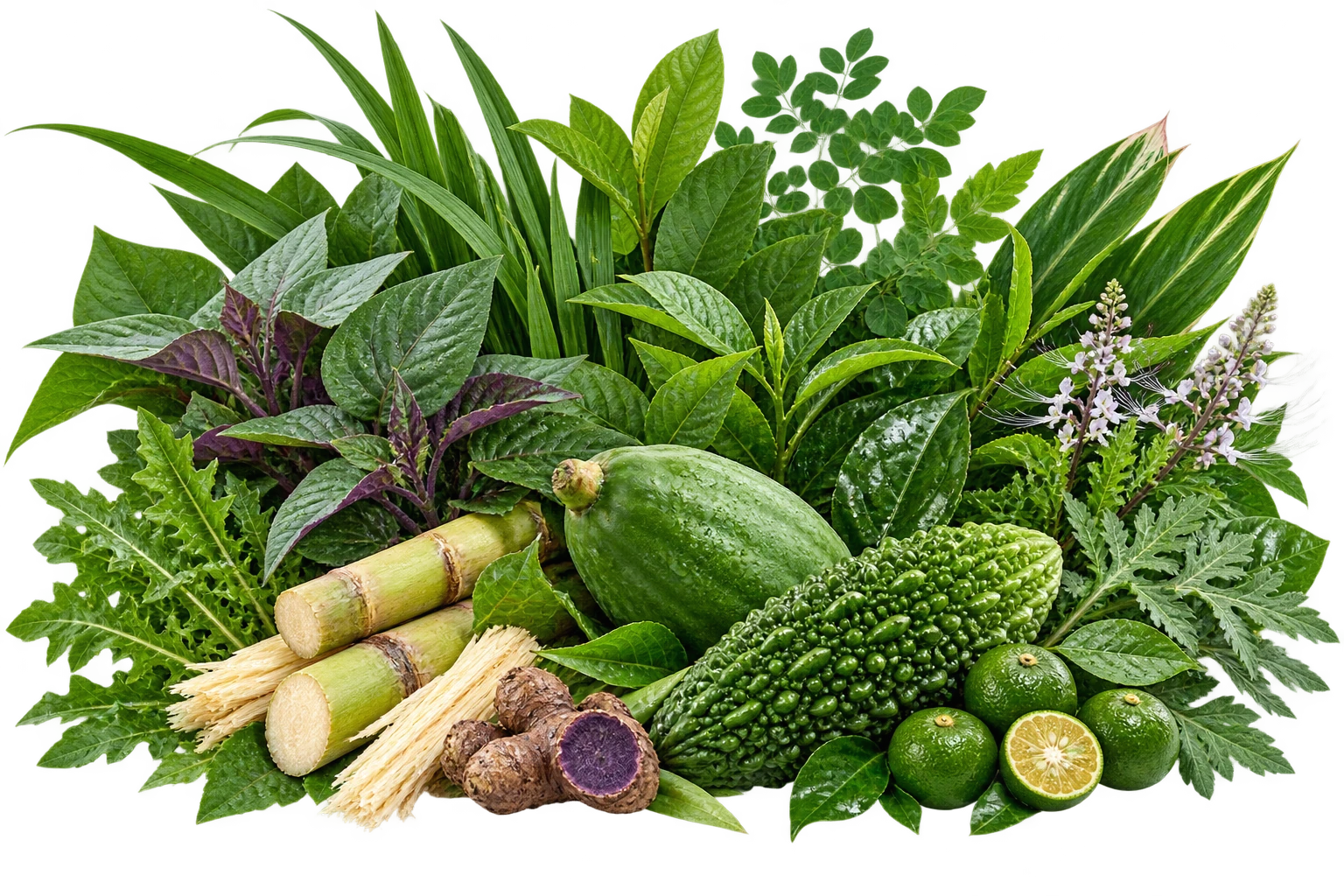 150 mg
16 Okinawan vegetables
Sweet potato leaves, green papaya, goya and island herbs. The amount shown is for the complete blend.
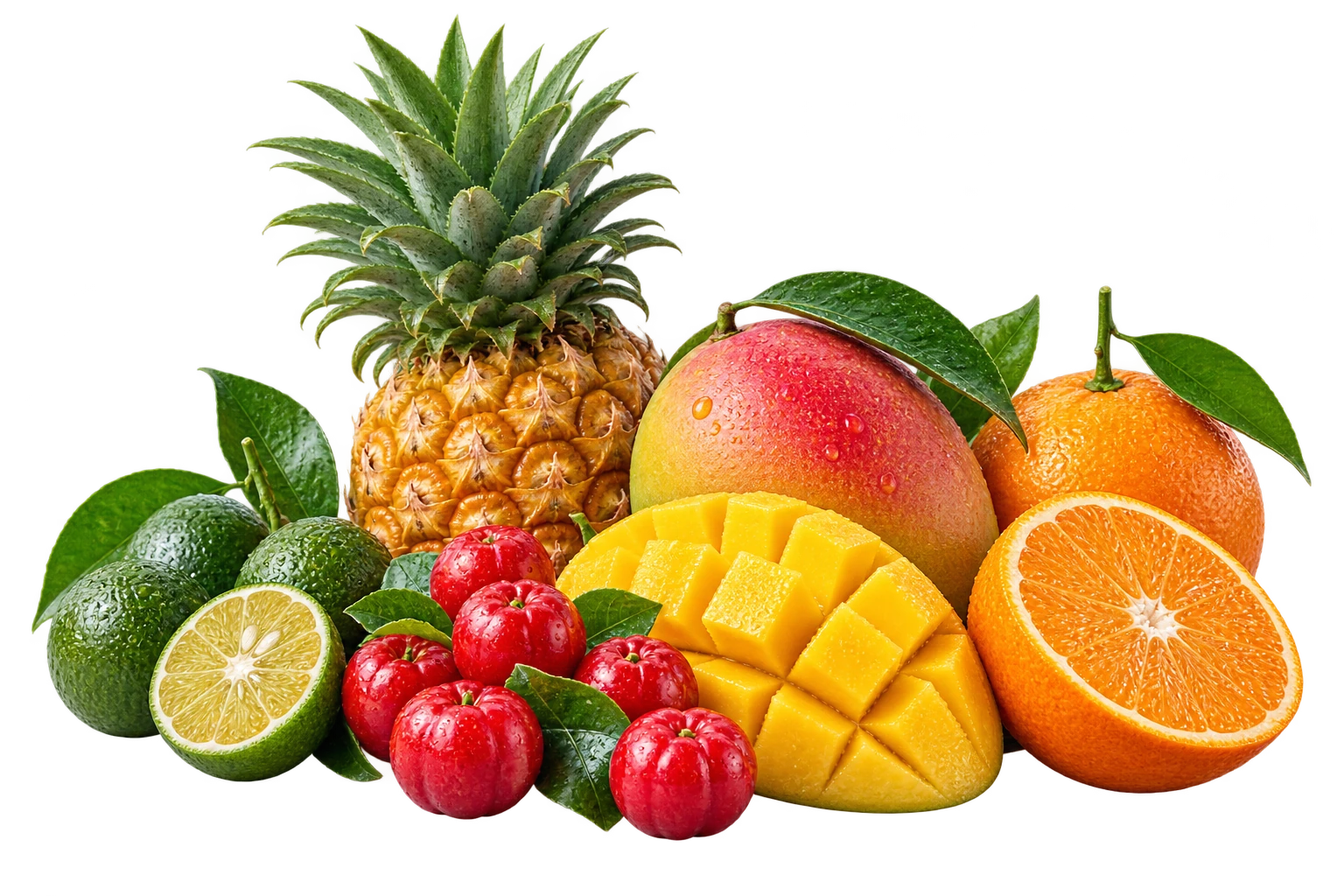 30 mg
5 Okinawan fruits
Shikuwasa, mango, acerola, pineapple and tankan. The amount shown is for the complete blend.
- 150 mg
Okinawan moringa
A separately declared island-grown botanical ingredient.
- 150 mg
Yaeyama chlorella
A separately declared green microalgae ingredient.
- 30 mg
Peucedanum japonicum
An additional Okinawan botanical layer.
The fermented chapter: shikuwasa and sugarcane
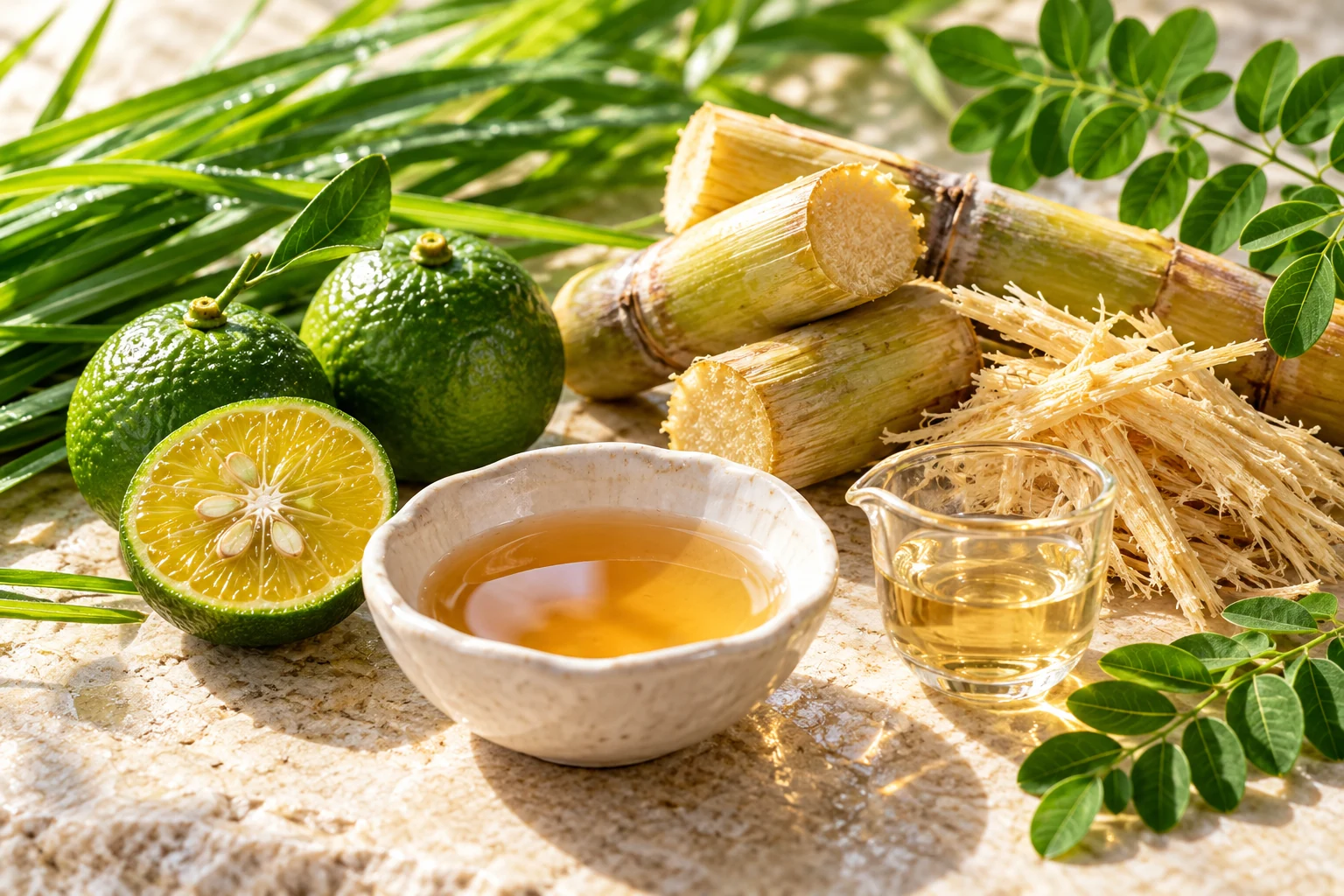
Small, intensely aromatic shikuwasa citrus is one of Okinawa’s characteristic fruits. Sugarcane adds another island connection. Bagasse is the fibrous material remaining after sugarcane juice is extracted; in this formula, it appears as a fermented ingredient.
Okinawa Tropical Aojiru declares fermented Citrus depressa, the botanical name for shikuwasa, and fermented bagasse. These sit alongside the separately prepared young barley, moringa and chlorella. The distinction allows us to describe the formula precisely: selected plant components undergo fermentation.
During fermentation, microorganisms transform a food matrix. The resulting material may contain transformed plant compounds and substances produced by the culture. Live cultures, prepared bacterial materials and fermented plant ingredients each have their own identity. The word “fermented” alone does not tell us which microorganisms remain alive in a finished product.
Citrus brightness. Sugarcane character.
Fermented Citrus depressa · 9 mg per stick. Fermented bagasse · 30 mg per stick.
What microbiota research adds to the picture
A Stanford study published in Cell in 2021 compared high-fibre and fermented-food diets in 36 adults over a 17-week protocol. The fermented-food group showed increased microbiota diversity and reductions in several measured inflammatory markers.
The high-fibre group showed changes in the microbiome’s capacity to process carbohydrates, while overall microbial diversity remained stable. The primary cytokine-response outcome did not change significantly in that group. Different dietary approaches produced different measured responses.
The participants changed their diets, eating foods such as fermented dairy and vegetables. They did not take this aojiru. The research offers a useful perspective on food, fibre and fermentation, with findings that belong to the diets and conditions tested.
A Japanese research update from August 2026
New Japanese work is bringing the chemistry of the gut ecosystem into sharper focus. A paper published in Gut Microbes on 24 August 2026 examined samples from 63 healthy adults, combining vitamin measurements with microbiome analysis.
The researchers distinguished vitamins within bacterial cells from those outside them. They reported associations involving Alistipes and biotin, and Blautia and thiamine. Looking at these compartments separately helps reveal relationships that a single combined measurement can obscure.
This is analytical microbiome research. It does not measure how much of those vitamins a person absorbs, establish a vitamin-replacement strategy, or test Okinawa Tropical Aojiru. Its contribution is a more detailed way of studying what our microbial communities contain and produce.
From an ingredient palette to a daily stick
Alongside its plant ingredients, the complete formula includes a declared lactic acid bacterial component, Okinawan coral calcium and vitamin D. Hesperidin, gamma-oryzanol and black pepper extract add further specified components. Each belongs in the composition story with its own declared amount.
The declared vegetable and fruit quantities refer to their complete blends: 150 mg for the 16-vegetable blend and 30 mg for the five-fruit blend. Those figures are not the amount of each plant, and the number of ingredients is not a number of vegetable servings.
A pineapple flavour and individual sticks make the format approachable. The richer story lies in the details: the young leaf, the island botanicals, the fermented citrus and sugarcane material, and the care taken to identify each layer. Explore the complete composition and serving information below.